Just pulled the trigger on a custom email inbox using my own domain, it’s been a looooong while since I’ve wanted my own email domain and this is it.
For any inquiries please email me at: contact@l21degrees.com
Just pulled the trigger on a custom email inbox using my own domain, it’s been a looooong while since I’ve wanted my own email domain and this is it.
For any inquiries please email me at: contact@l21degrees.com
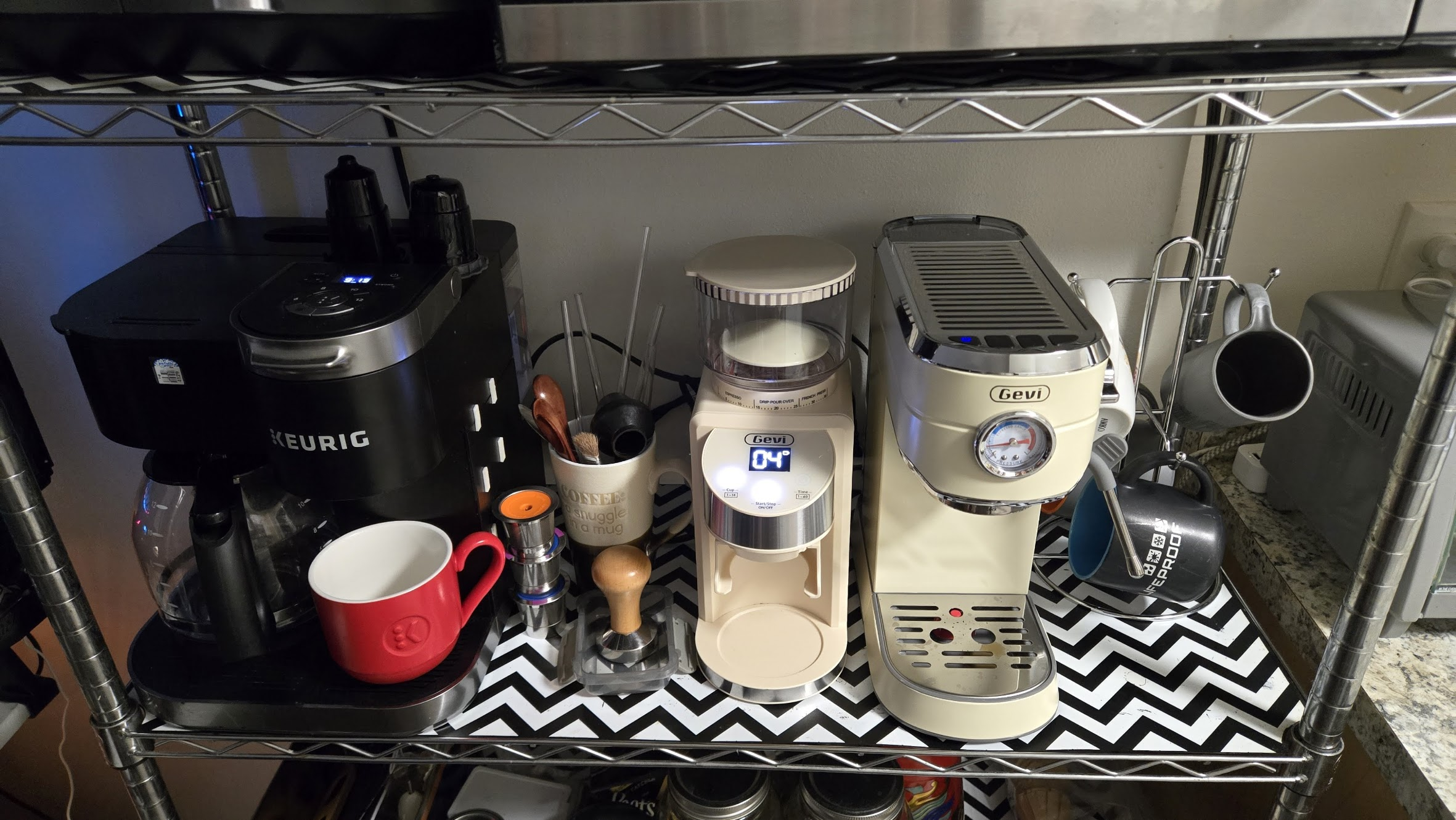
Like my list of semi-abandoned hobbies didn’t need to grow, I just replaced my Nespresso Vertuo Breville machine with a cheap set of coffee grinder and espresso machine with a steam wand which included a nice tamper and a chrome frothing jug along other small accessories. Since then, I’ve added a “bottomless” portafilter and a kit that contained a portafilter funnel, a WDT tool, a filter plate and a brush. I just received a tamping/knock box station. How did it go? I’ll go back to this in a bit.

Don’t get me wrong, the Nespresso Vertuo Breville machine is EXTREMELY convenient and precise, you insert the pod, and the barcode reader on the machine does its magic identifying it setting up all parameters for a consistent brew, always exact on size, temperature, timing and variable speed within it. The texture was also amazing, it is not the same as traditional espresso, but the centrifugal extraction created a long-lasting coffee “froth” (not actual crema) that added to the taste. BUT, all that convenience and precision come at a price, each coffee pod goes for around $1.40USD which adds up if you drink several cups a day. Also, if you recycle your pods, takes away from the convenience storing and then mailing/dropping at boutique (if close), if you dispose of them, the guilt builds up. So, what do you do?
Reusable pod kits!!!! Some let you reuse the original used pods which you reseal, there’s metal and plastic reusable plastic or aluminum pods with either disposable seals or reusable silicone ones, and plenty others. Now you’re saving plenty of money on coffee and you get to use the exact coffee you want at the cost of some of the convenience, you can spend 1/2 – 1 hour a week prepping 30-40 pods. This is also messy, there’s always the pod cleanup and spilled coffee grounds afterwards which gets old with time and gets you rethinking your overall experience, I still reminisce of my old $10USD Walmart single cup coffee brewer many years ago with a reusable mesh filter, it was cheap, it was all plastic, but it did one job and did it OK, not the best, not the worst, but it did it.

No, I didn’t go back to that $10USD coffee machine because I wanted nice cappuccinos and lattes and I’ve been background watching 1-2 hour long first-person-view videos of baristas making coffee in coffee shops and James Hoffmann on YouTube. I was ready, BRING IT ON!
So I went looking for the cheapest OK experience, found that the De’Longhi Dedica clones are good overall and cheap enough to have a good starting point. Started drooling to the nice $500, $1000 and then $5000 espresso setups but it didn’t make sense for me to go all-in when I’m not a coffee afficionado and didn’t care for subtle differences, I was hoping that just upgrading my experience from fancy pods to freshly ground beans and a traditional brewing process would really make a difference.
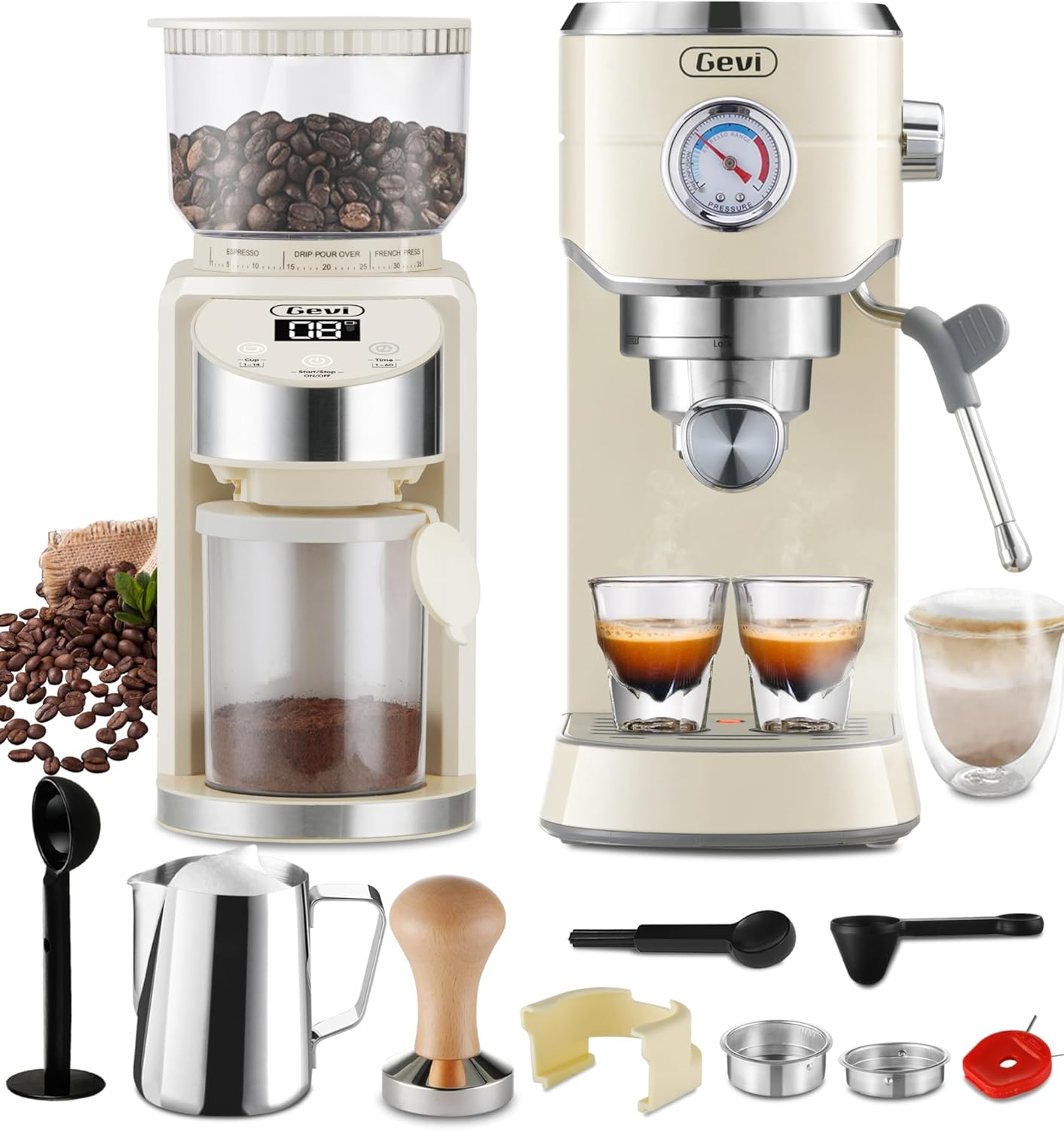
So, yeah, I got the Gevi espresso machine and coffee grinder for $203USD, it came with a pressurized portafilter and two cup sizes, a very nice solid metal tamper with a wooden handle, the grinder comes with a conical burr and portafilter holder, the machine has a small water tank and a steam wand for milk frothing. It’s an awesome value for a complete beginner’s setup! Did I mention it came with two double-wall insulated glass cups?

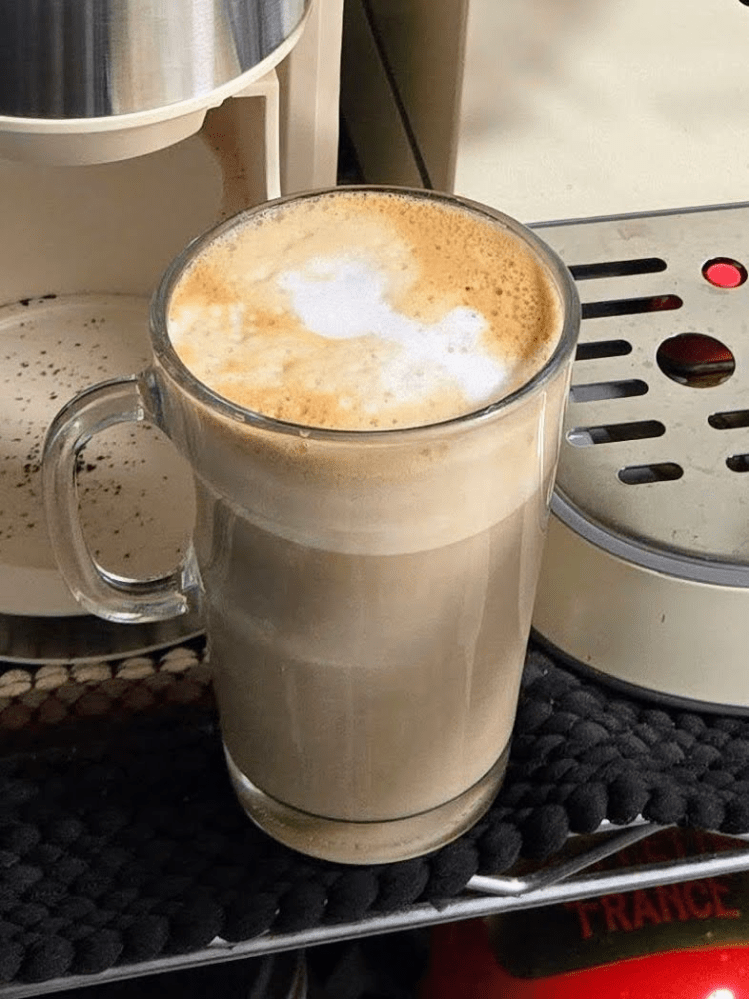
After a couple of weeks, I’ve found out that I enjoy the coffee making process, I look forward to drink coffee just because of it, and I know I’m getting a very similar experience to a fancy coffee shop! A small investment for hopefully years of good coffee experience return. If it breaks and I can’t fix it, I’ll look into used fancy machines. I still suck at latte art, so don’t ask about it, it will take lots of time, my progress is not progressing :p

That Keurig Duo is very nice and a good middle-ground (get it? ground?) between pods and actual ground coffee, which also made the Nespresso Breville doubly redundant. Wife likes Keurig so I think that with this setup we got all coffee enjoying and sharing scenarios covered.
Oh, what is a WDT tool? It sounds fancy but it’s a handle with long needles that help distribute the coffee grounds evenly in the coffee basket (portafilter) for better extraction, it stands for Weiss Distribution Technique in reference to its creator. How deep does the rabbit hole go?
Wanted to reaffirm just in case this was not obvious, in this day and age, nothing surprises me. In a world where social media, false news, and realistic AI creations are everywhere, it’s worth to put a bit more effort to digest the information you receive.
Sorry, didn’t feel too creative for an April Fool’s joke; after writing the previous post I realized what day it was, so there you go.
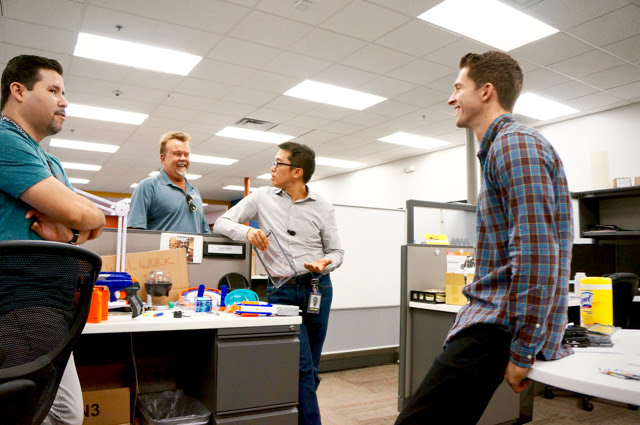
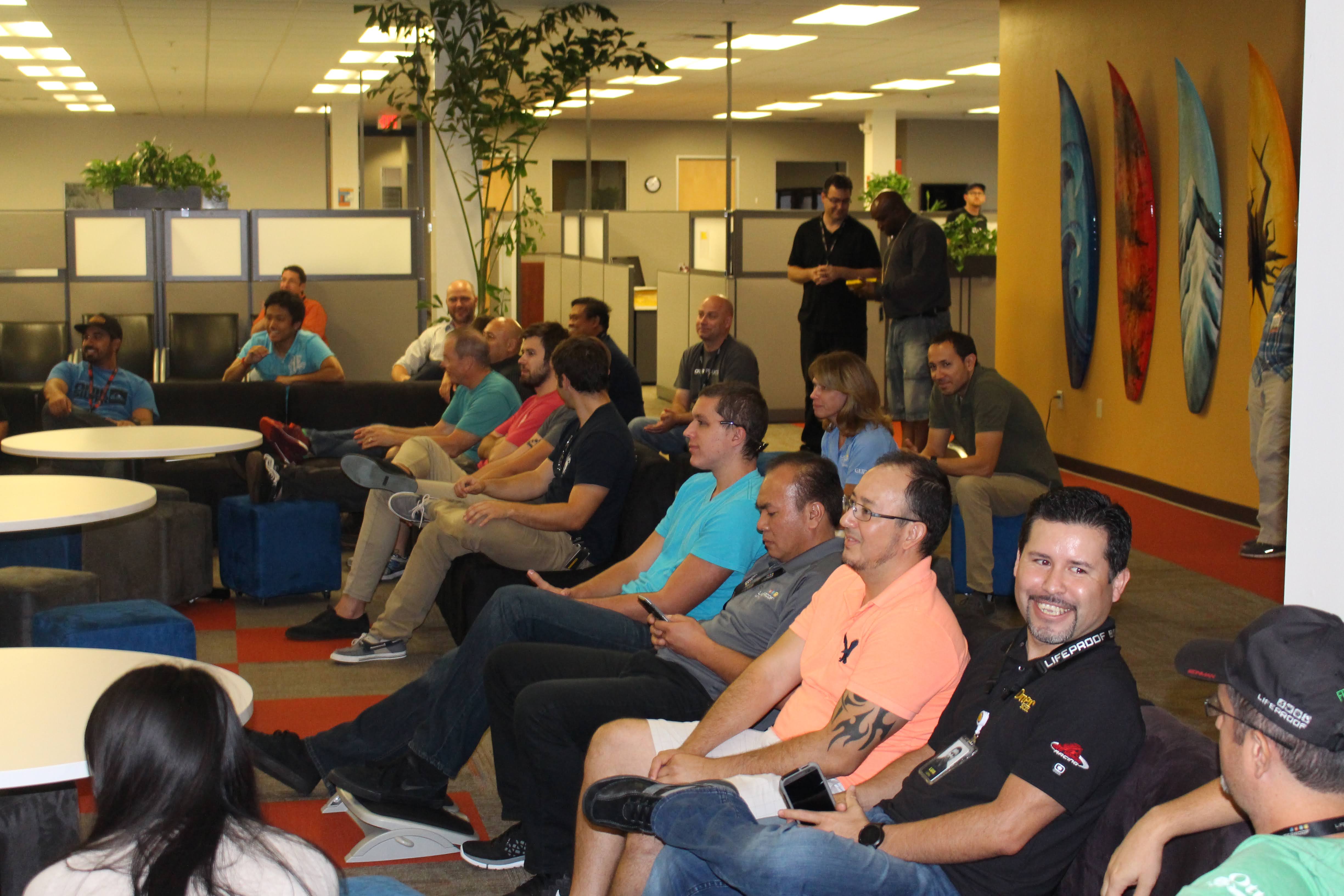
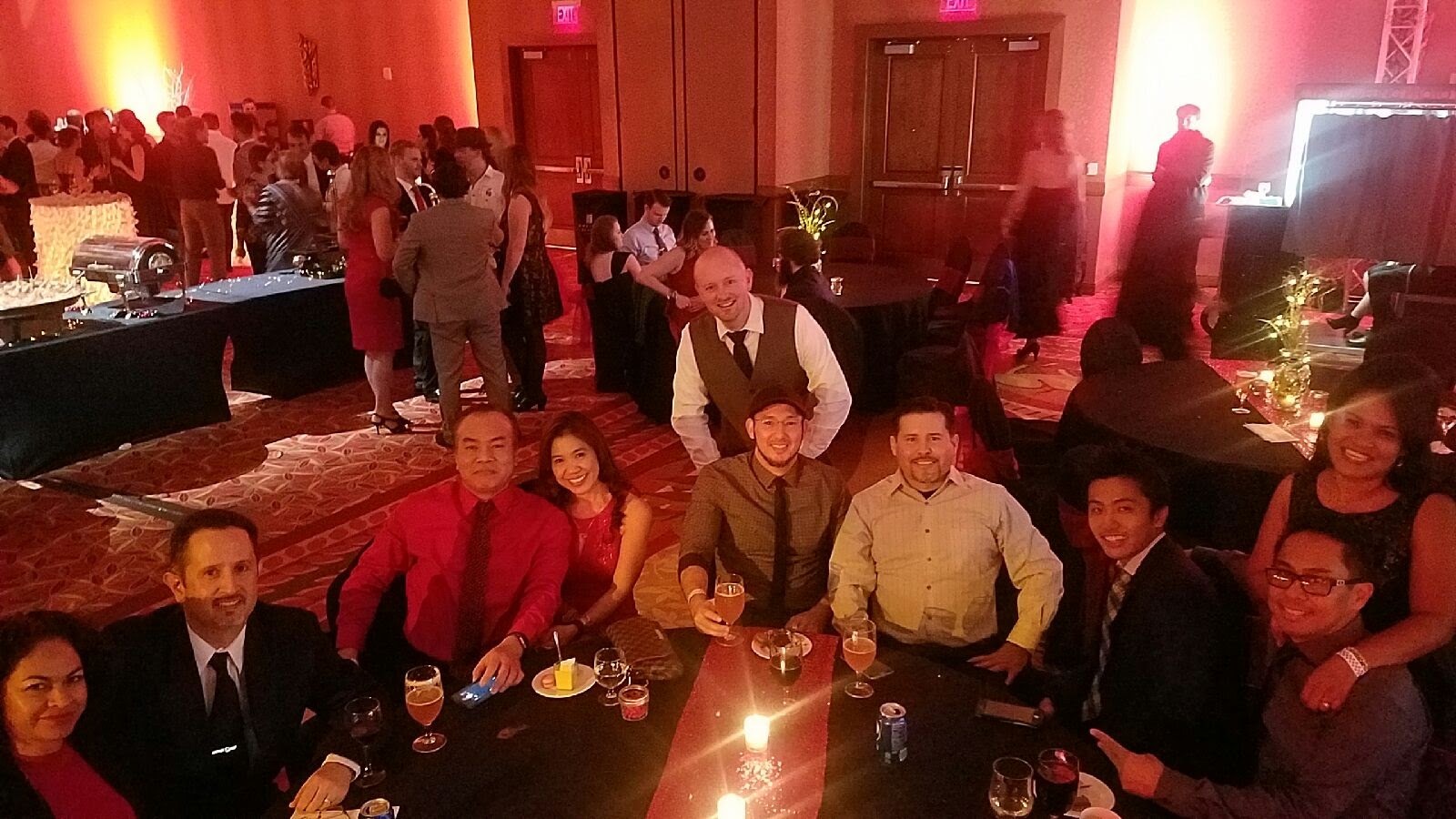
Eleven and a half years as a Sr CAD Designer at my previous company, year after year 3D modeling to fit the new device features into the existing case architecture while incorporating improvements to both the design and CAD infrastructure… the most rewarding thing was being part of the amazing team in charge of developing the most challenging solutions that involved waterproofing, hazardous environments and commercial solutions. My amazing coworkers and managers were always supportive and cheerful even after all this time.
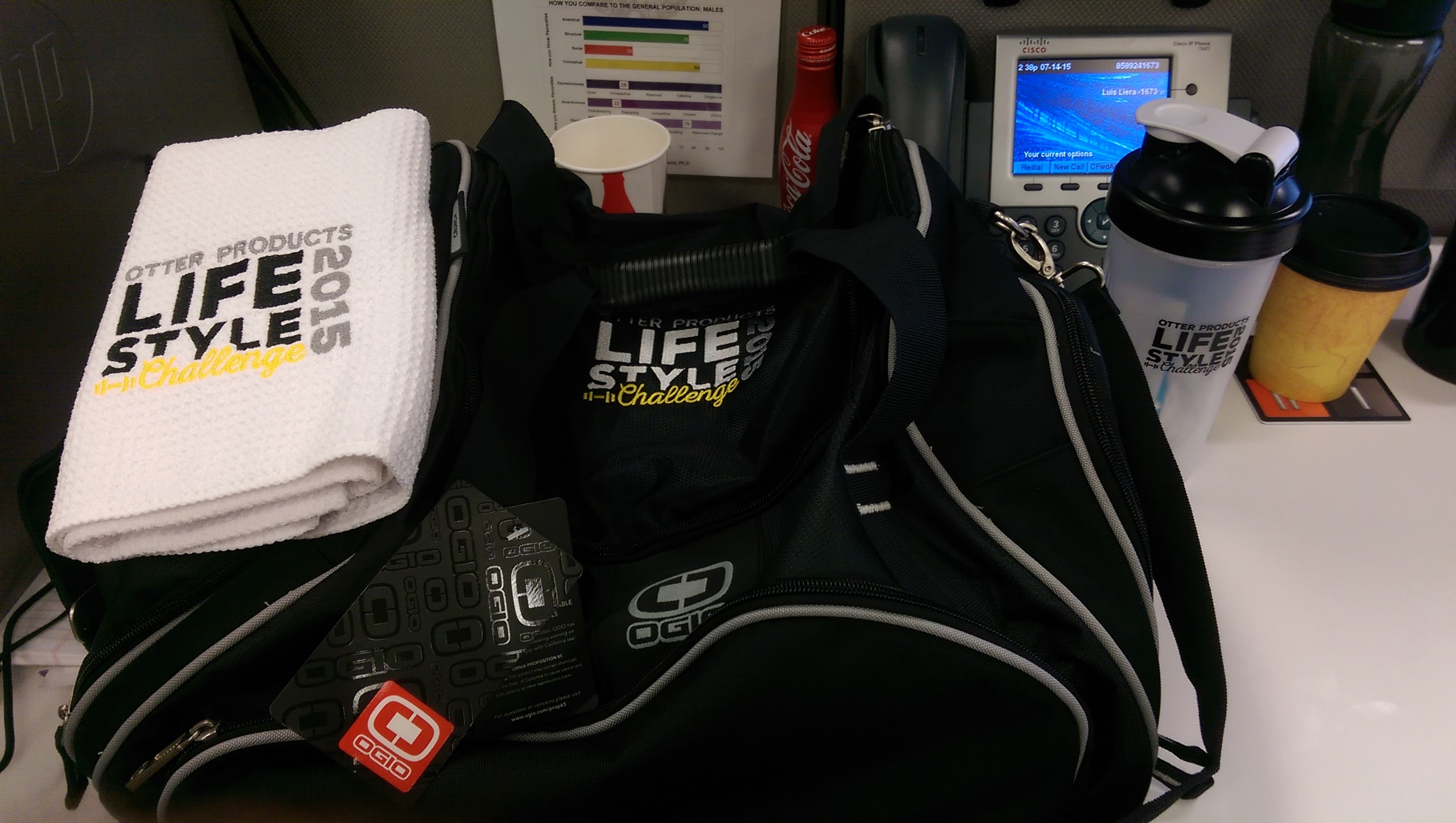
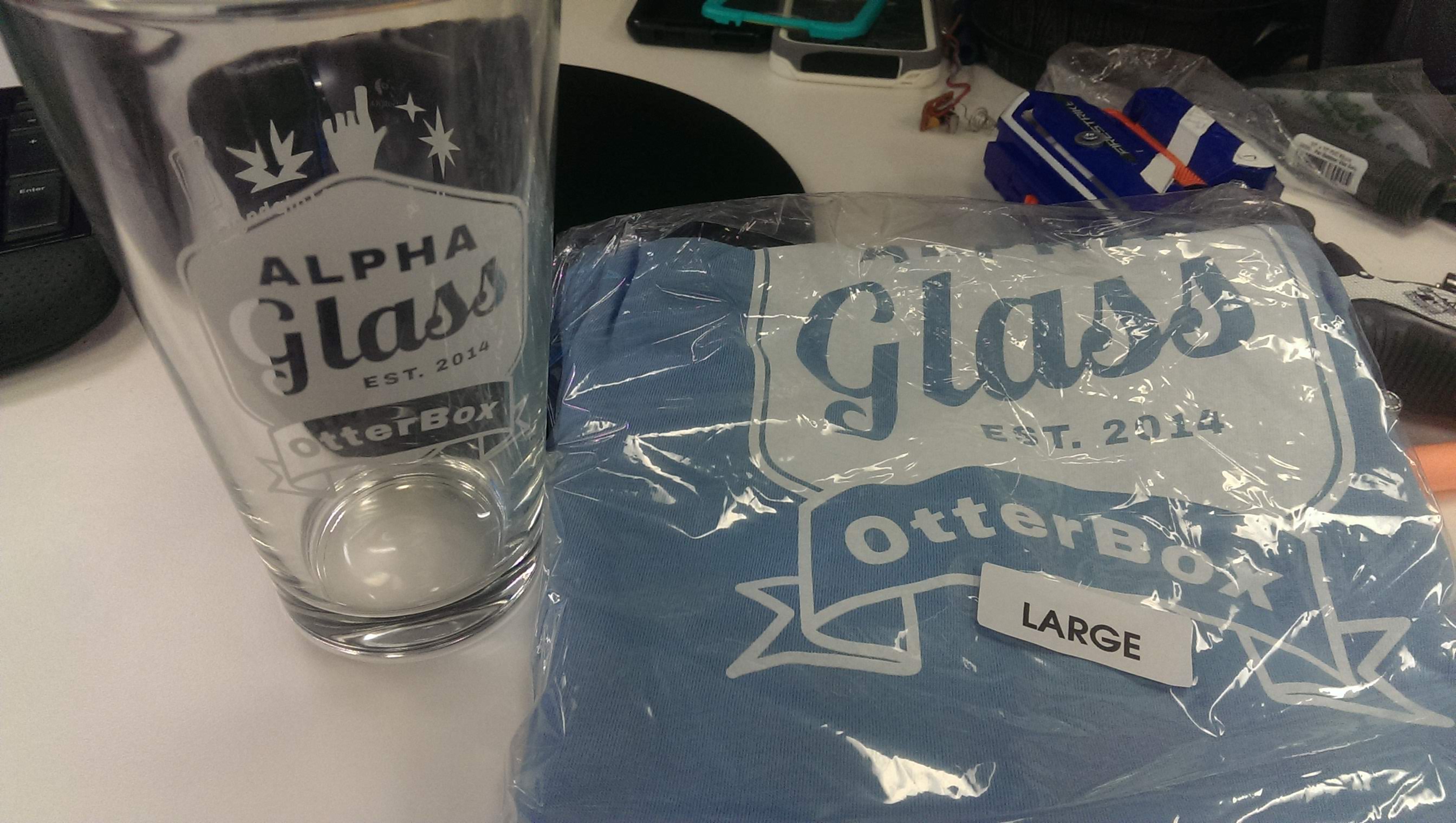
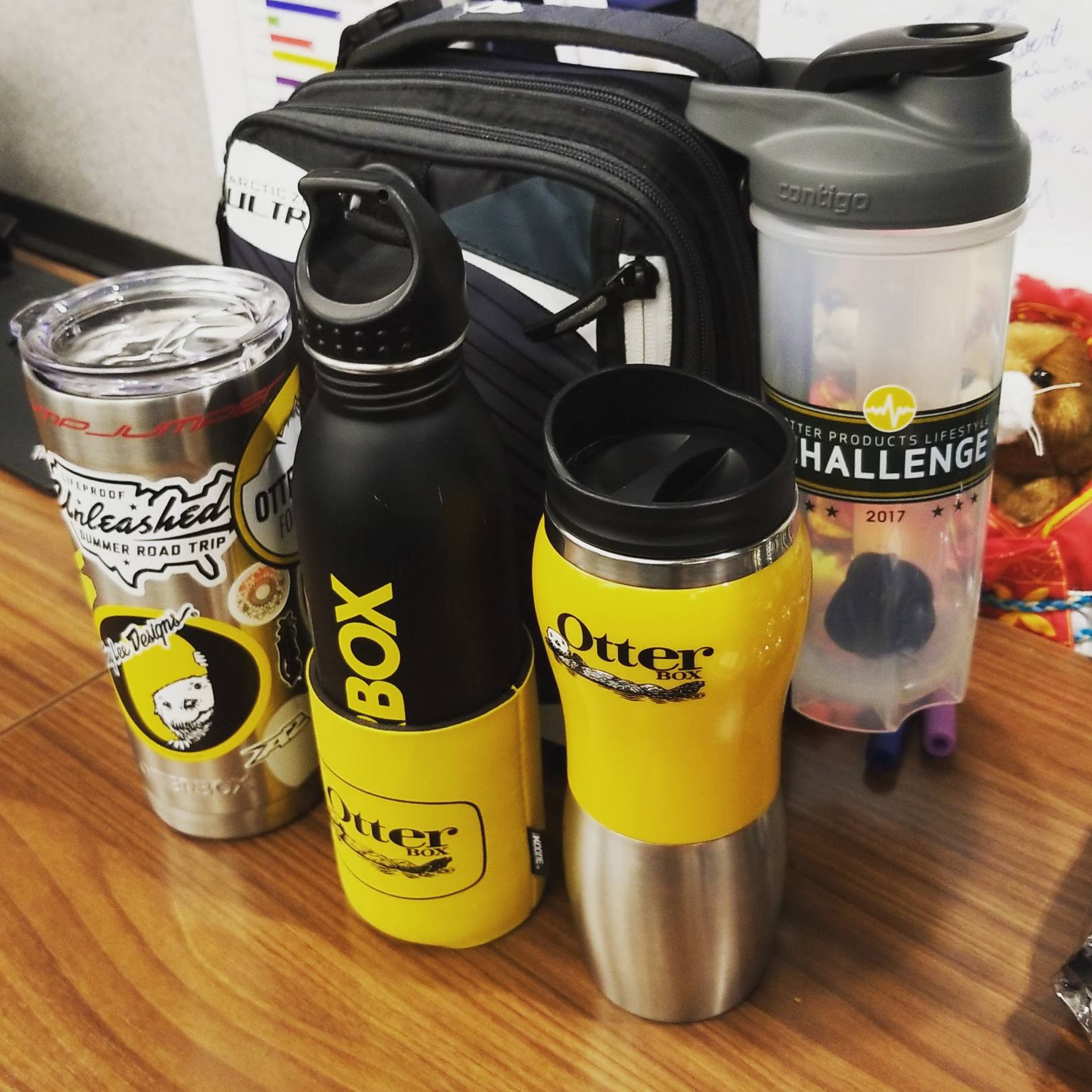
Very cool, but 11 years of the same was starting to get old, still a “CAD Designer” with no career progression and capped salary. My duties, responsibilities and achievements greatly surpassed the expectations of a “Senior CAD Designer” but discussions about salary and title always came down to the company wants for the position and “middle market value” of it. Yeah, after all my contributions, I was worth middle market value to them, salary cap on a middle market value is still middle market value! Company “restructuring” almost on a yearly basis was keeping us on the edge, the company was doing good but the constant push to reduce expenses meant that everything that made working for the company great, was being reduced or eliminated year after year, events, celebrations, custom merchandise, the “buckets”, little things like biweekly office bagels, etc. A lot of time and resources invested in “CAD templates” where it was pointed out several times that they were not feasible because they became obsolete the moment the current project was finished, with no maintenance plan that addressed expected device changes and incorporating manufacturing improvements. But the part where mayor company-changing contributions are attributed to others is the hardest.
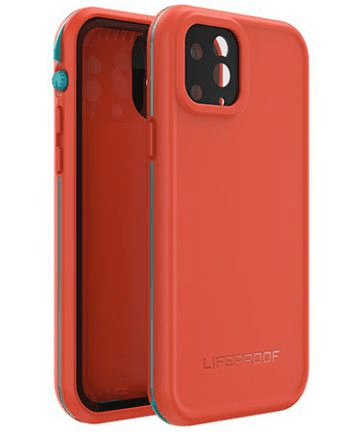
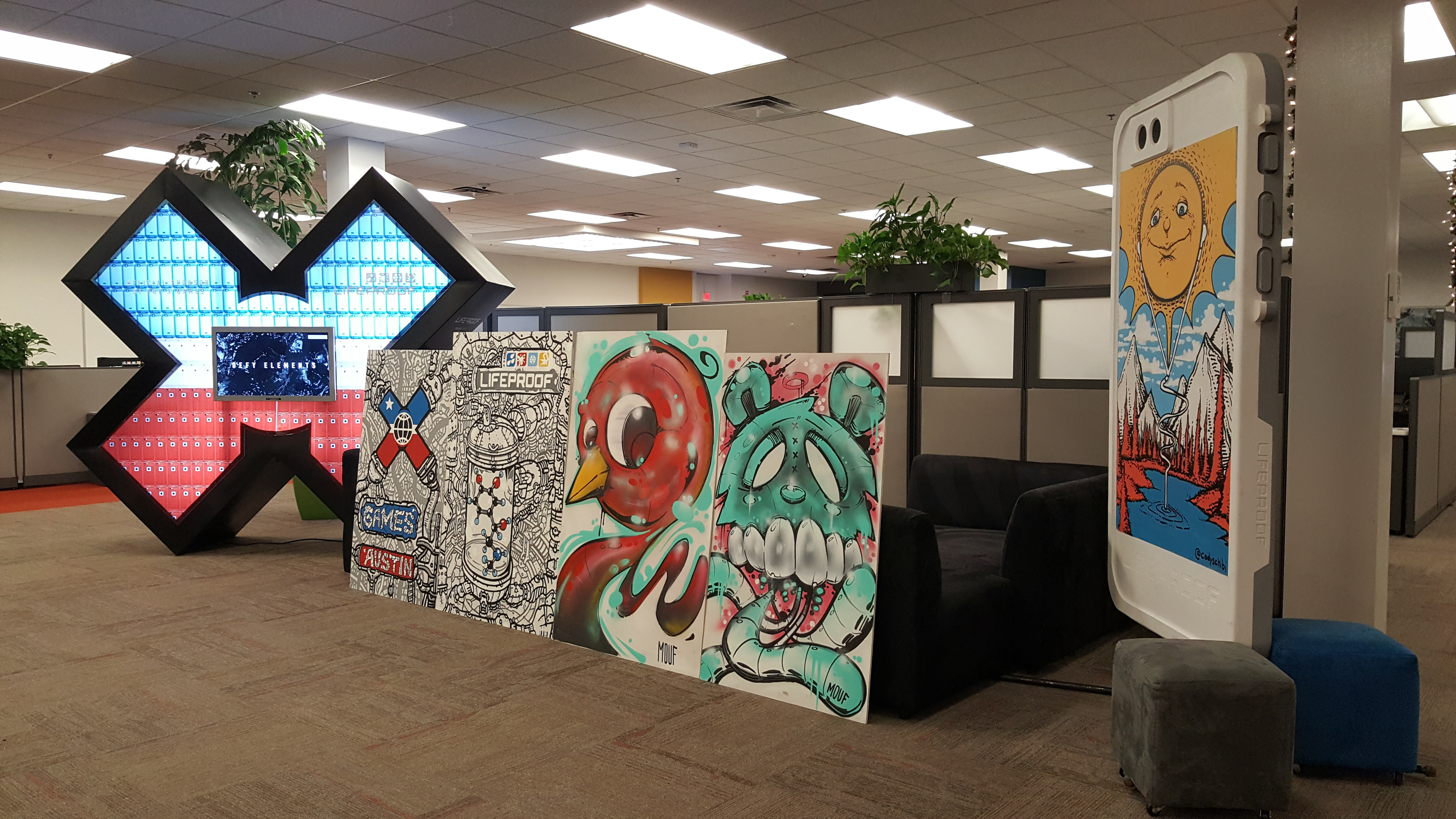
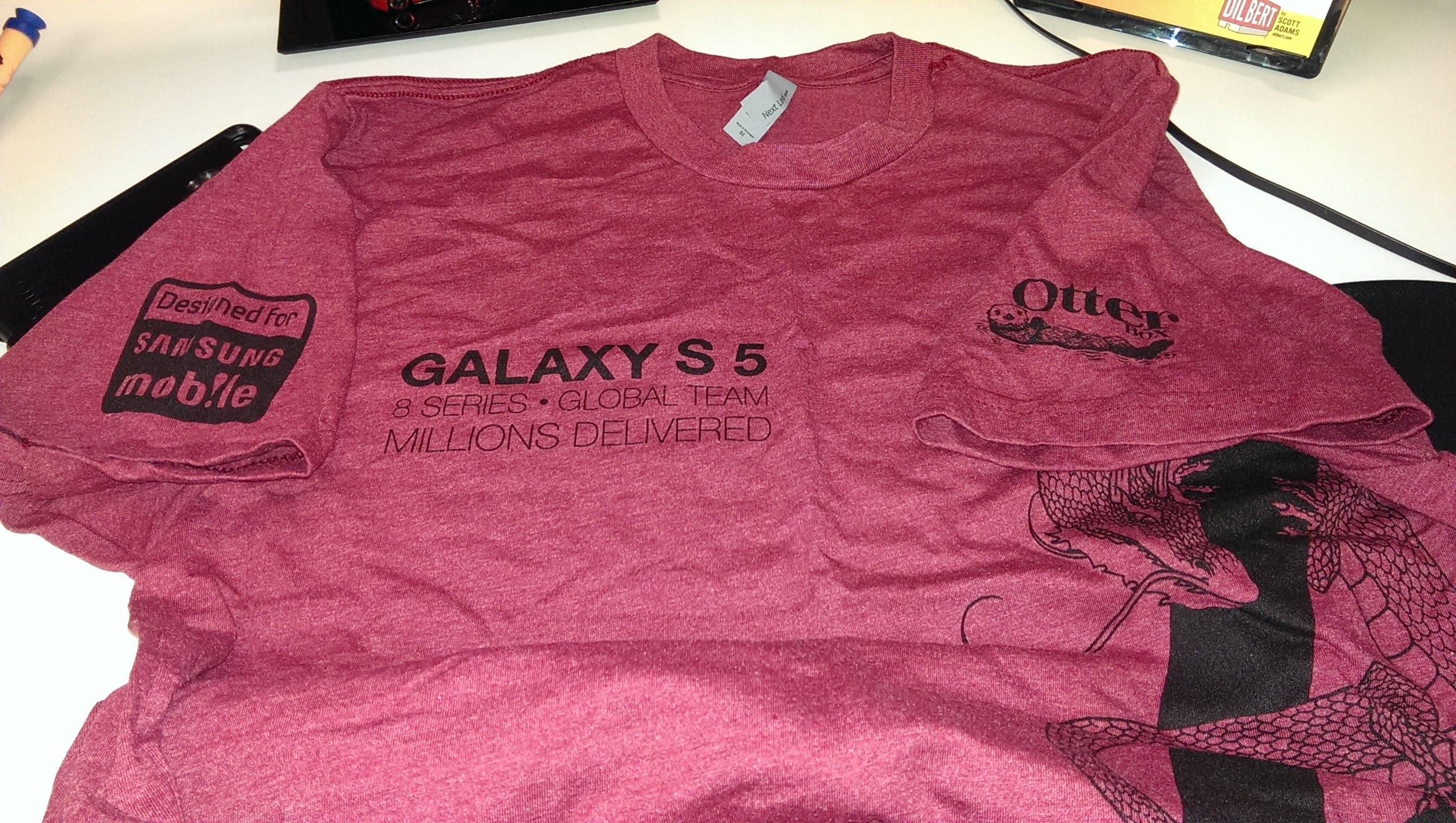
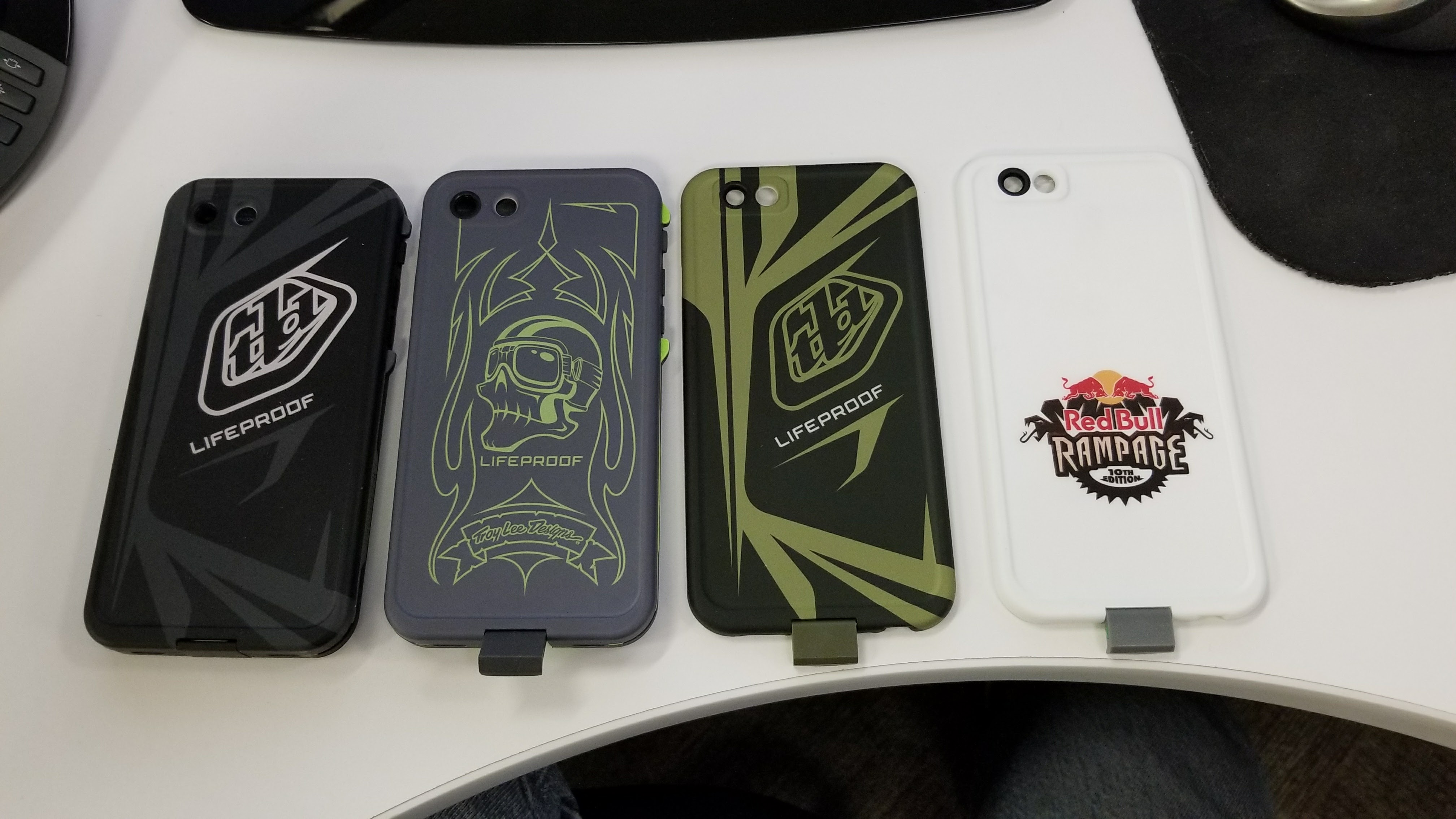
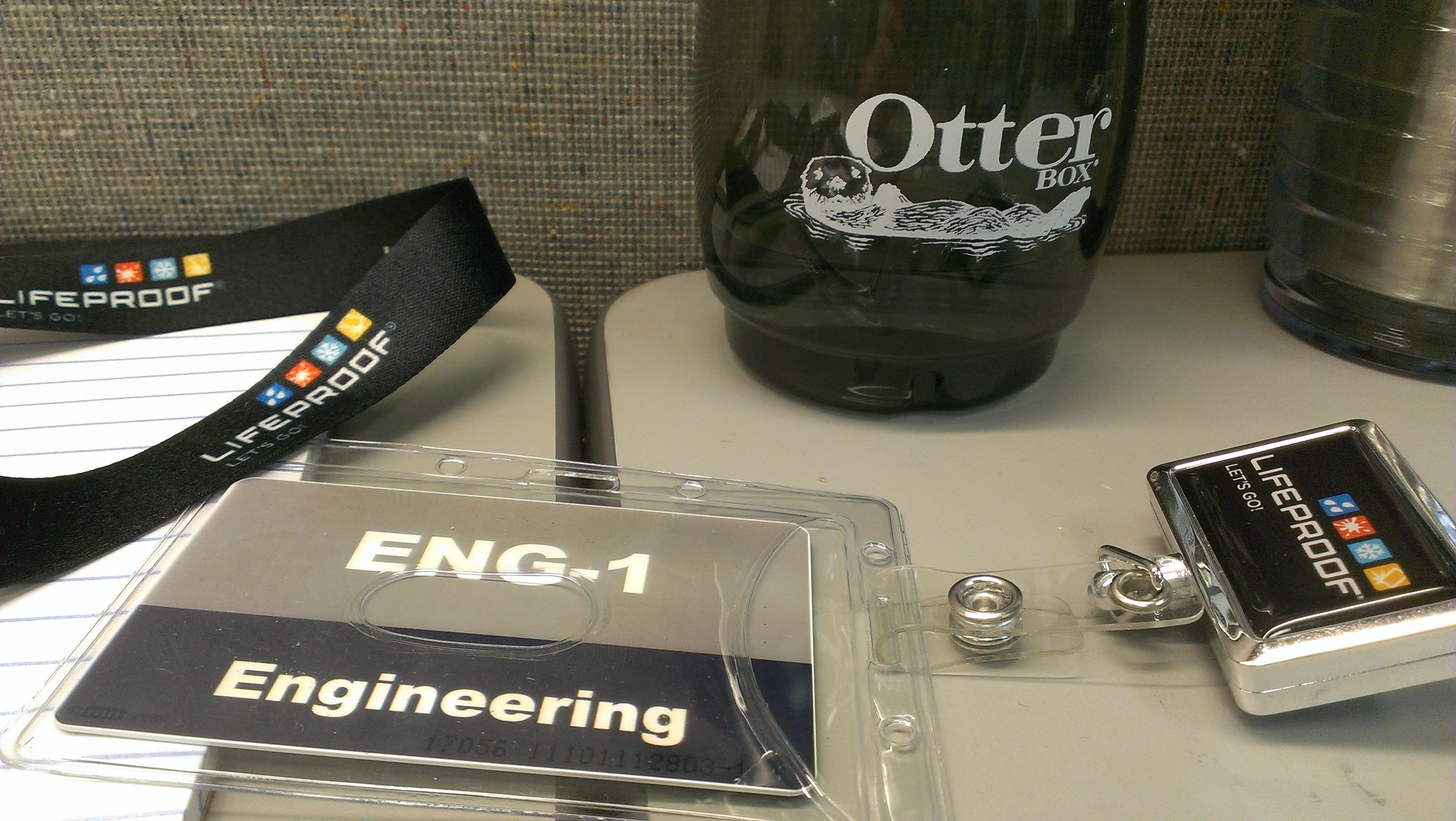
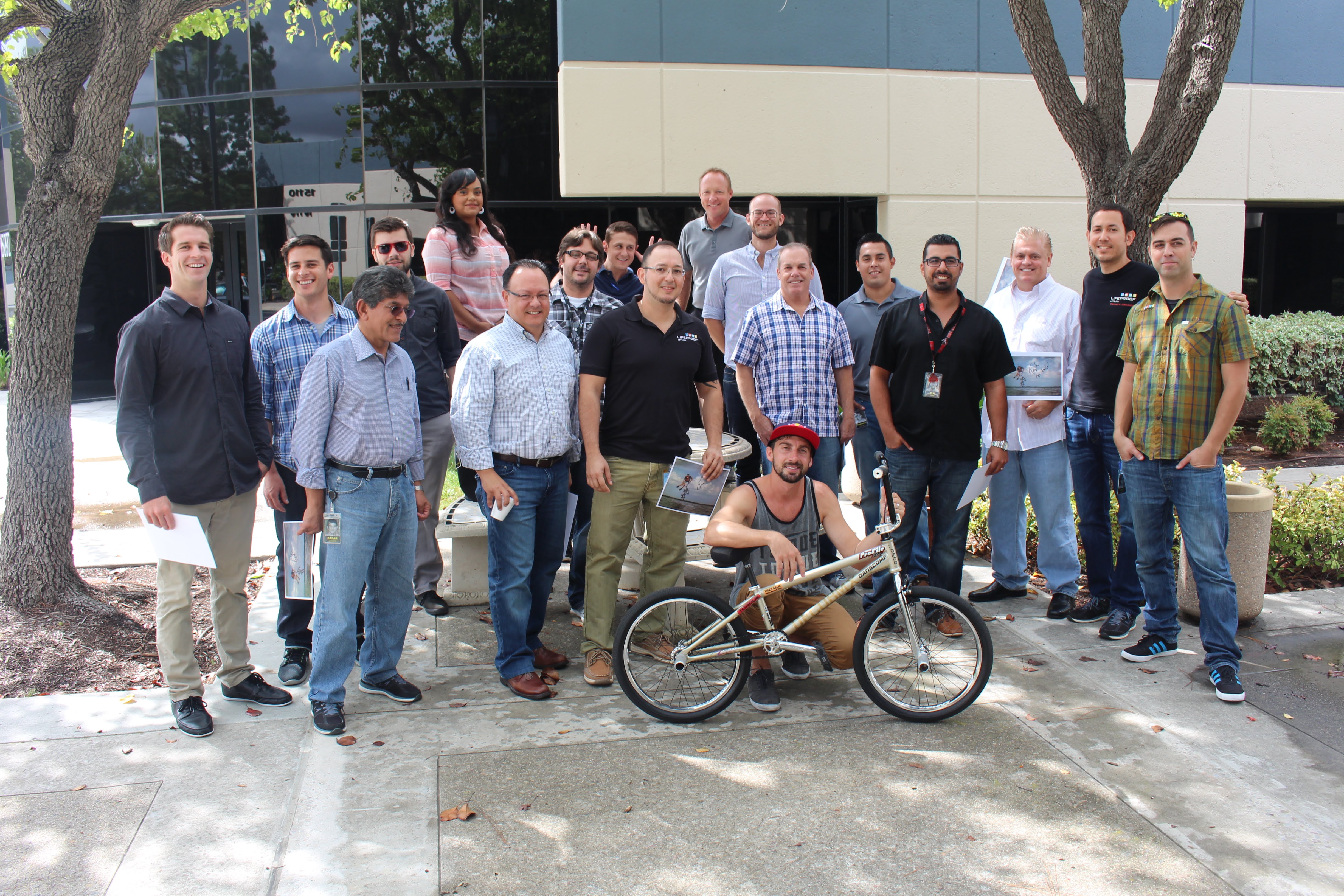
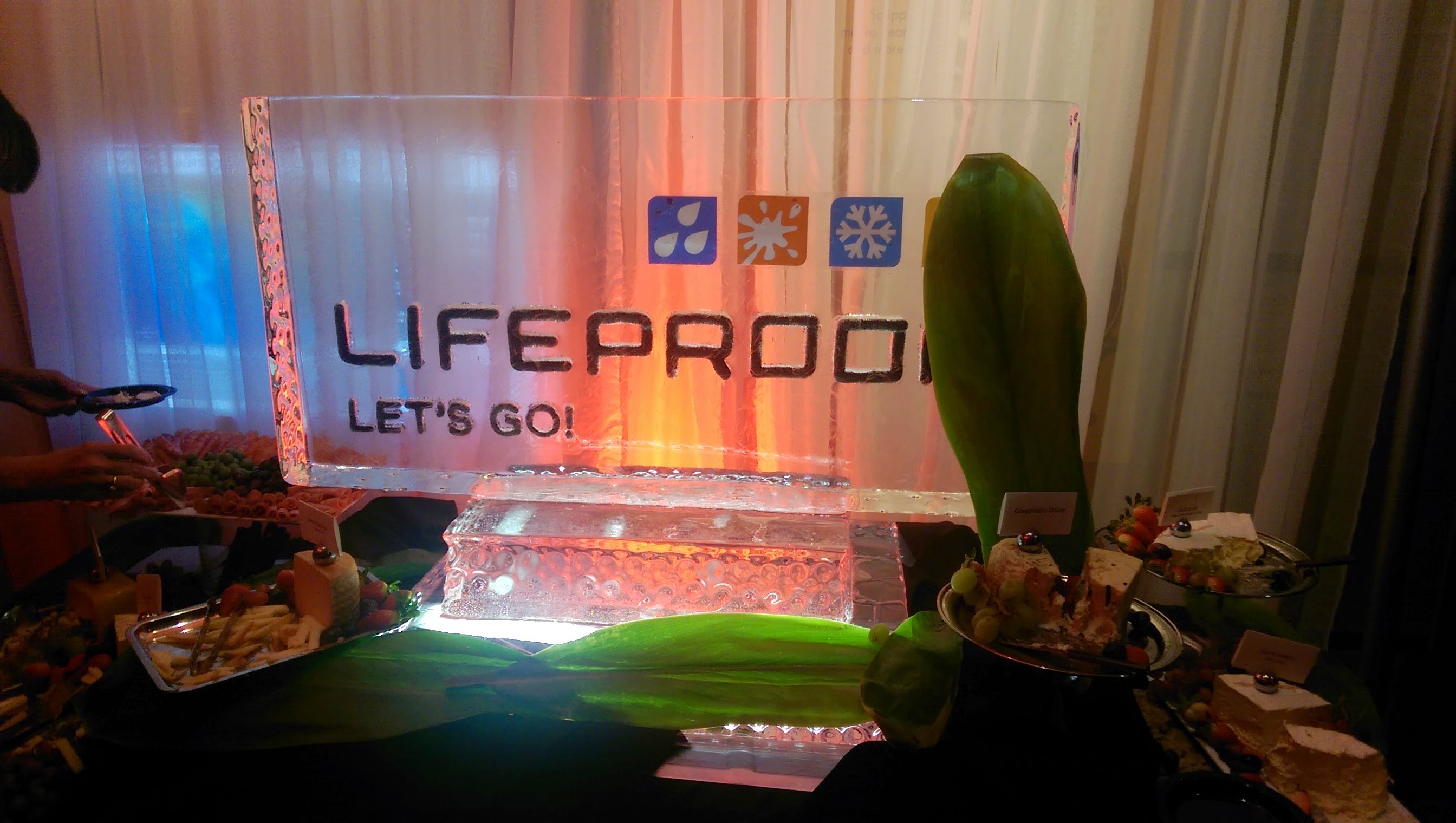
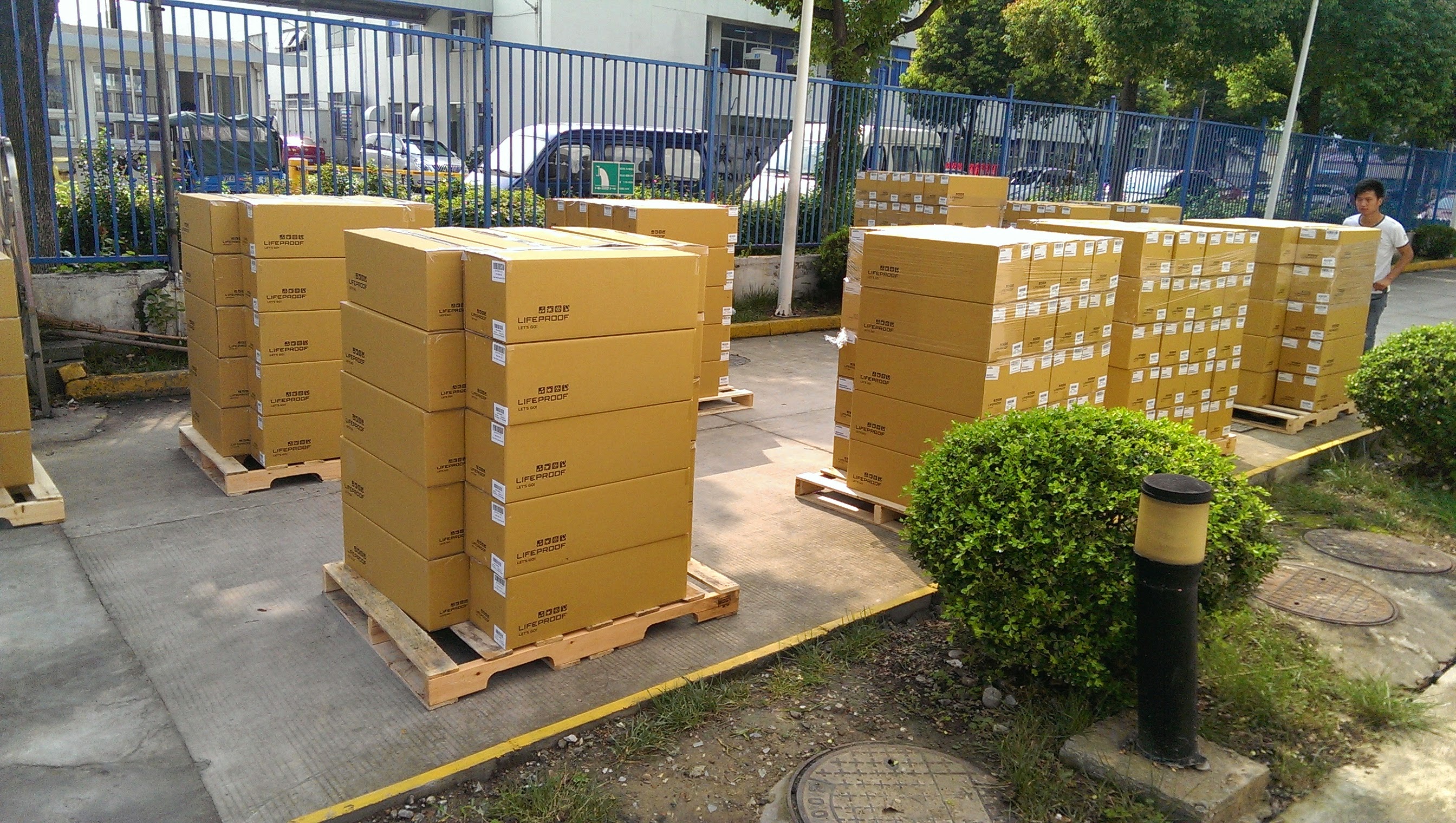
Well, everything started with LifeProof, the ONLY true waterproof phone case that allowed all device features to be fully functional, no compromises, a brand that was everywhere from the local San Diego surfing events to humongous X-Games and RedBull Rampage sponsorships, then being acquired by a brand that had more than half of the market for device protection, it was hard not to feel some pride to see the products you personally modeled in all the phone carrier stores, Walmart, Target, Best Buy, etc.
Also, company benefits were top tier, being a CAD Designer meant that I could fulfill my duties working from home which happened for 4 years, I was very comfortable and became very complacent.
At last, but not least, my coworkers and managers, after all this time you get to know them, and they get to know you so well that asking for time flexibility on both ends is no issue as both trust that each will manage their expectations. That is something that you can only build with time.
Not to confuse with a Mechanical Engineer, a designer will quickly bring the vision into a realistic and manufacturable virtual representation utilizing their hand sketching/CAD expertise and their manufacturing backgrounds, often working in conjunction with an Engineer or within a team leveraging and complementing each other’s strengths to bring a solution to life.
I’ve started a Sr Mechanical Designer position at a product design and engineering firm, small enough that feels like a startup but backed by over 10 years of experience working with big and small brands, local and international, developing new and or improved solutions over several markets.
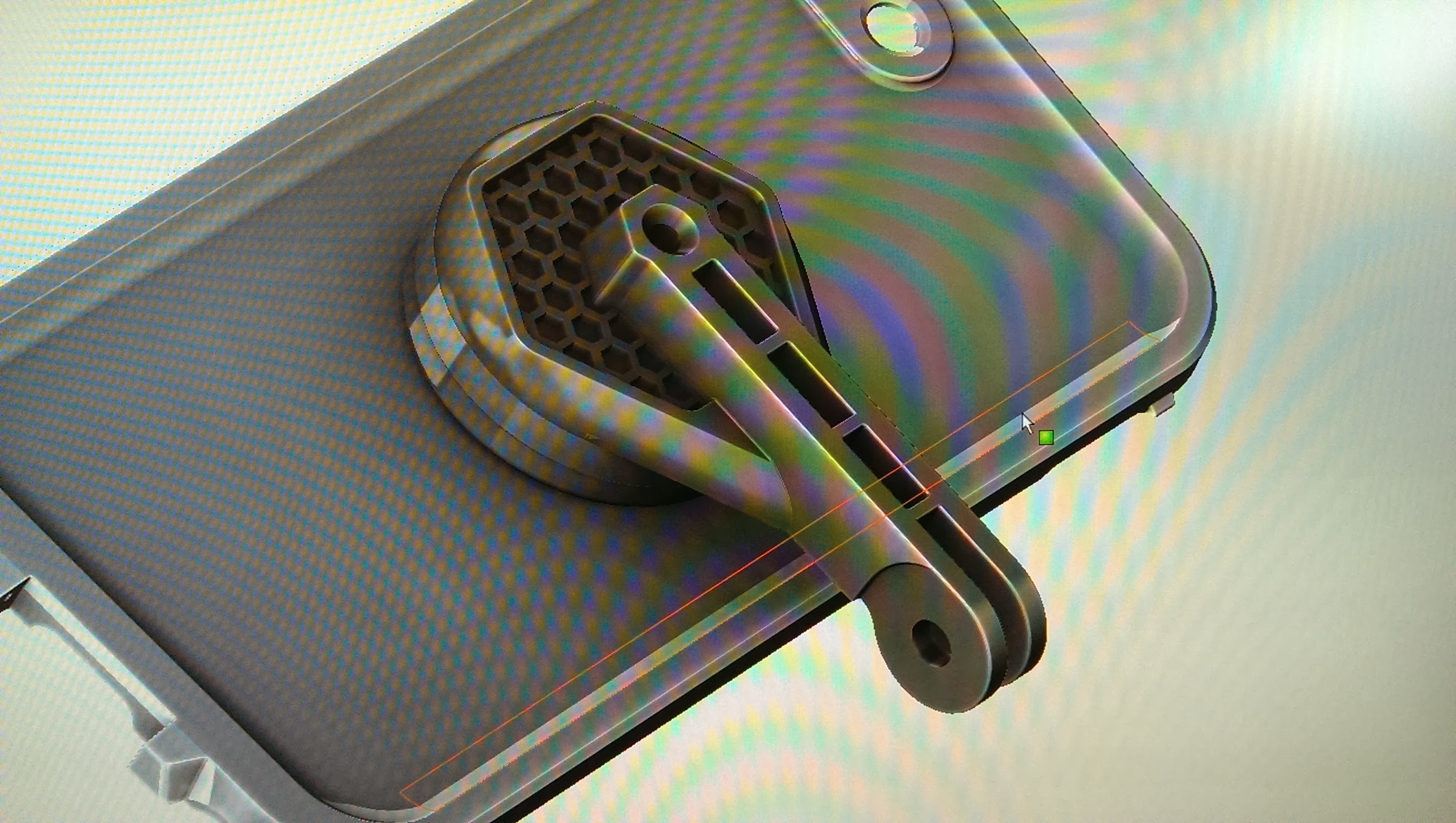
Now I’m creating diverse solutions, my vast CAD experience lets me quickly whip up efficient preliminary designs while incorporating my immense plastic injection molding experience, recalling my extensive sheet metal experience, utilizing my growing additive manufacturing experience and then standing up from my desk and creating physical representations of the screen concepts via the different manufacturing capabilities including SLA and FDM 3D printing and assembling, yes, I’m finally utilizing my nice hoarded tools to their potential.
It feels nice to have a proper reason to stand up from the desk/screen (besides health), grab your tools, pick up the manufactured/delivered parts, build and test/inspect/review looking forward to having fulfilled the client’s requests.
I can now properly call myself a Mechanical Designer. Señor Mechanical Designer.
That’s it, thank you 😀

Listing: https://www.printables.com/model/1144913-keyboard-megashelf-sliding-keyboard-and-peripheral
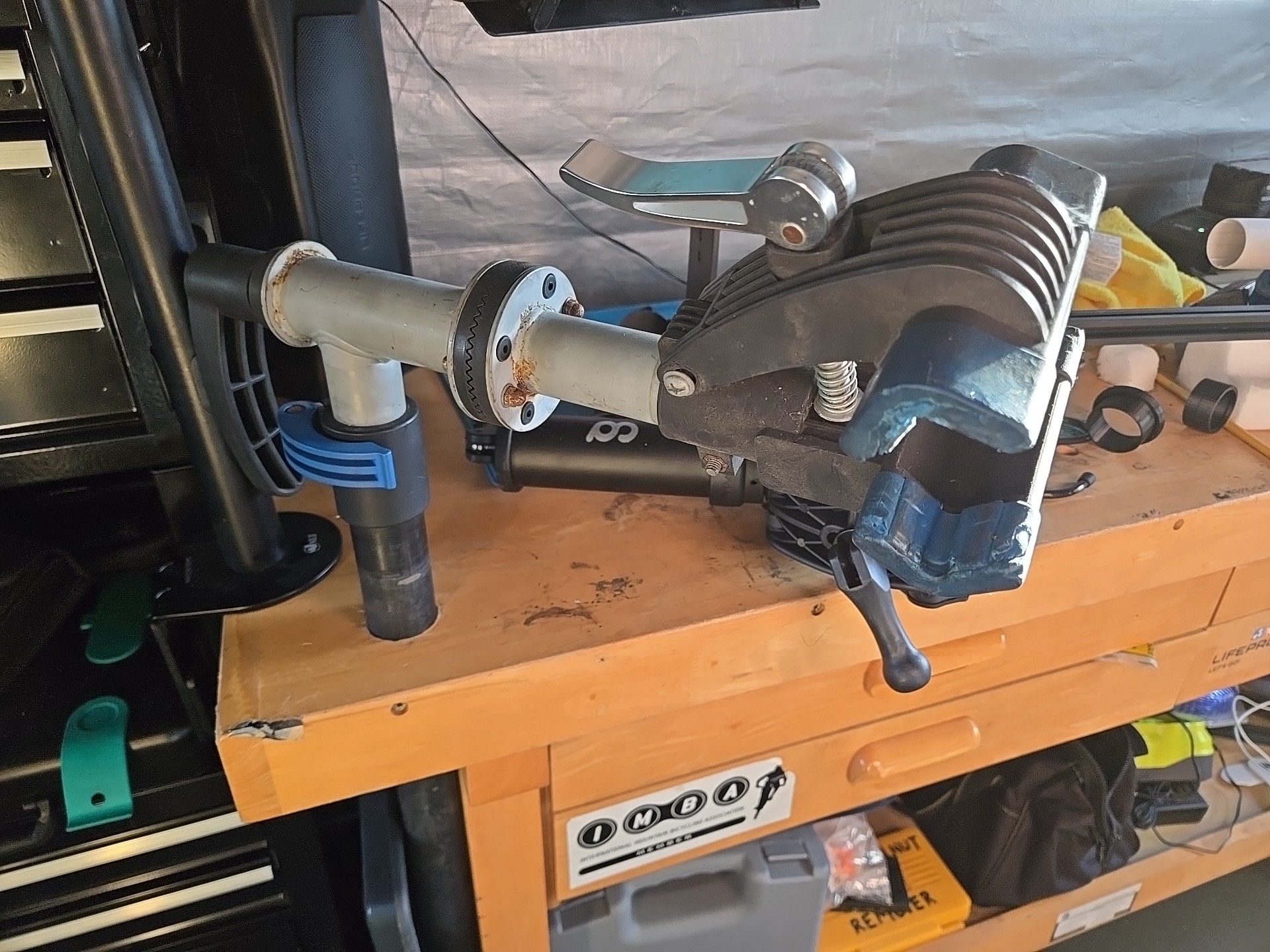
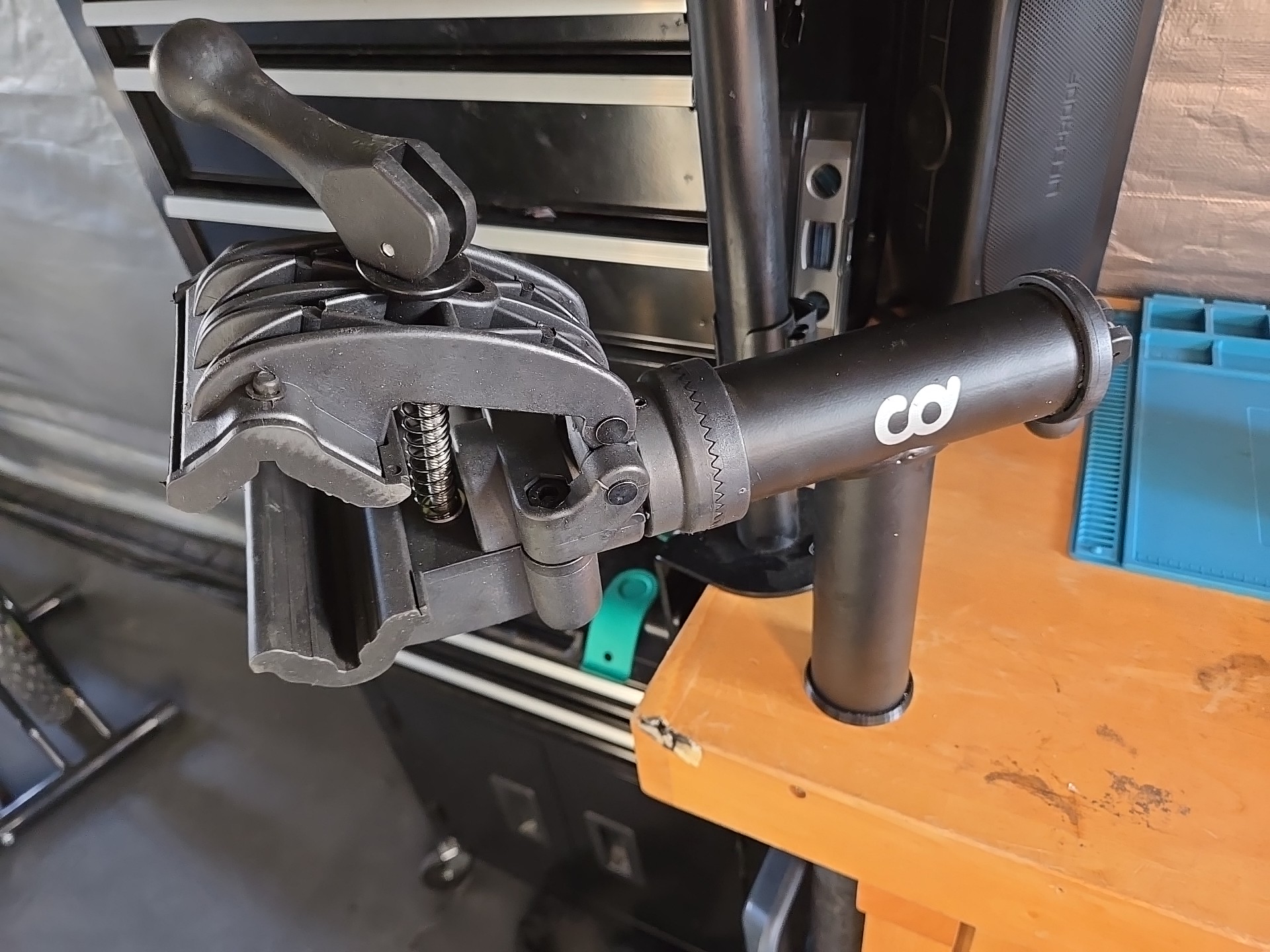
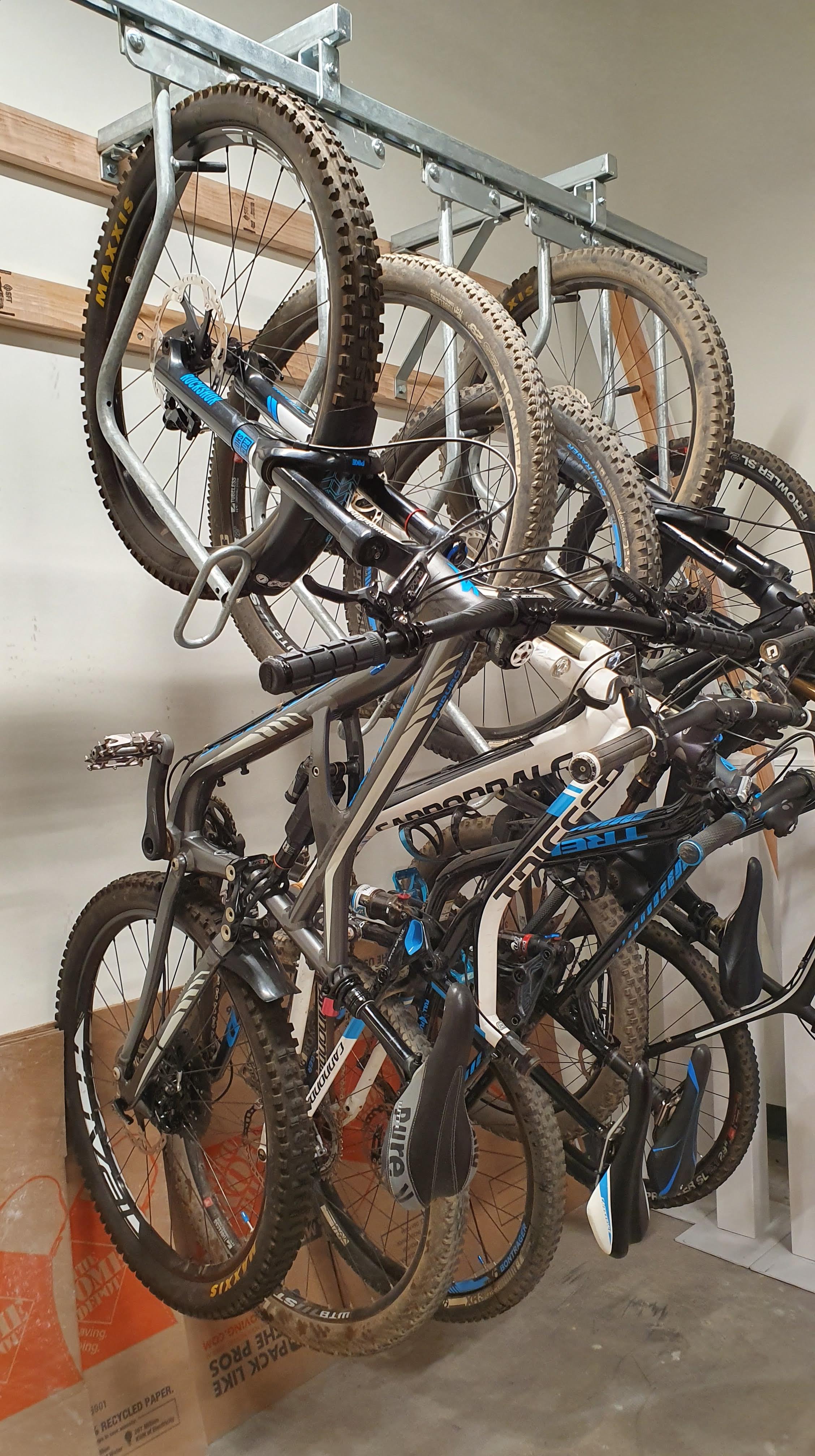
This is a simple one but solved elegantly and quickly because of CAD and 3D printing, I have an old bike repair stand that was falling apart, still working but overall wobbly and unreliable. I’ve been thinking about restoring it, but I got my hands on a much nicer and reliable one.


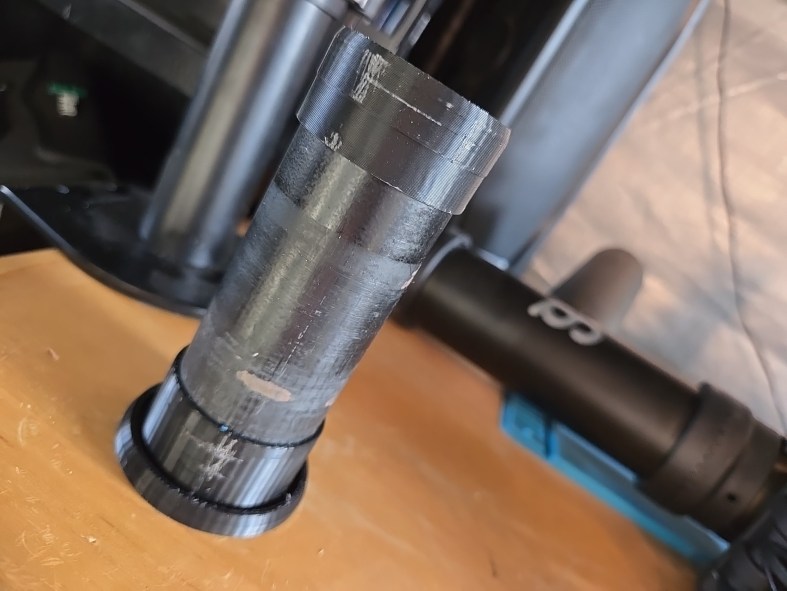
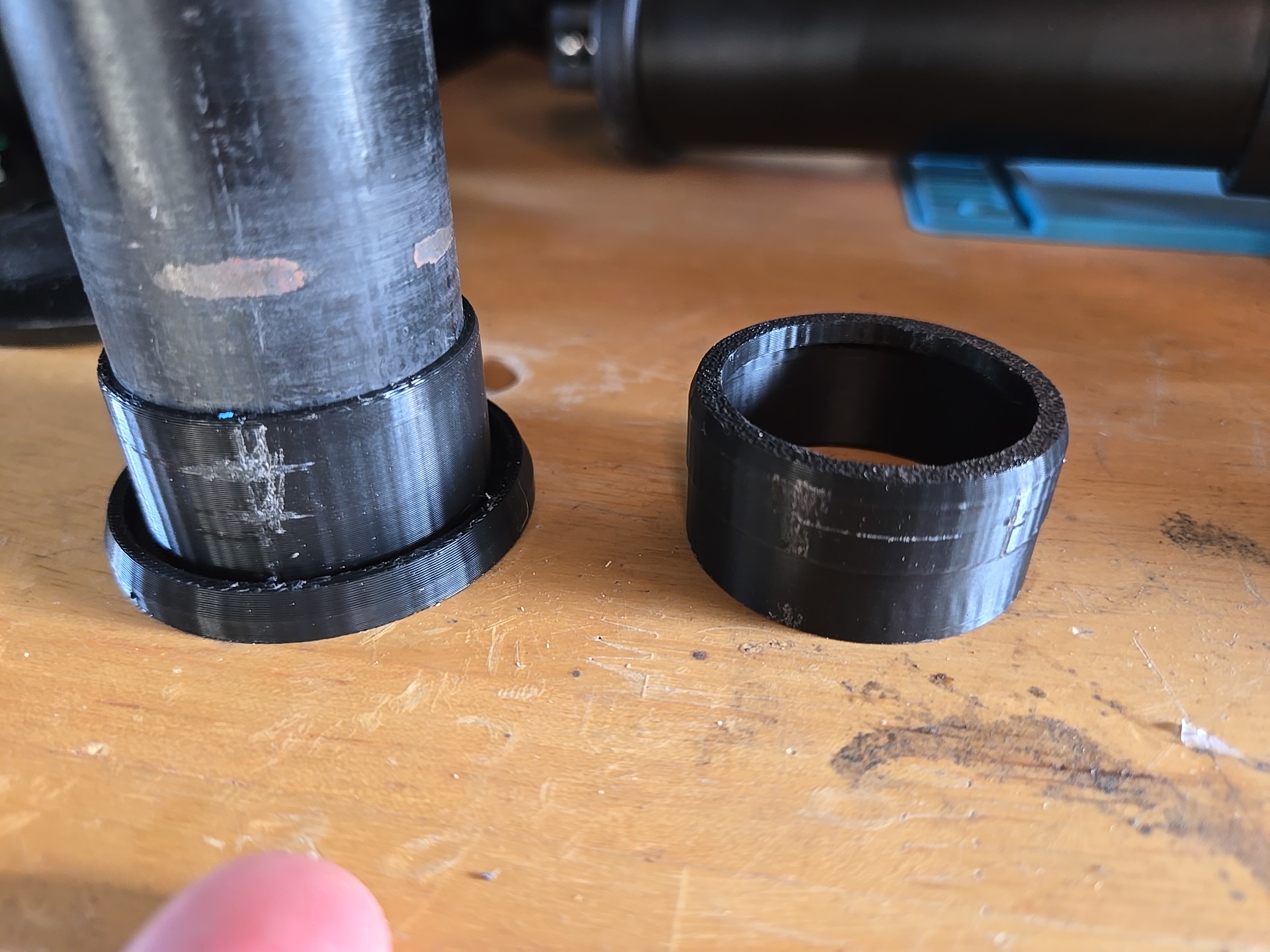
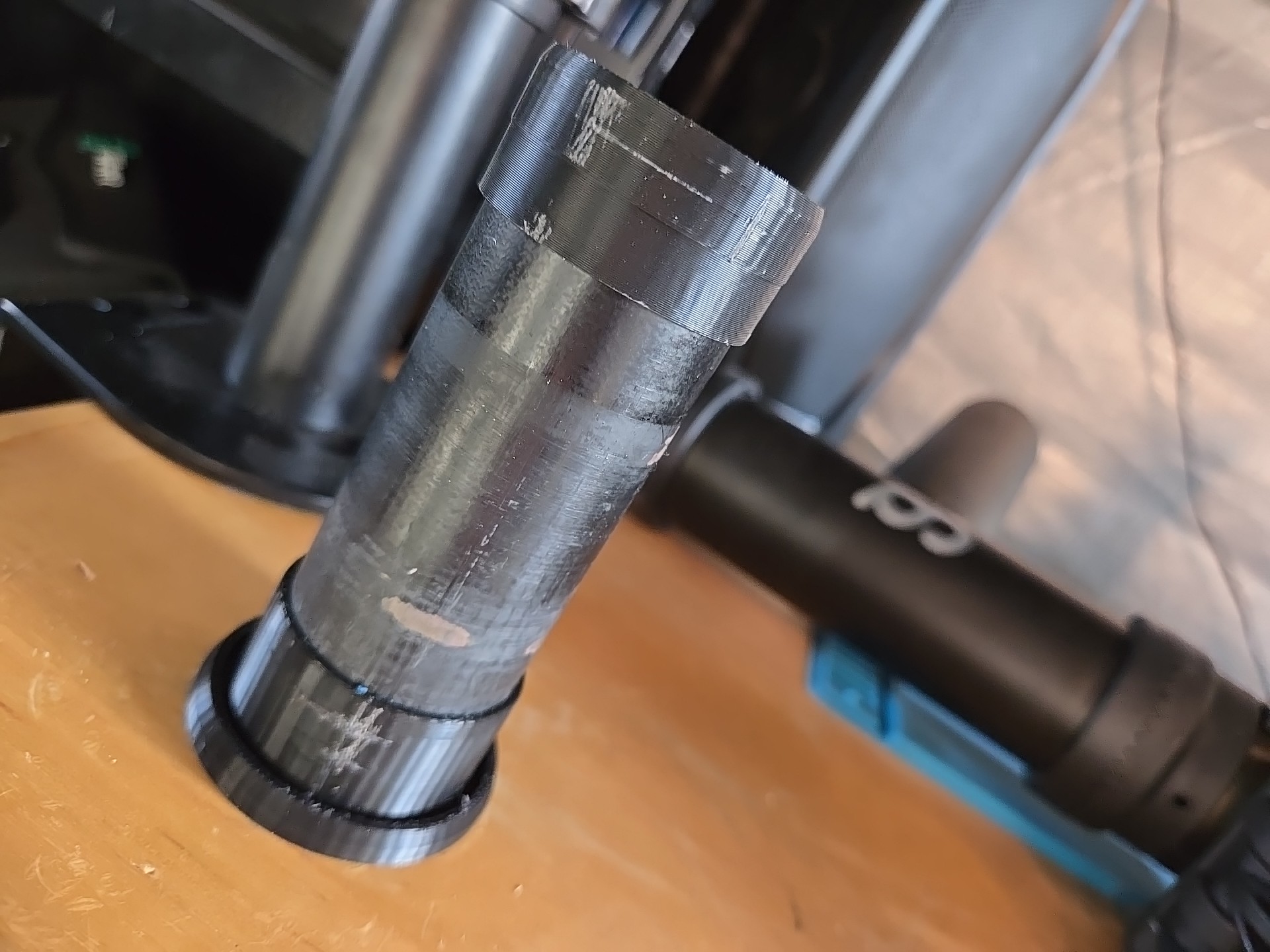
The old one was mounted by getting its main tube through the top and hose clamps to the leg. The new one had a huge bracket that could either be screwed to the wall or to a countertop. I already had a big tube firmly attached to the bench so I wanted to reuse that. Well, the new stand’s tube is bigger than the old one’s so I needed to add a spacer to it and there’s a million ways to do that. I have CAD and a 3D printer so I took that route.
I was going to write something simple and short; this is just a solution to fit one tube over a smaller one but here I am, starting SolidWorks and a design walkthrough. I can’t stop now, sorry.
The fixed tubing protruded about 5 inches from the benchtop, but the spacer didn’t have to go the whole way through, I didn’t want both to bind and also it was an unneeded waste of material and time, so I thought of making it in two parts, a base and a cap.
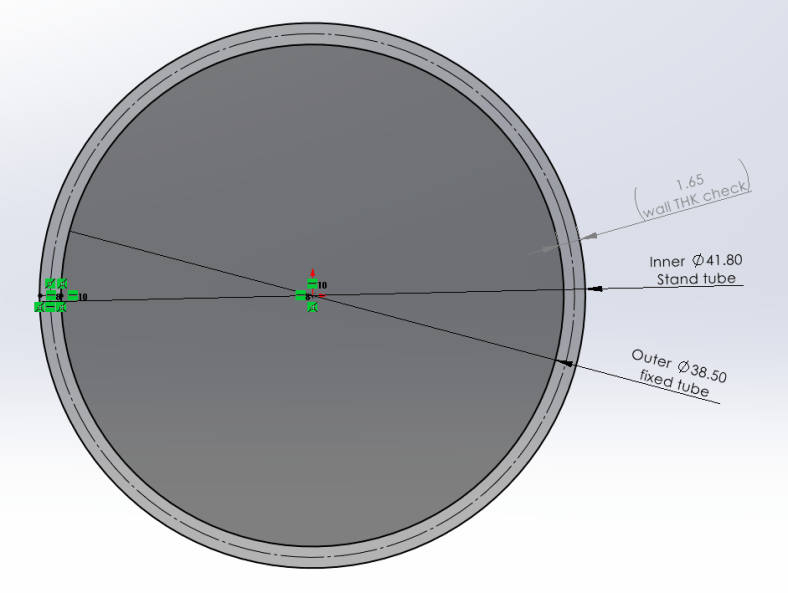
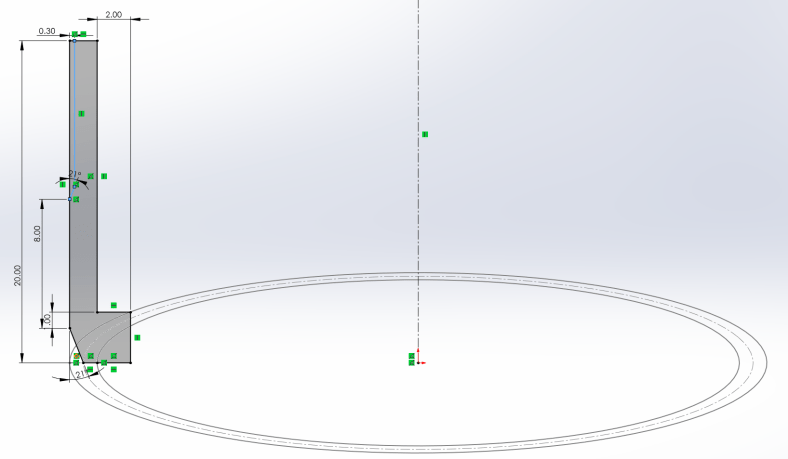
I usually start by sketching and sometimes modeling the reference material, in this case it would be the fixed tube and the new stand tubing but it was supposed to be something quick so I sketched the outer diameter + clearance of the fixed tube and the inner diameter plus clearance of the new stand tubing to use as reference for the cross-section.


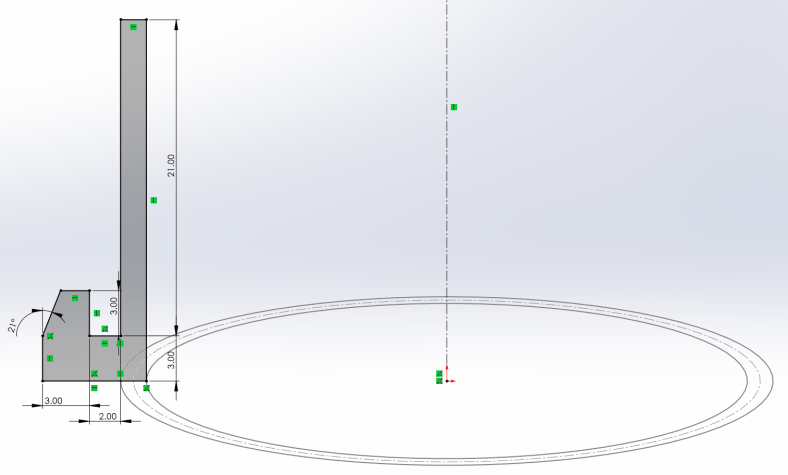
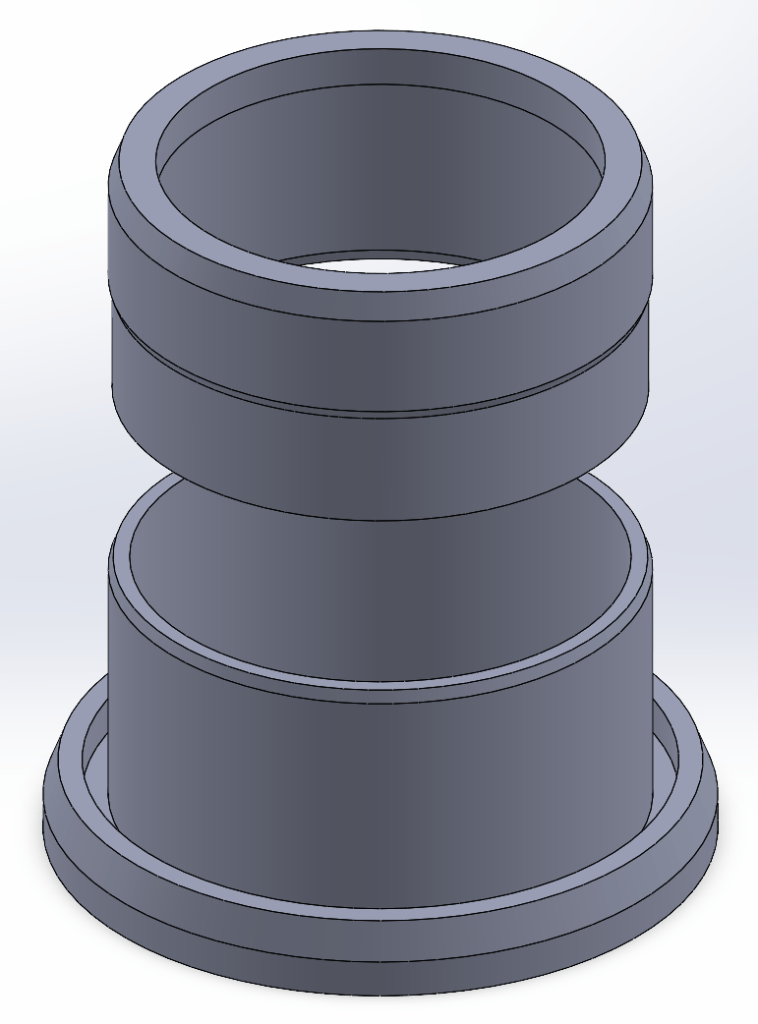
Started with the base, added a bottom flange to protect the benchtop from the stand tube as it rotates and then flanged again up to hide its edge. Revolve feature, straight-forward.

Then the cap, designed inverted for ease of 3D printing, added a flange as a stop over the fixed tube and a chamfer to facilitate the stand insertion. Again, revolved sketch.
And this is it, I reduced outside material on the cap to reduce friction from the stand. For testing, I printed small sections of each (about 6mm) to quickly test fit and kept tweaking the first sketch until I got a good press-fit for the fixed tube and a slip-fit for the new stand.


Product listing if interested:

I didn’t because it hadn’t crossed my mind, and I got the new one almost for free which is a very nice upgrade overall in usability and materials. Now that I think of it, it could be a cool future project, but then I don’t think that the 3D printed PLA/PETG parts would stand better than the original injection molded ABS.
What would I have used if I didn’t have a 3D printer? Masking tape? I don’t know, what would be your approach with your skills and equipment? Machining? Turning? Getting rid of the tube and screw the stand to the wall or bench? My bike “shop” is a 7ft x 5ft portable shed so no walls and didn’t want to reduce the bench top area with the big bracket.
I just posted some designing details for FanSwap as a project in this site, this is a high-level thought process, posting it as a project will make it easier to follow as I update it, it’s available on the left menu but I won’t make you look there, you can also click here.
*UPDATE: My heart goes out to everyone involved and I have no doubt in your skills and passion and that you will succeed wherever you set foot, I’m here for anything you need help with, my contact details are here.
*UPDATE2: Thank you everyone for your kind and encouraging words, I’m overwhelmed by the vast amount of support in these tough times.
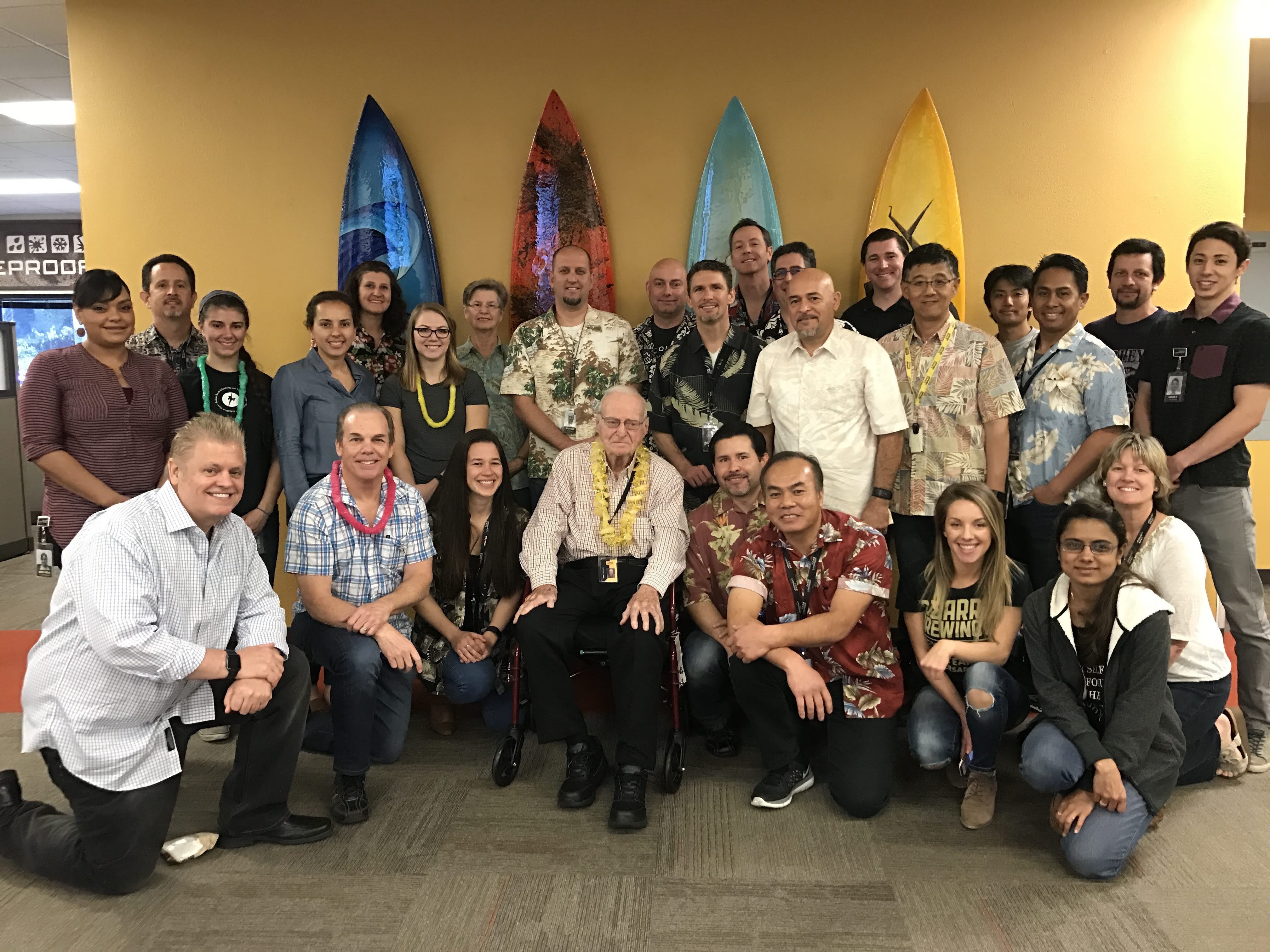
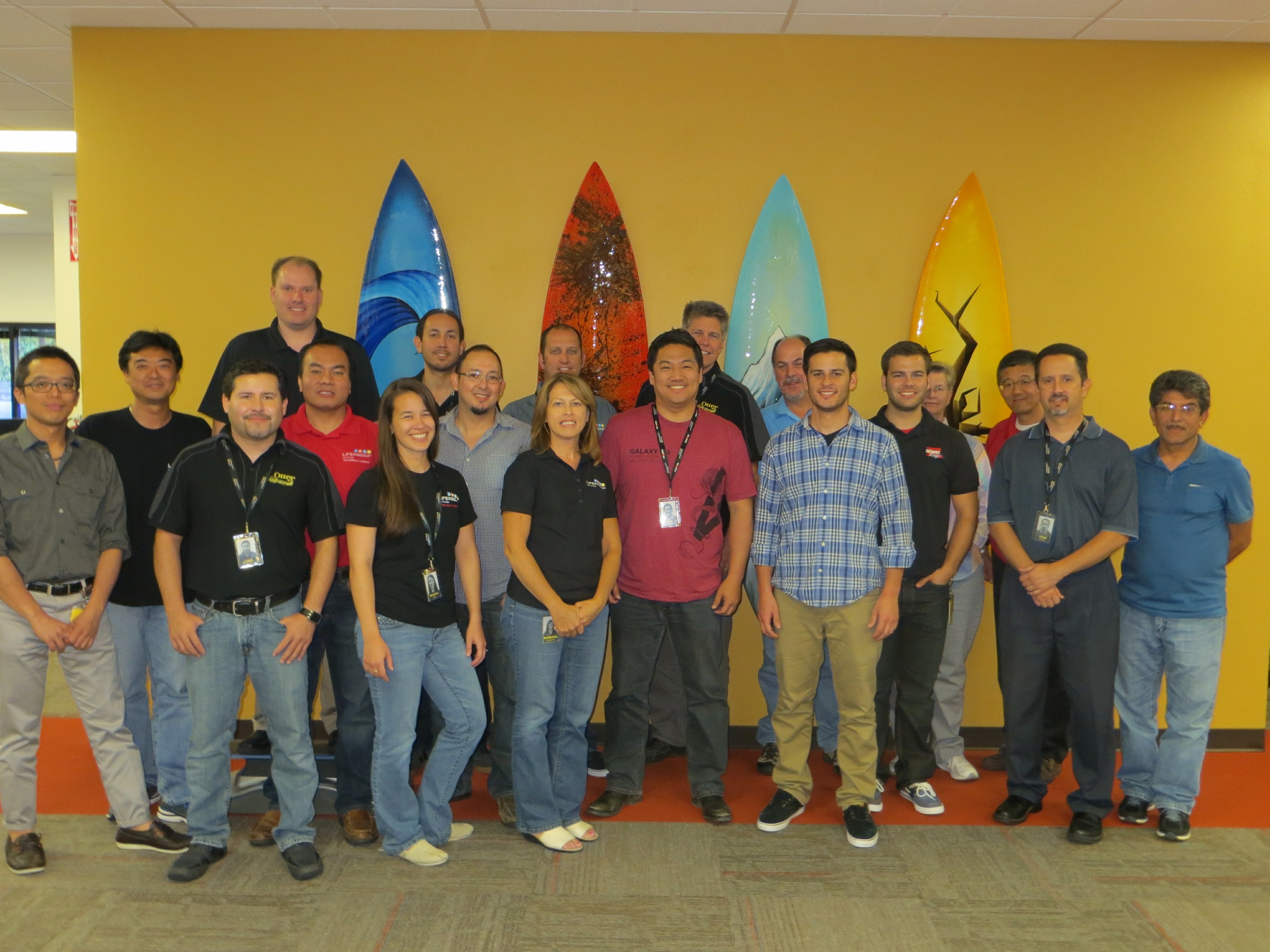
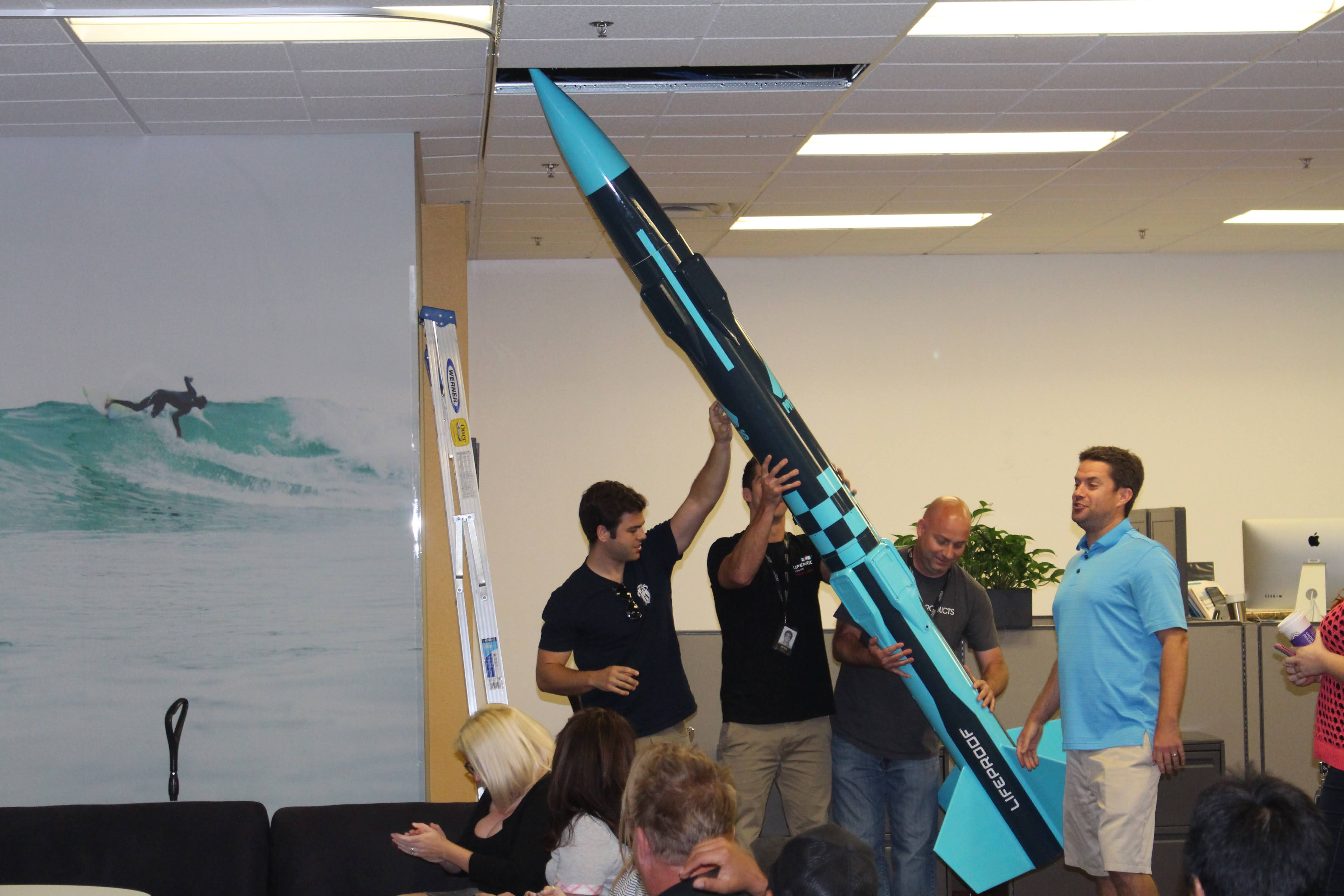
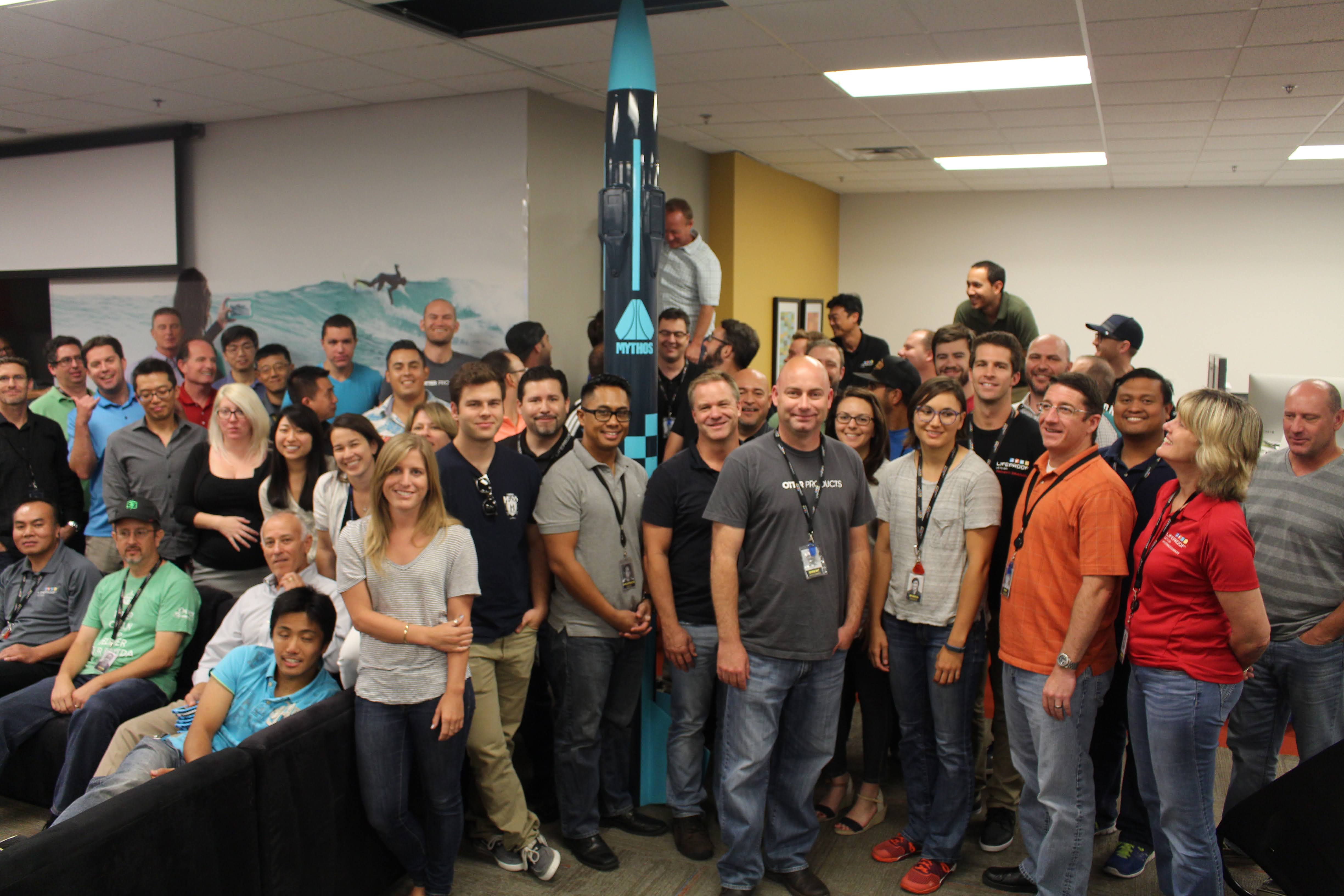
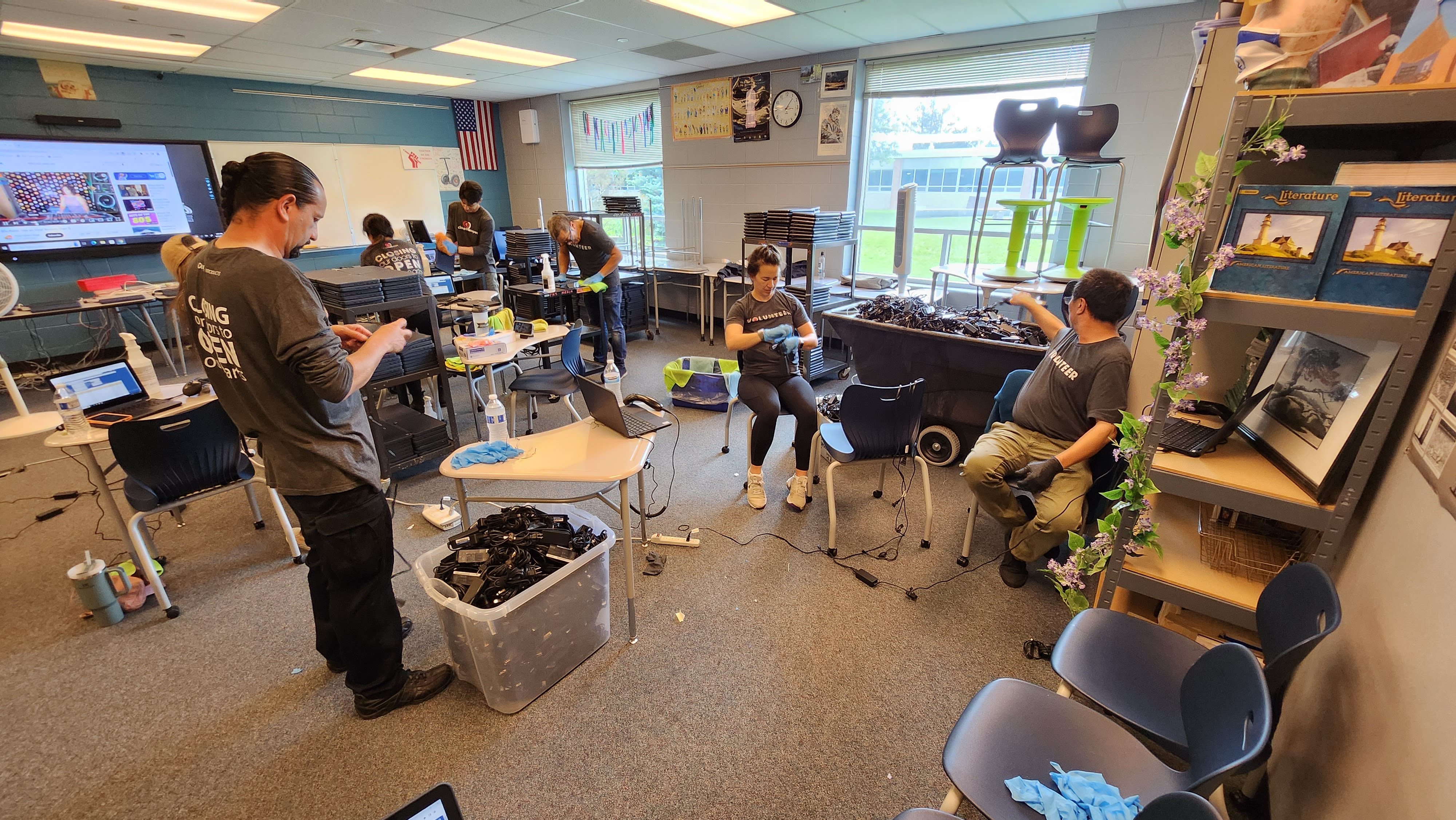
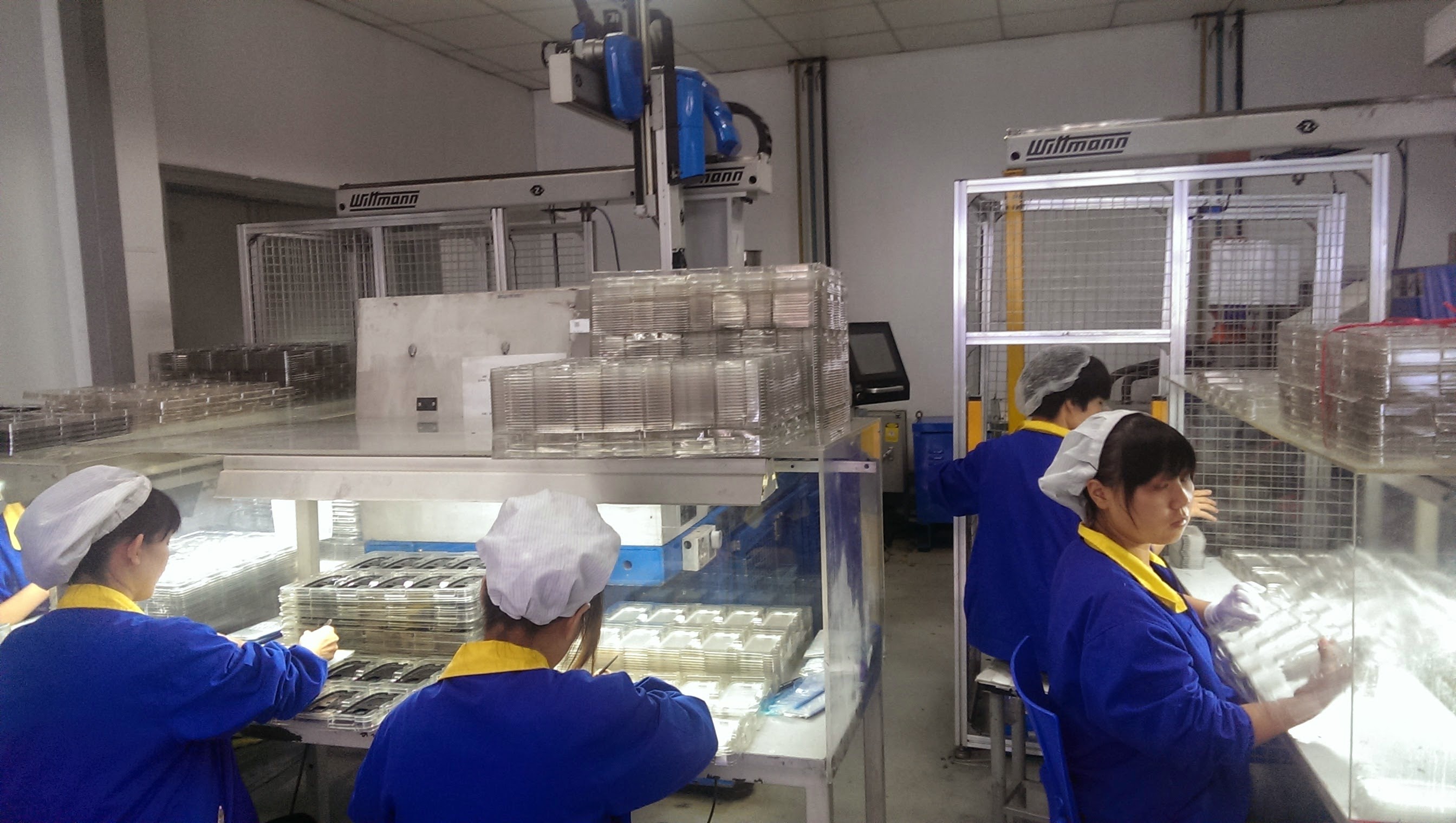
In this restructuring event, a lot of people were let go including the remote Mechanical Engineering force in San Diego, the OG brilliant minds from LifeProof, the ones that figured out, developed and delivered fully waterproof mobile device cases while allowing for full functionality, the LifeProof FRE case.

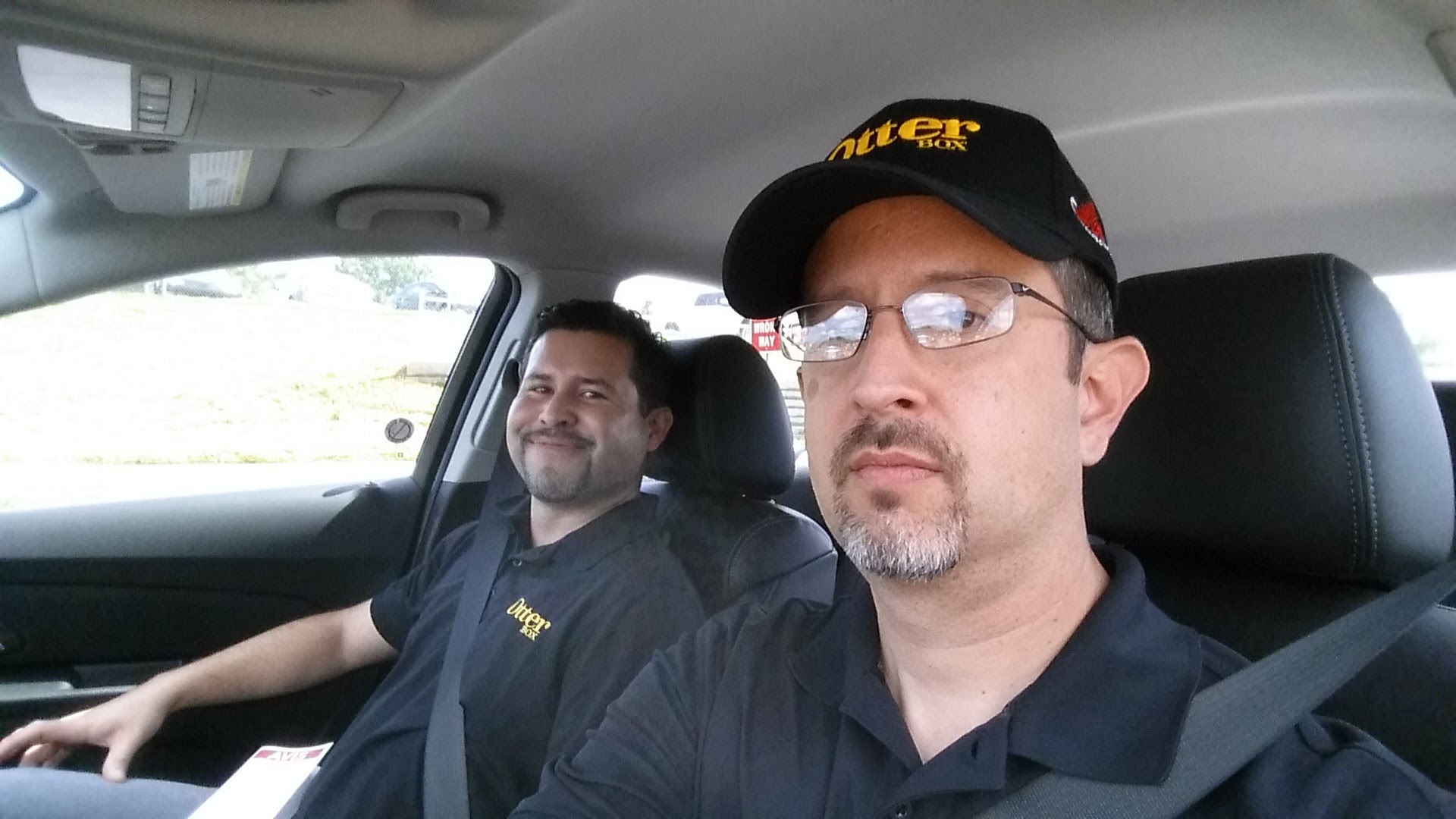
I’m a bit bitter, a bit sad, seeing my coworkers, my brothers in arms of many years, one by one announcing getting the dreaded email including myself, no explanation yet but we had it seen a mile away.

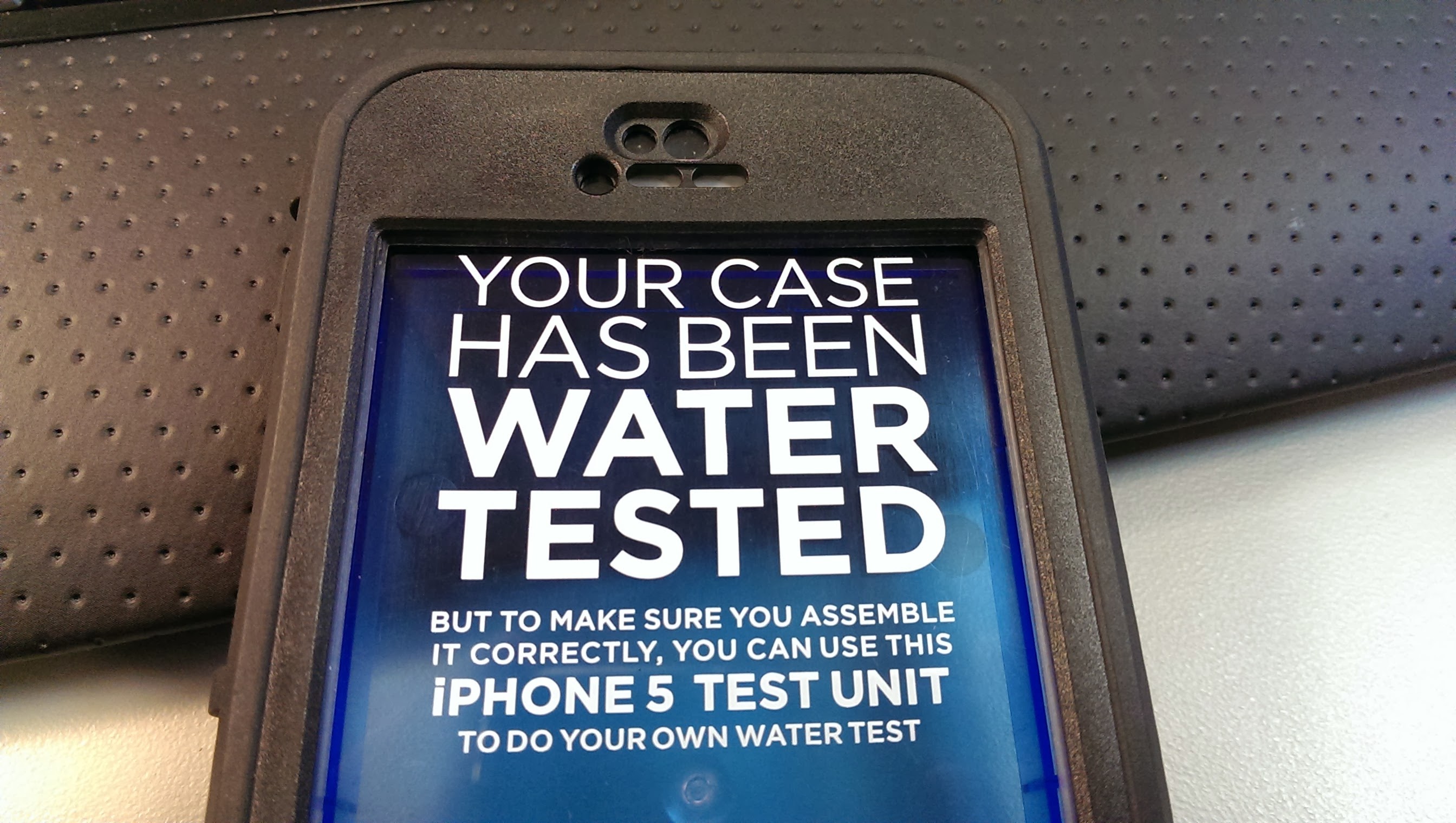
What makes FRE special? It’s just a waterproof case, why not use a Ziploc bag? Well, once you seal a phone device in a watertight enclosure, you need to worry about sound, about the microphones and how they interact with the software algorithms, the cameras with optically clear lenses and the flash that wants to bleed light wherever it can. And the touchscreen, it needs to seal out 100%, prevent it from creating those rainbow ring artifacts, reduce fingerprints, add scratch resistance, etc., the materials used are also tested for ultraviolet degradation, common solutions (think lotions, sunscreen, alcohol, etc.), button forces, latch retention… and, yeah, drops, the case should continue being waterproof after being dropped, all in a very sleek package that rivals drop protection only cases in size and style. Oh, and it has to be produced millions of times, assembled and tested, yes, each case is tested for water ingress before packaging.
Back to the situation, maybe it was a good thing, maybe it was time, there was no development career for my position and salary was capped for many years. But what if… what if that’s what I wanted to do, to continue the challenges of designing and developing for new series, new devices, maybe I wanted to continue for 10 more years. Maybe there is something else waiting and I needed a push, after all, I wouldn’t been here if it wasn’t for these life nudges.
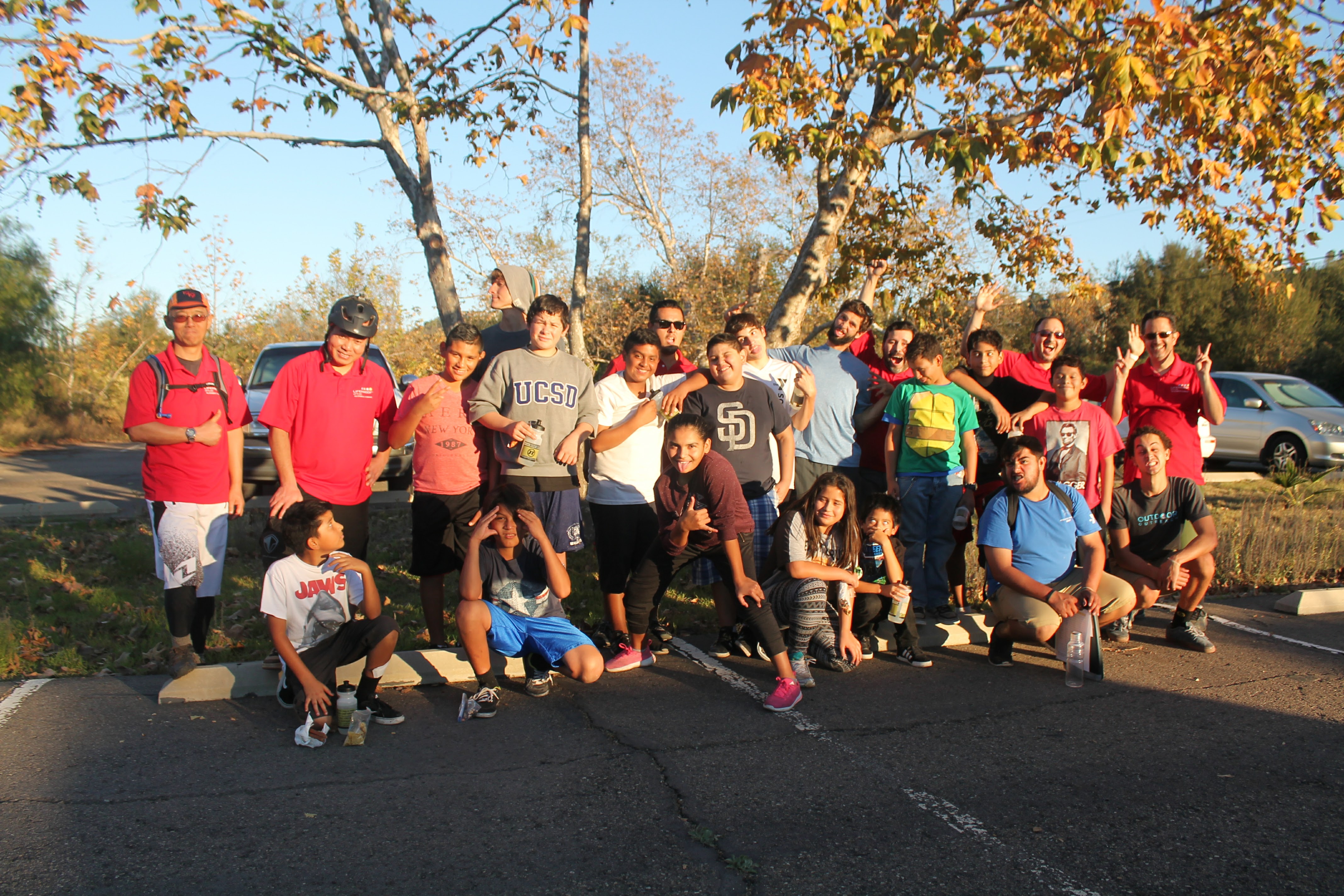
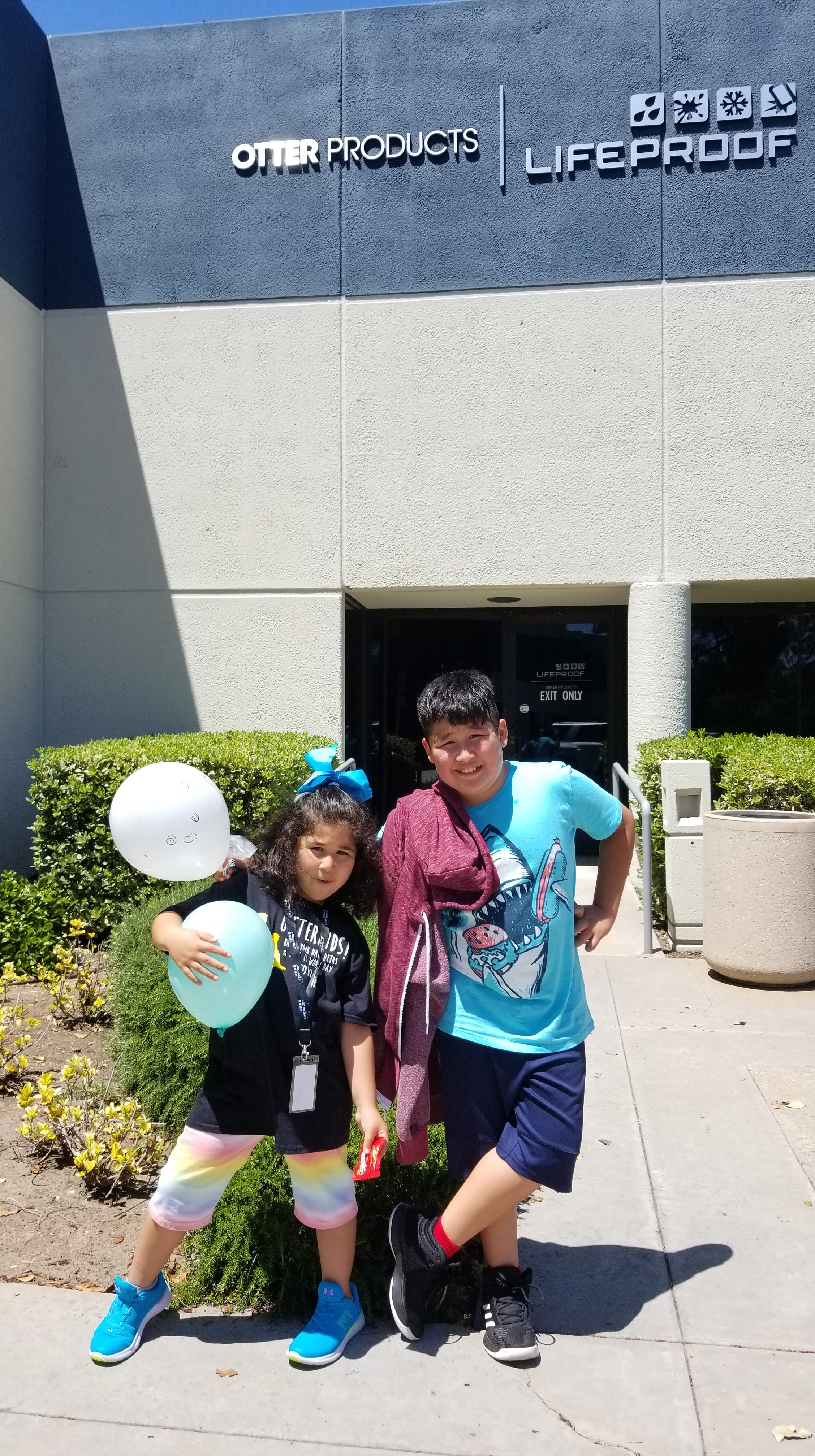
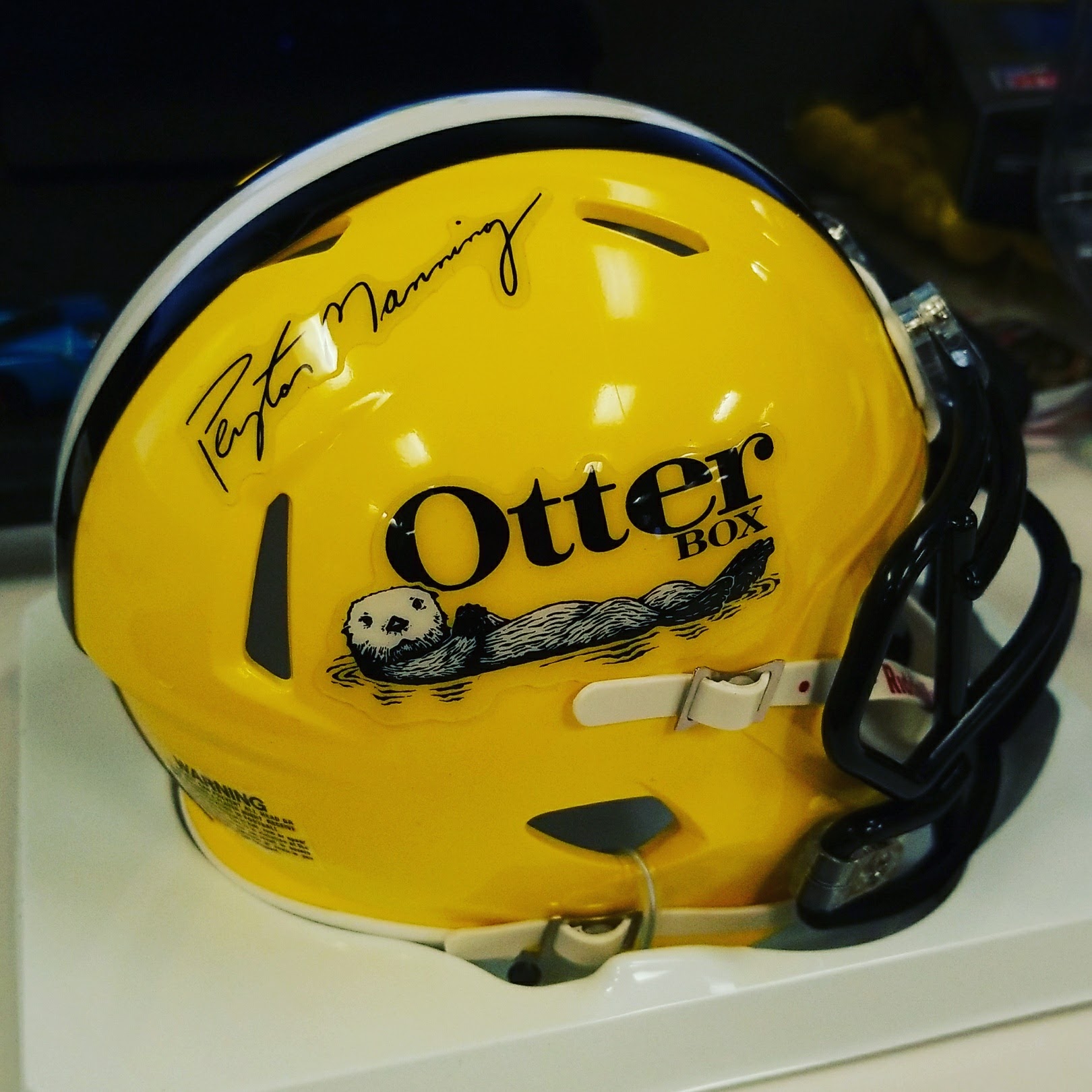
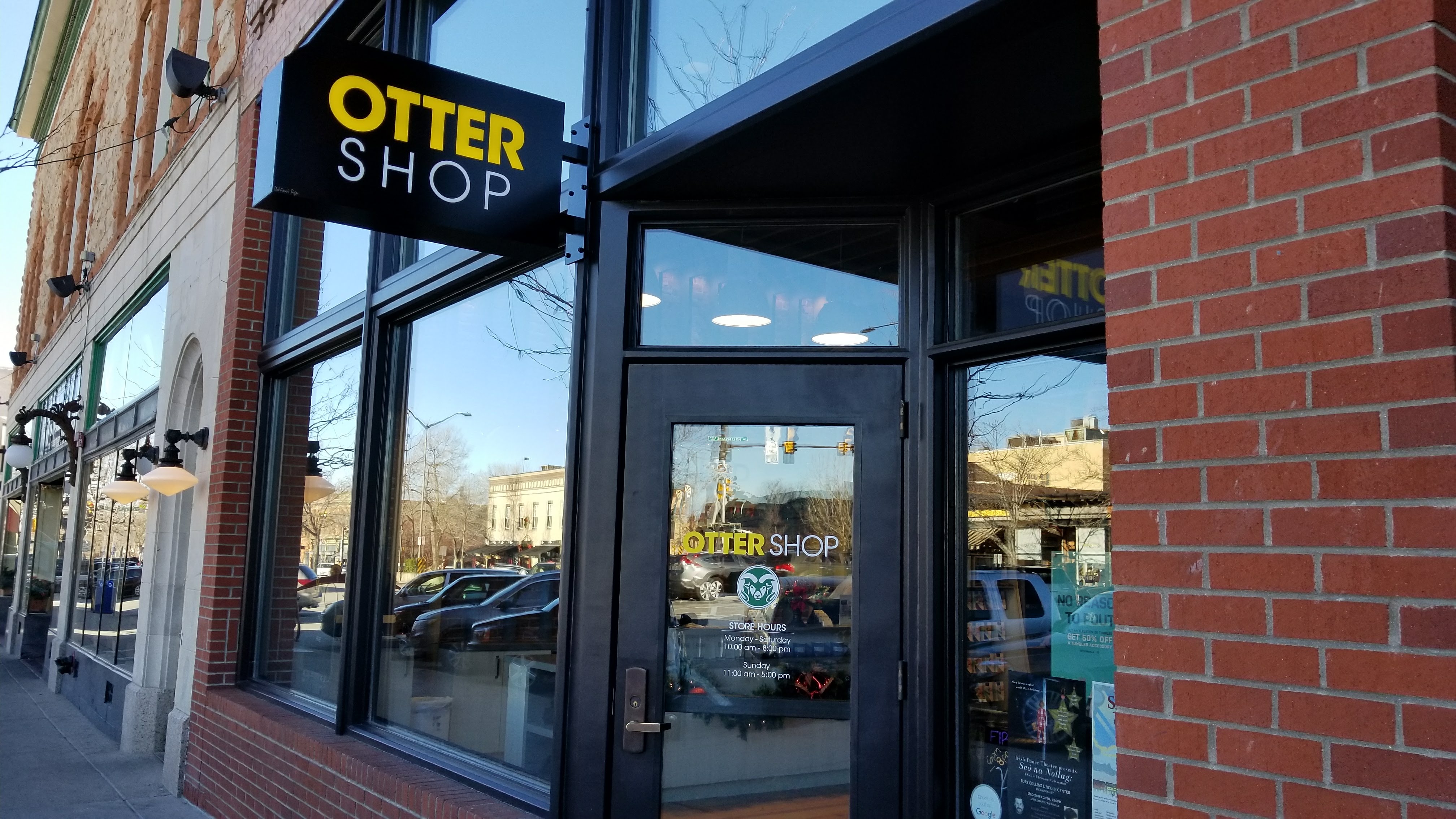
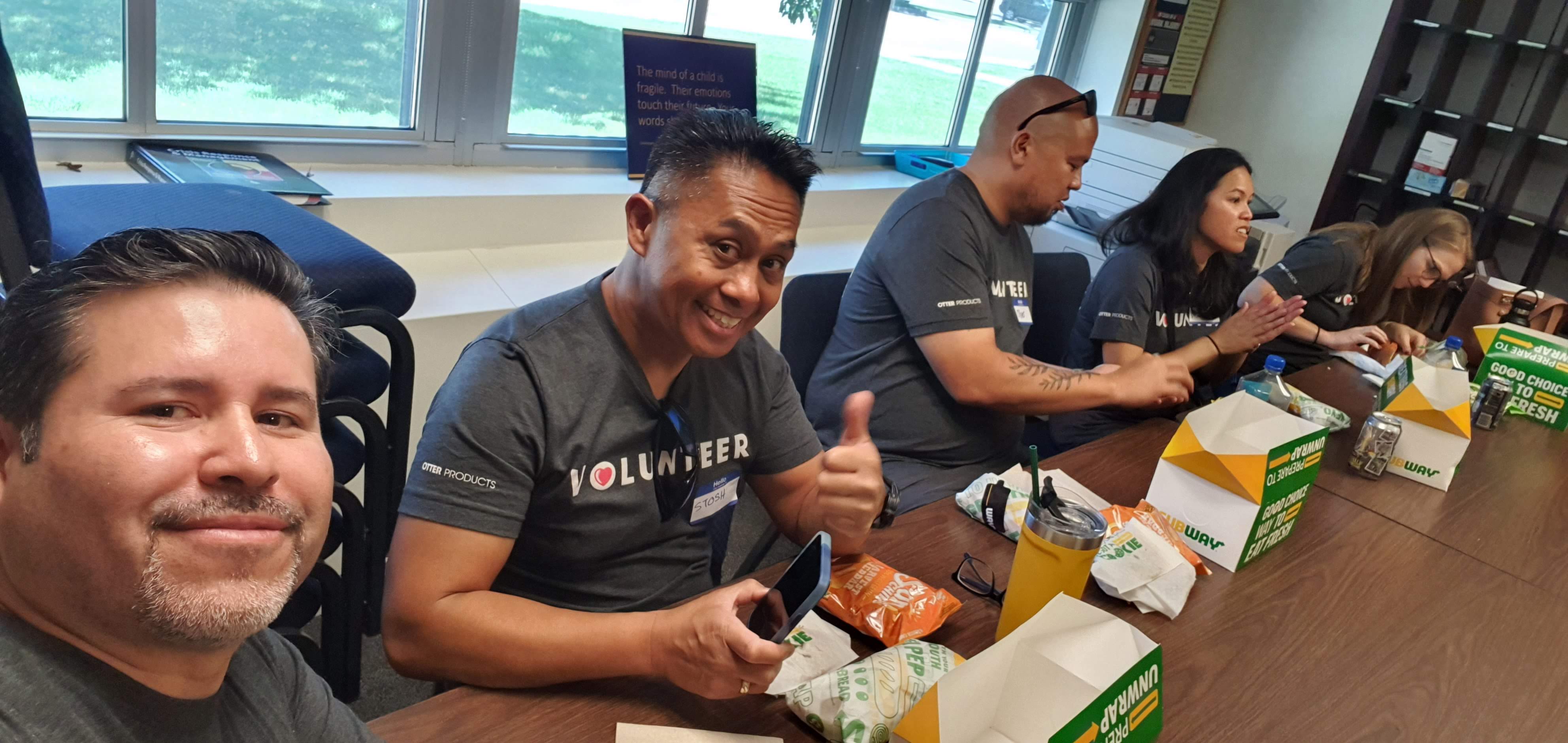
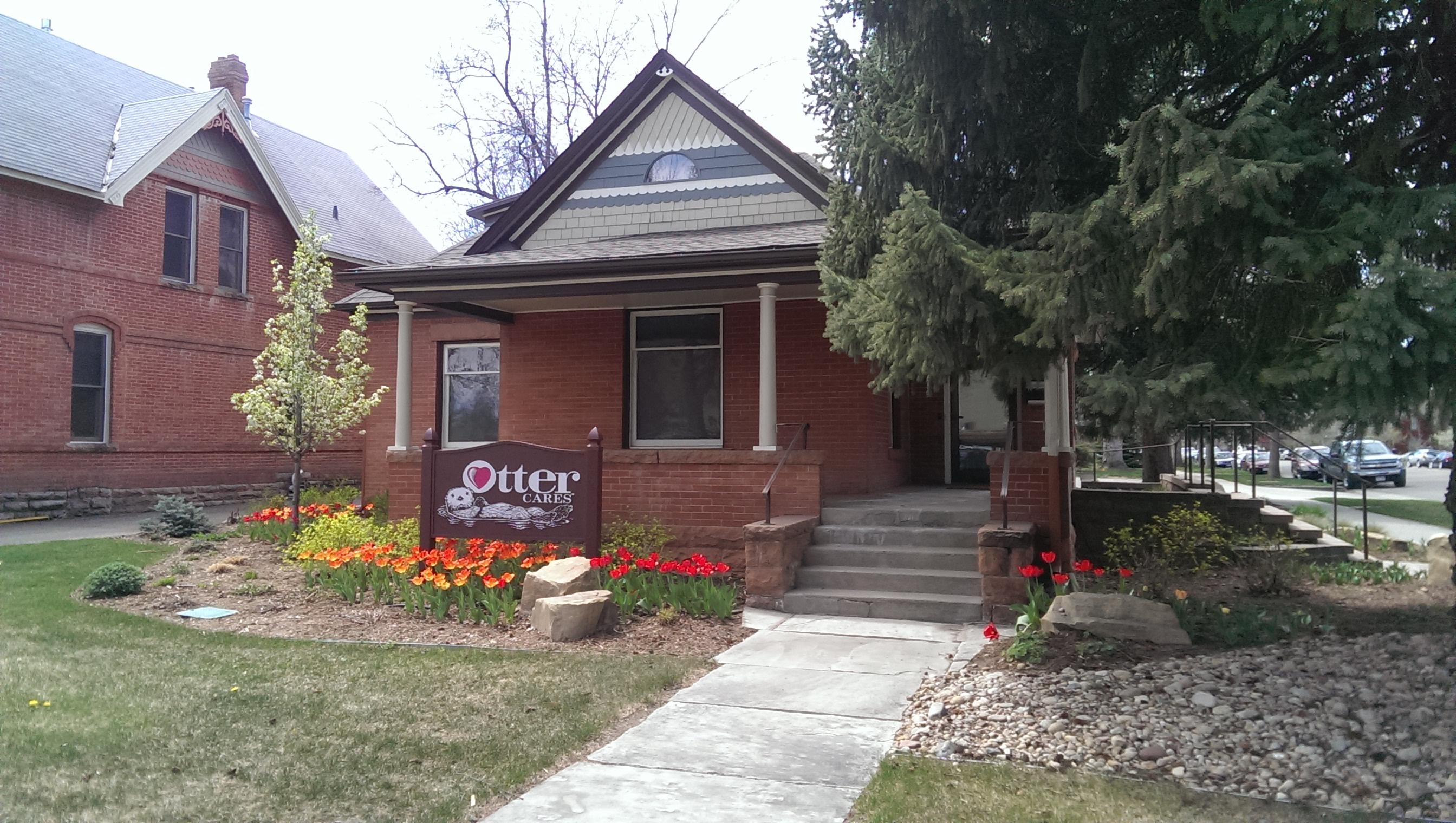
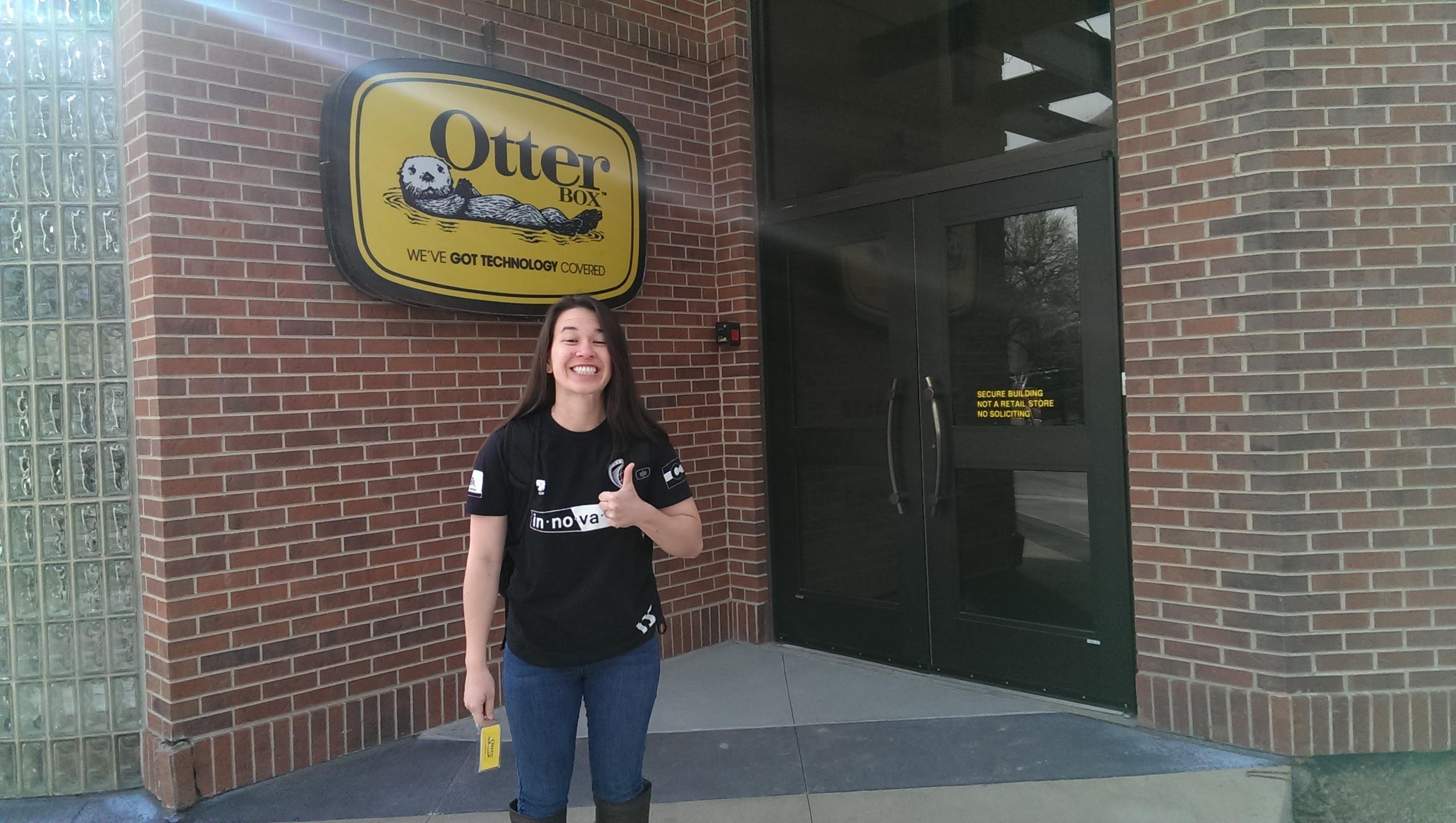
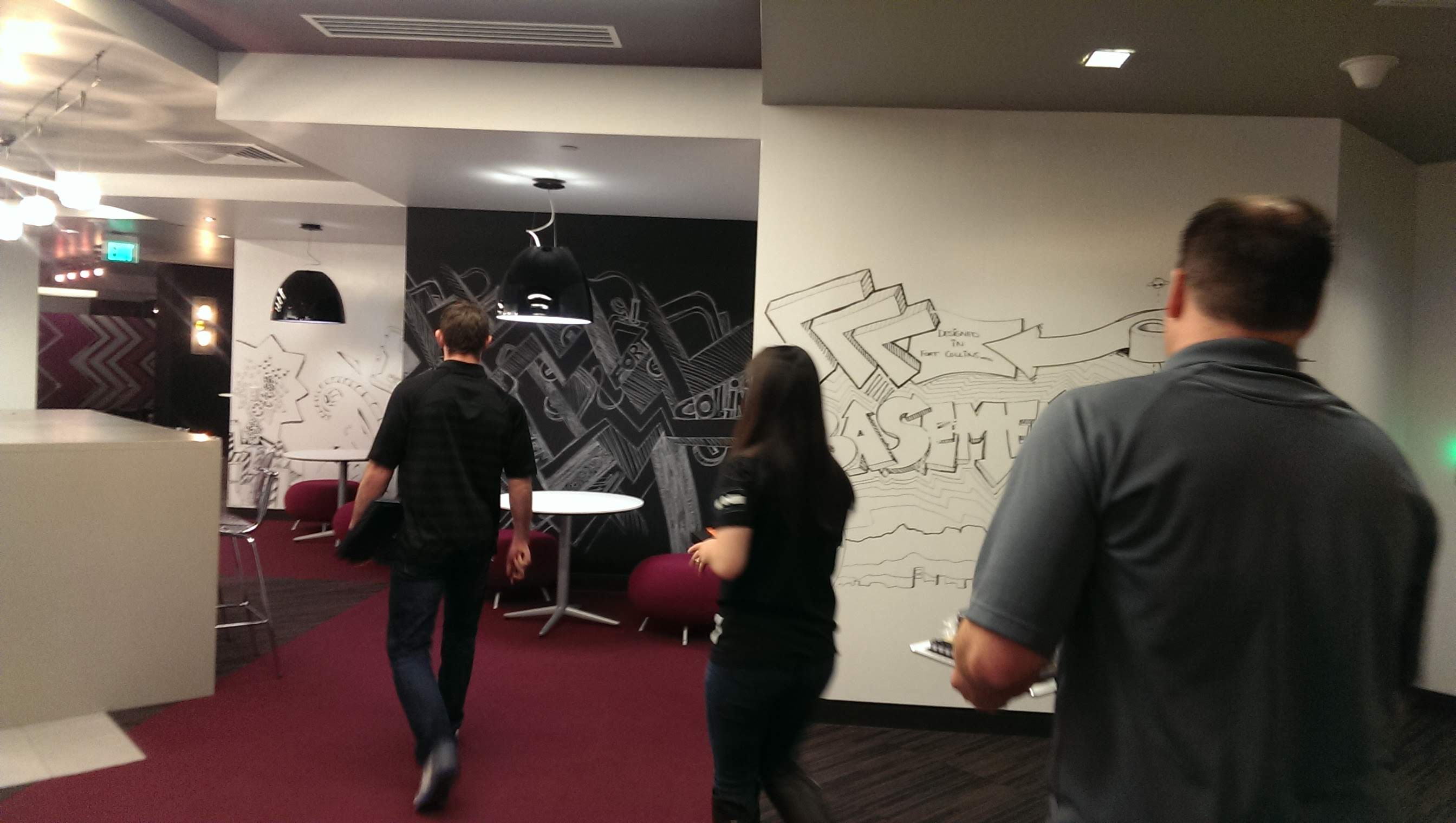
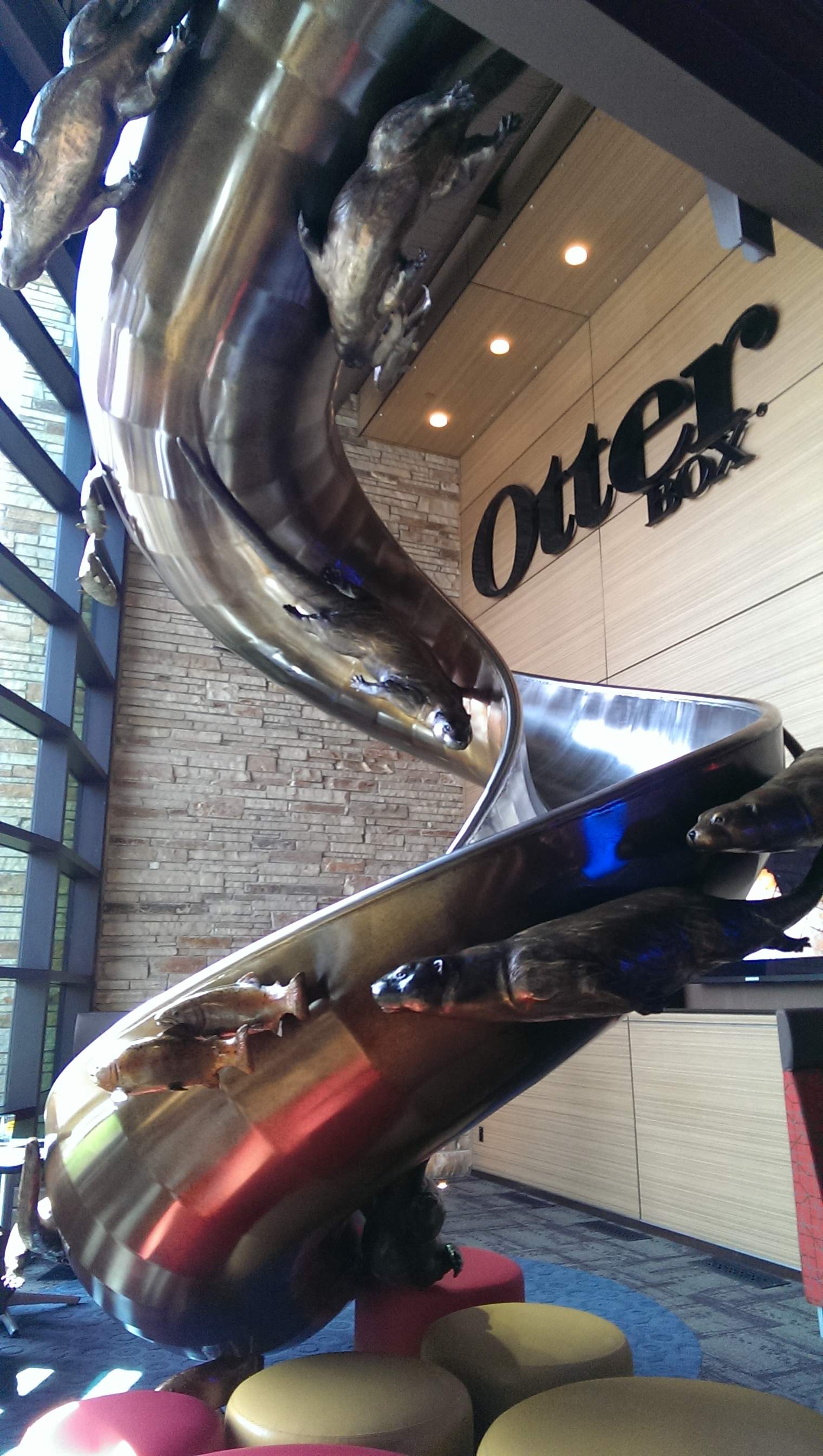
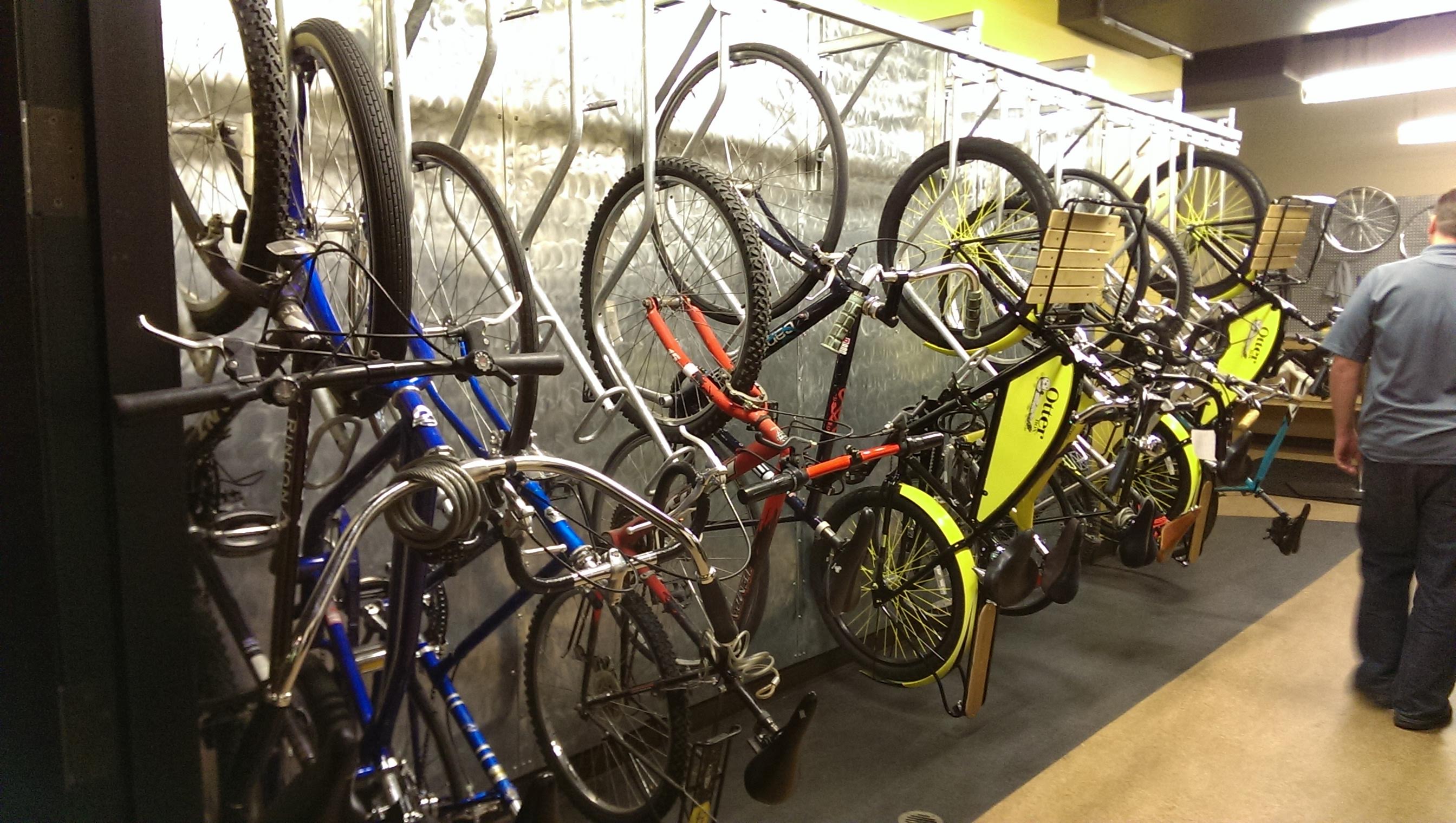
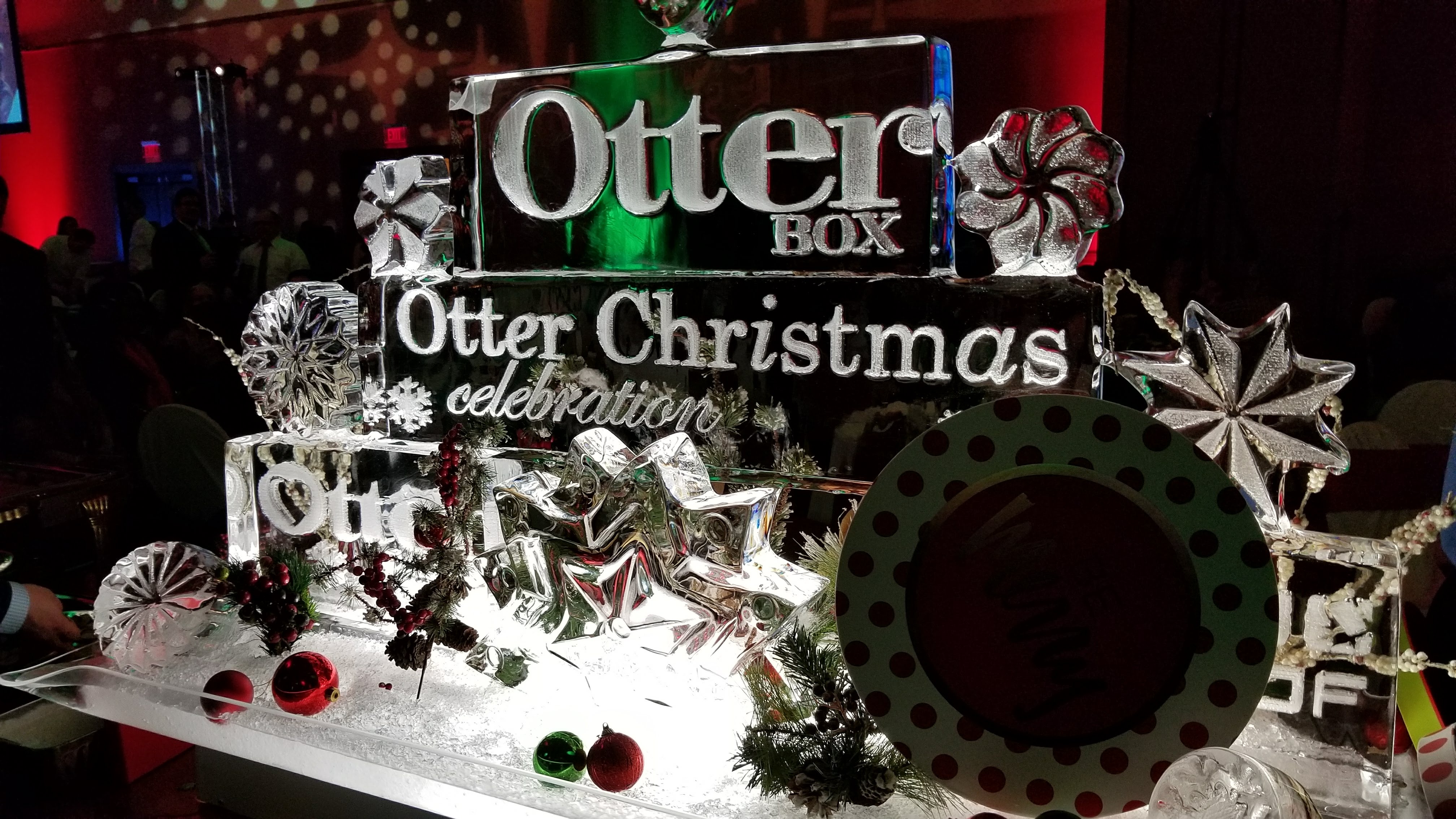
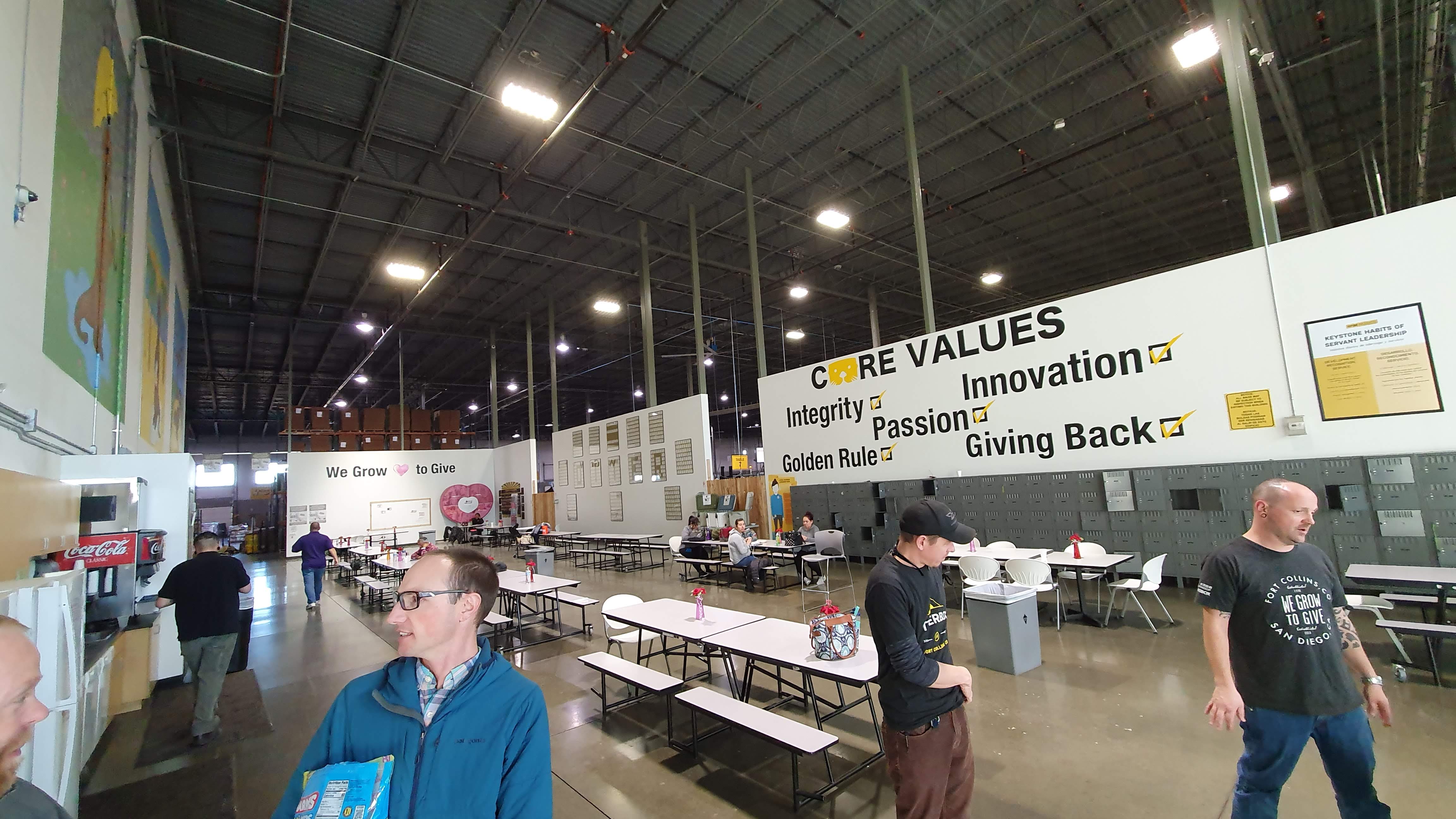
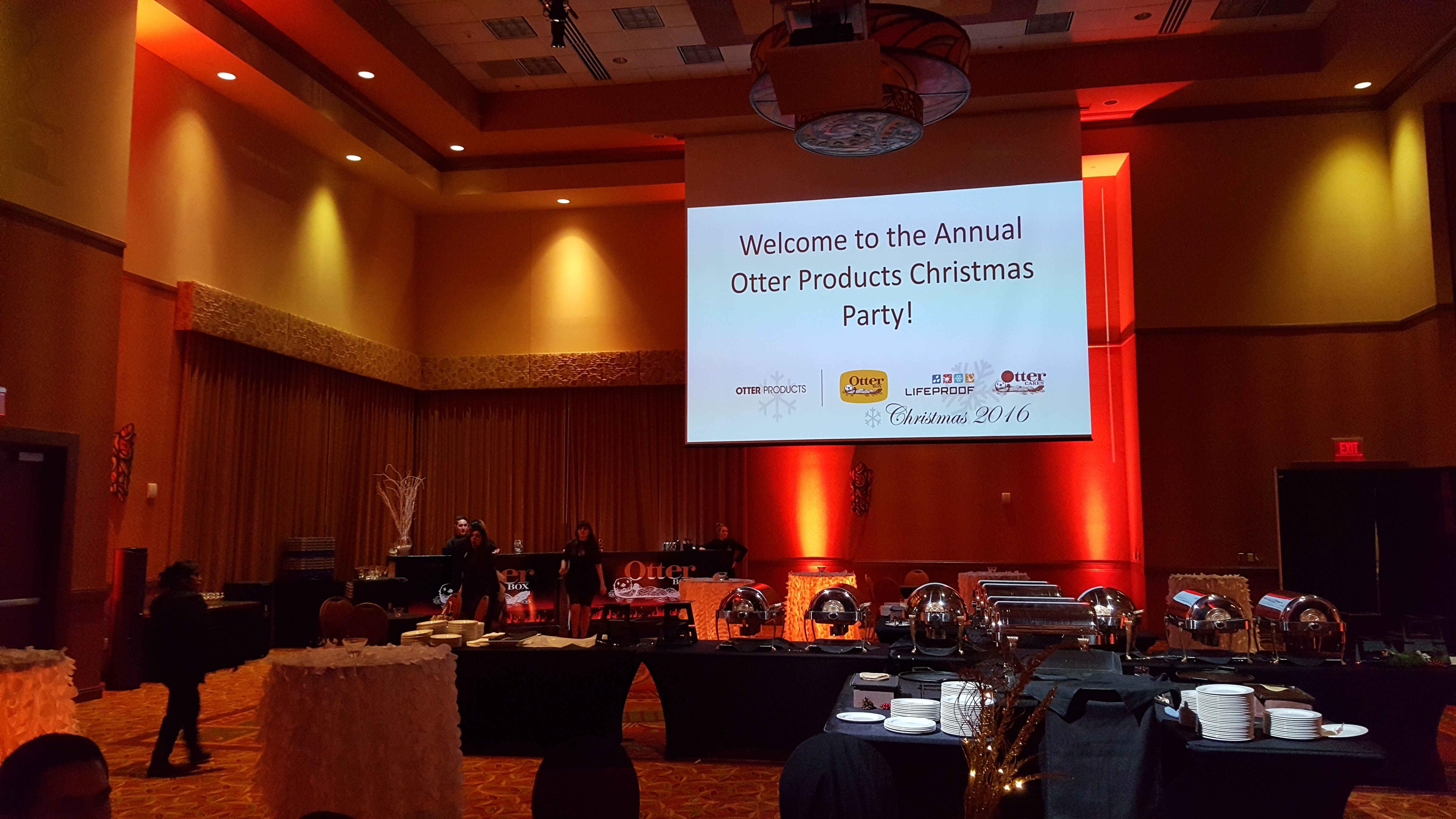
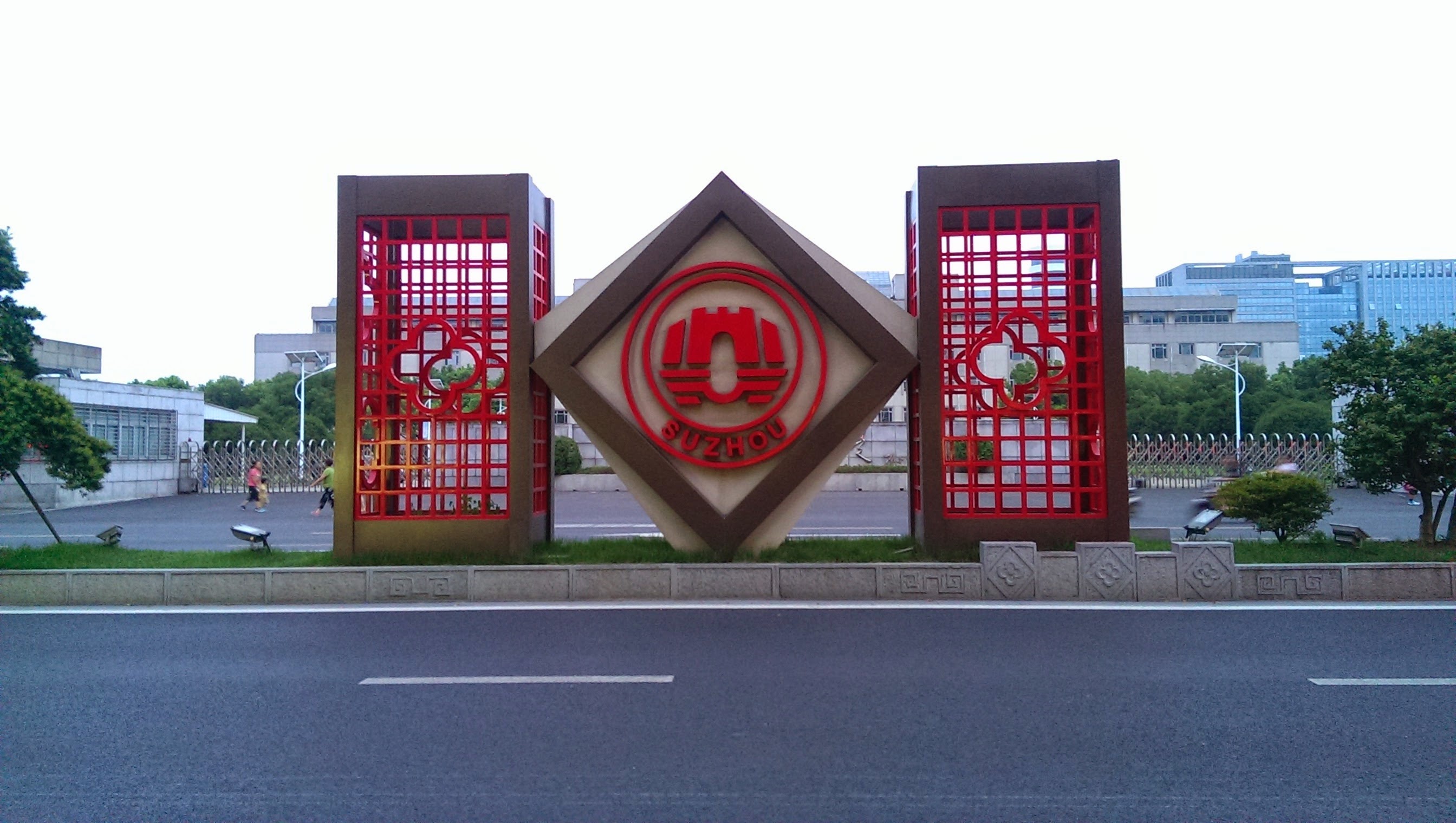
But oh well, after 11.5 years in the company seeing the evolution from LifeProof to OtterBox and everything in between, my daughter was born a few months before starting here, I’m very grateful to have had the opportunity to build, shape and implement a modeling infrastructure that helped reduce design time from months to weeks to days in some “cases”, the foundation has been baked-in across all case series templates and it’s amazing to see it develop and deploy way further by the team of awesome Mechanical Designers (YOU’RE NOT A CAD DESIGNER, YOU’RE A MECHANICAL DESIGNER, keep the fight on); I’m grateful for being part of the design and development of our most challenging product series, I’m grateful for the opportunity to visit OEM partners and factories across the sea, and out-of-state events; I’m grateful for all the ongoing learning and development that an environment like this provides; but above everything else, I’m grateful to have worked with the most amazing engineering minds here and in Fort Collins, seeing them “kick-ass” solving issues (features) that new devices constantly threw at us, and their growth across all these years, our managers who always put their peers before them and doing the best with what the company provided, and my mountain biking peers whose motivation sparked back my interest in the sport and adventure.
Thank you everyone.

I have gone through elevator cab building and designing, shipboard furniture design, injection molding tooling design, then product design and development, I can say that I have enjoyed the last one the most but I’m not afraid of venturing into other areas, I’m very interested in additive manufacturing (ref this website), maybe design services? I can’t be too picky, I have a lifetime project to take care of which is my family, but I hope that the answer comes sooner rather than later.


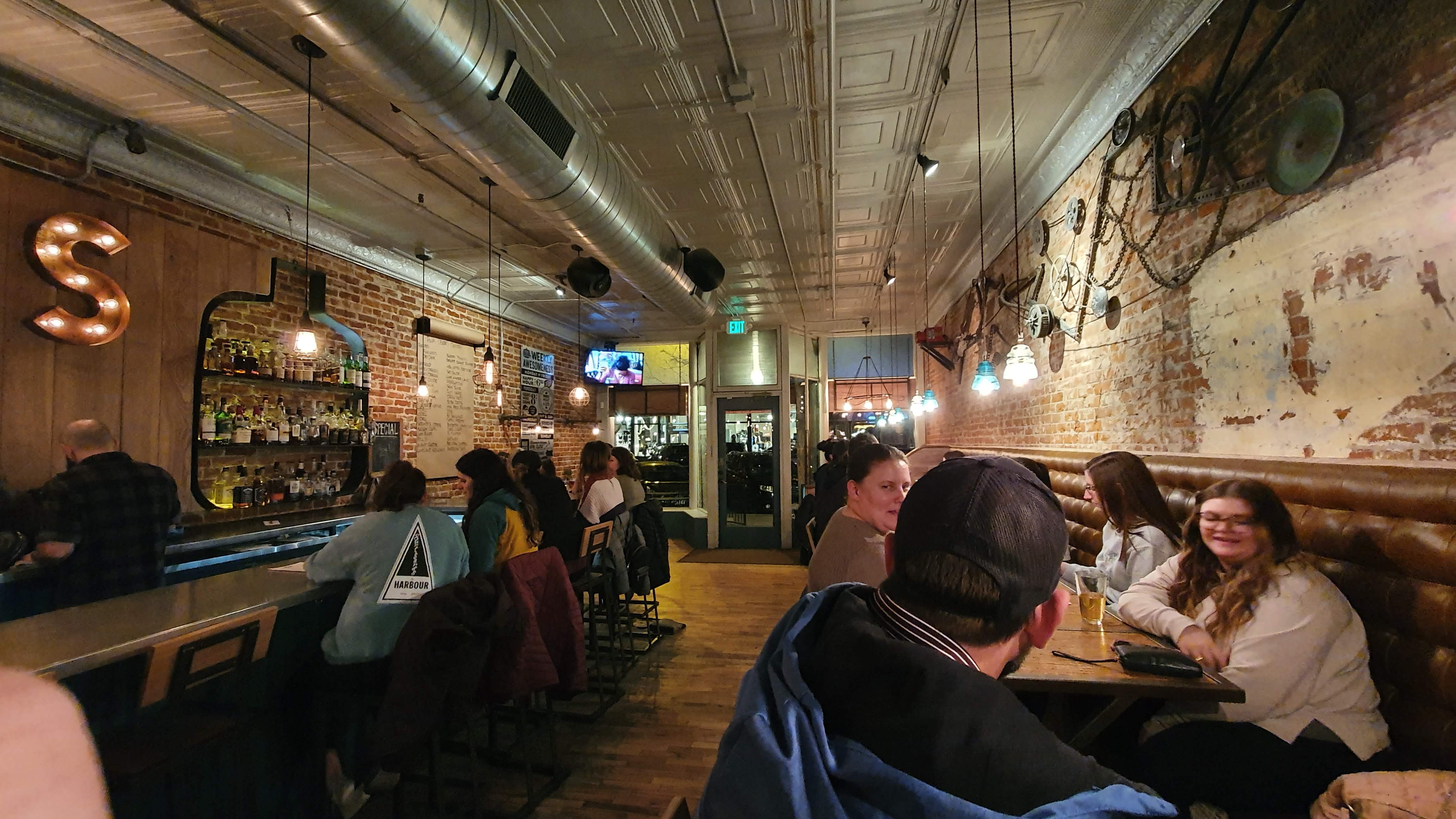
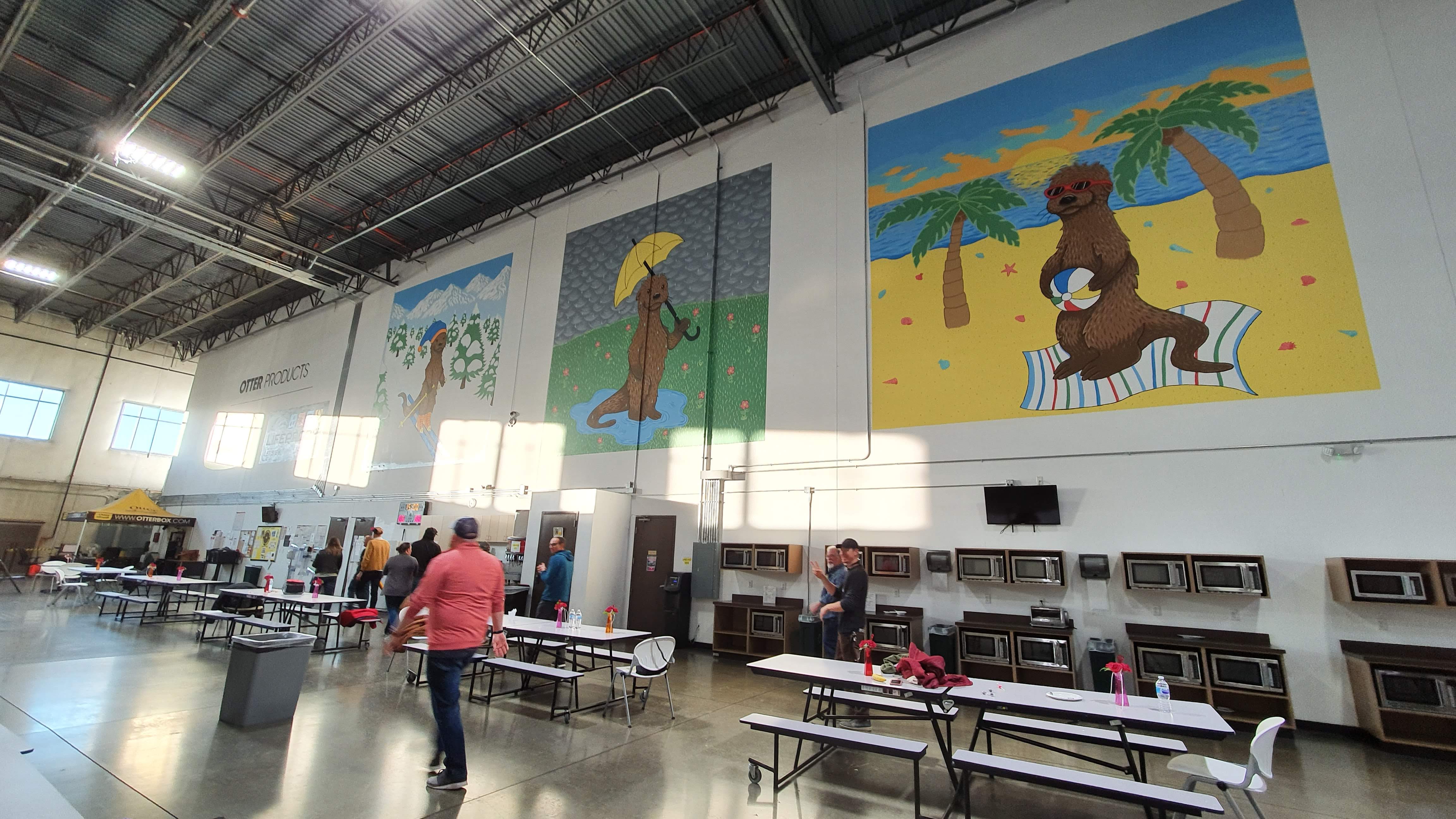
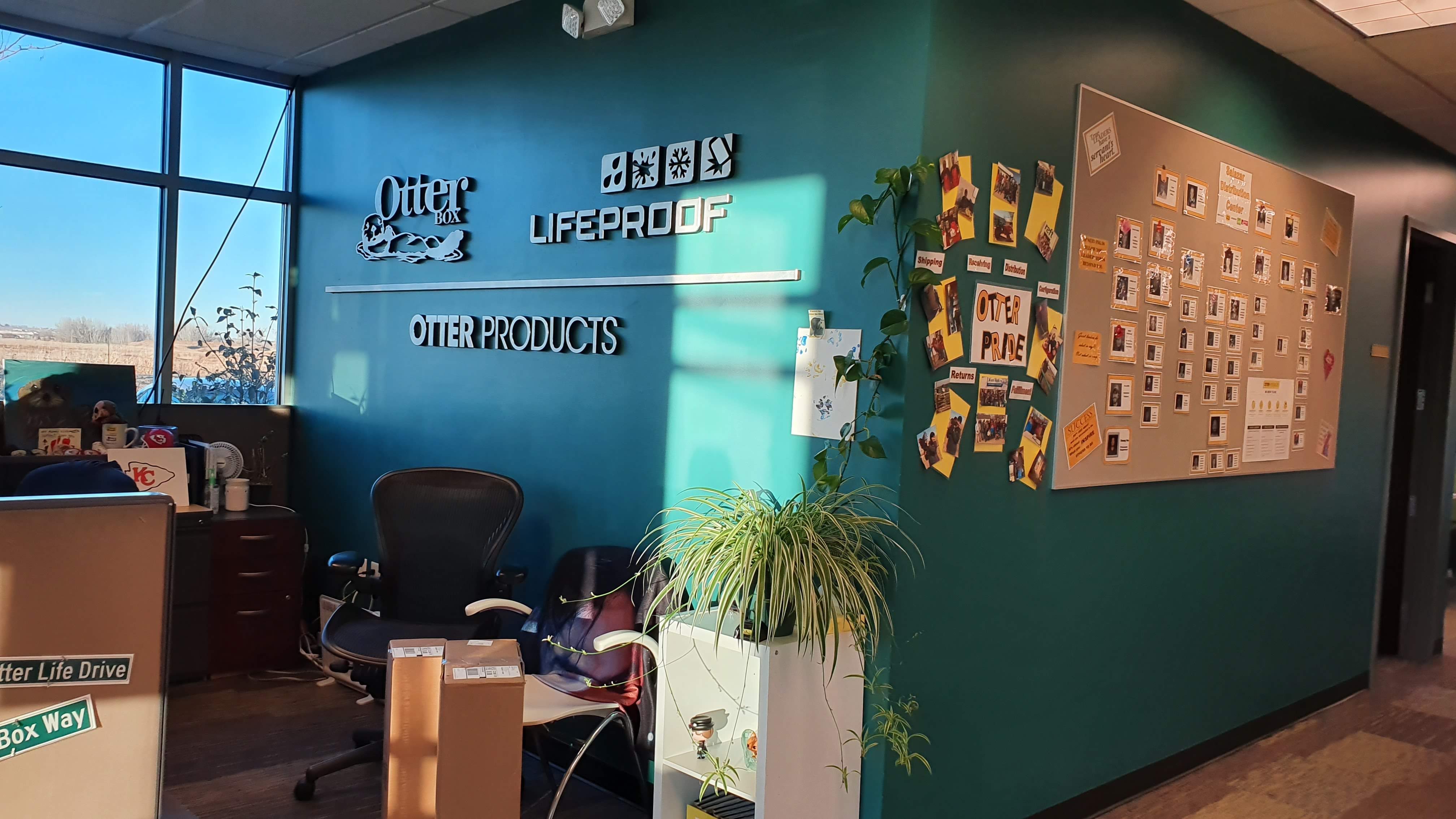
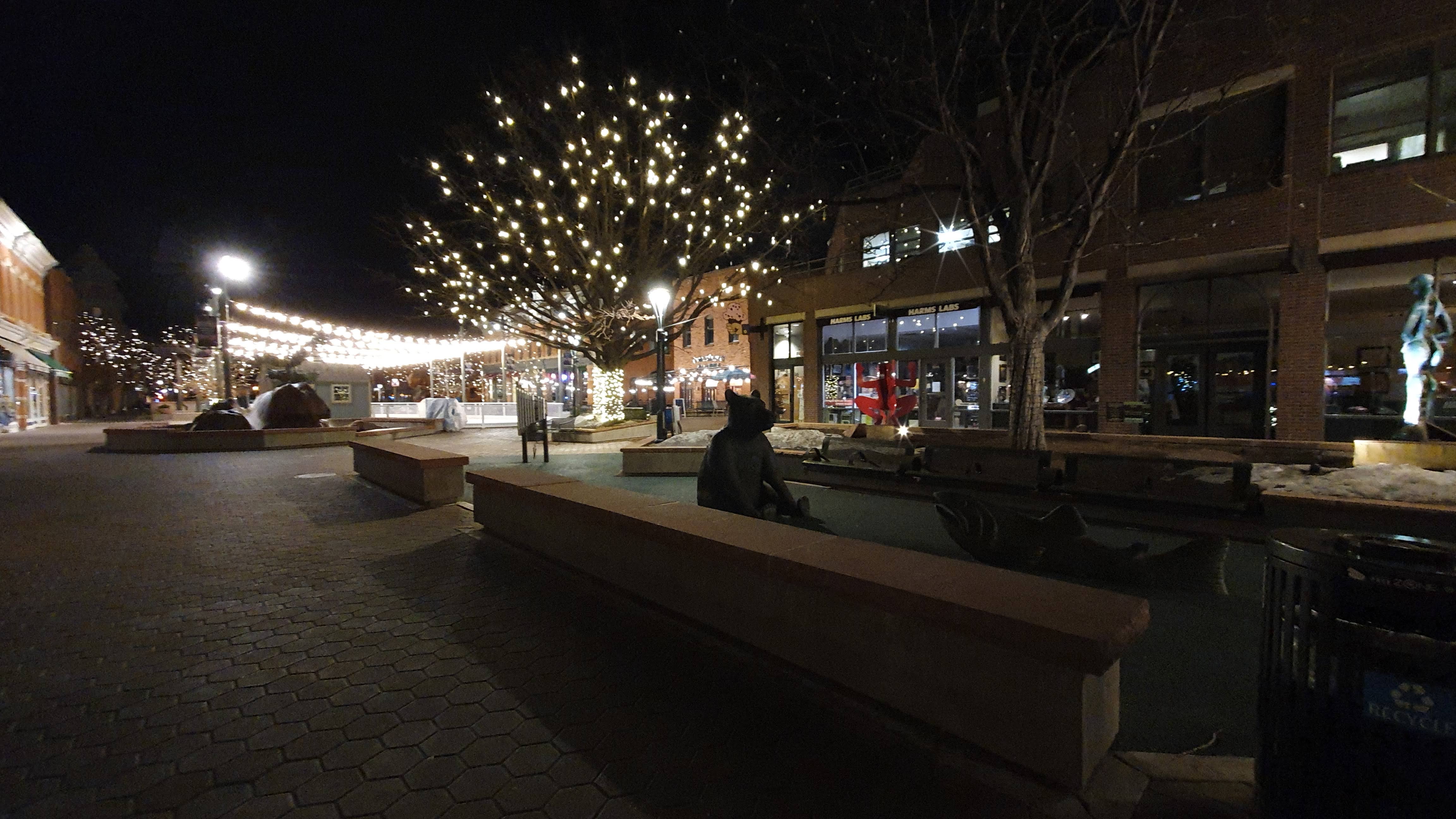
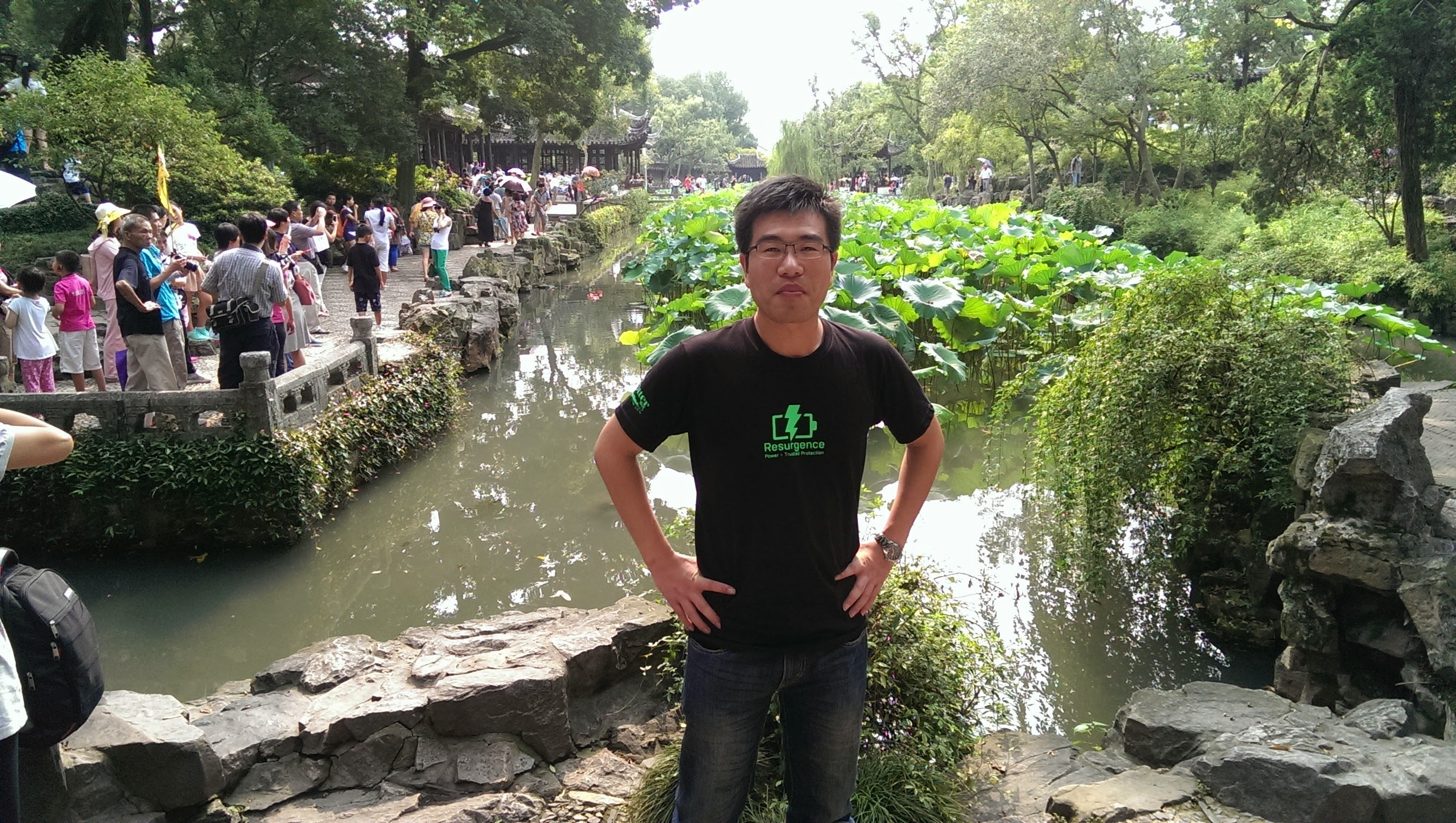
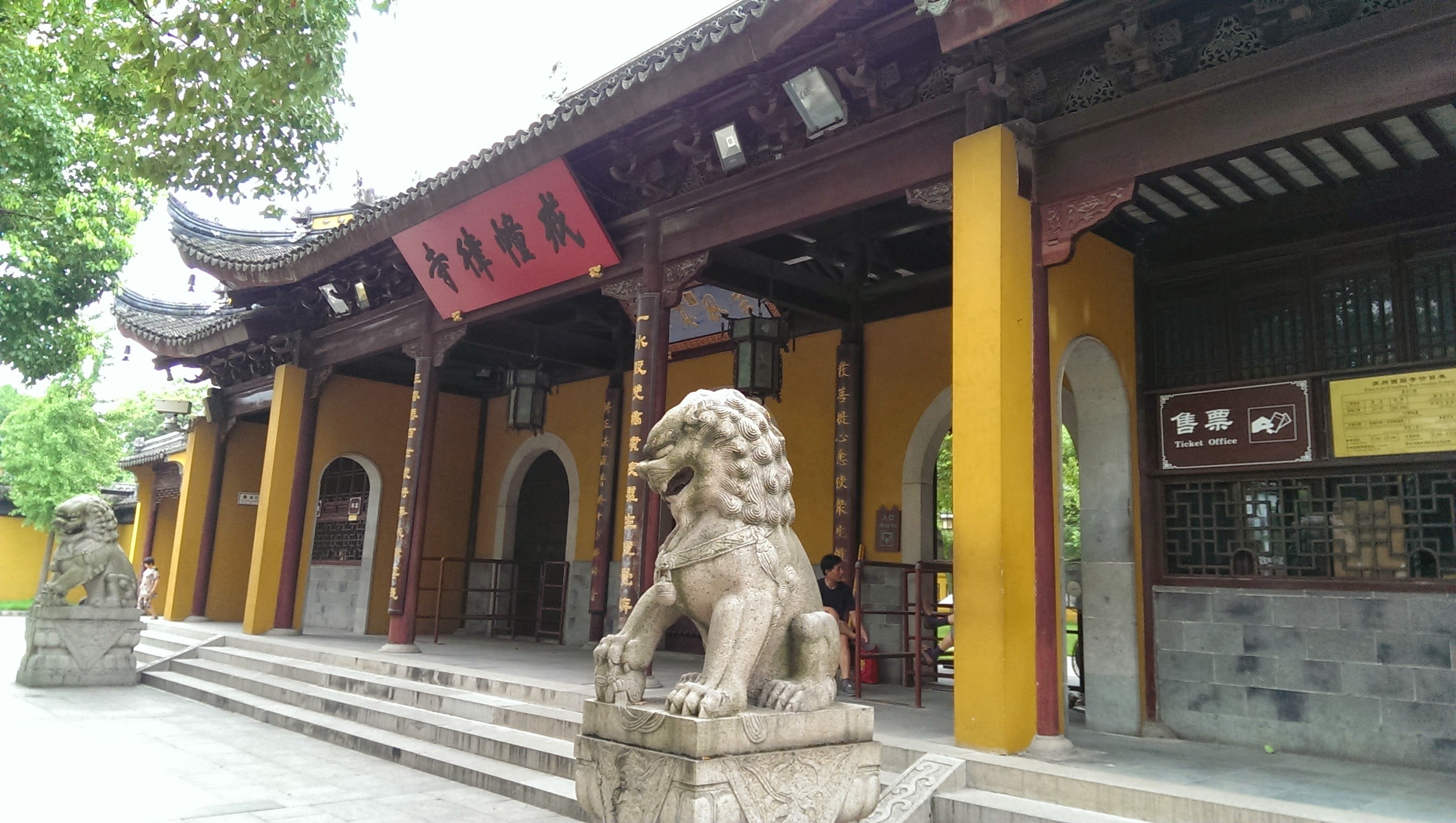
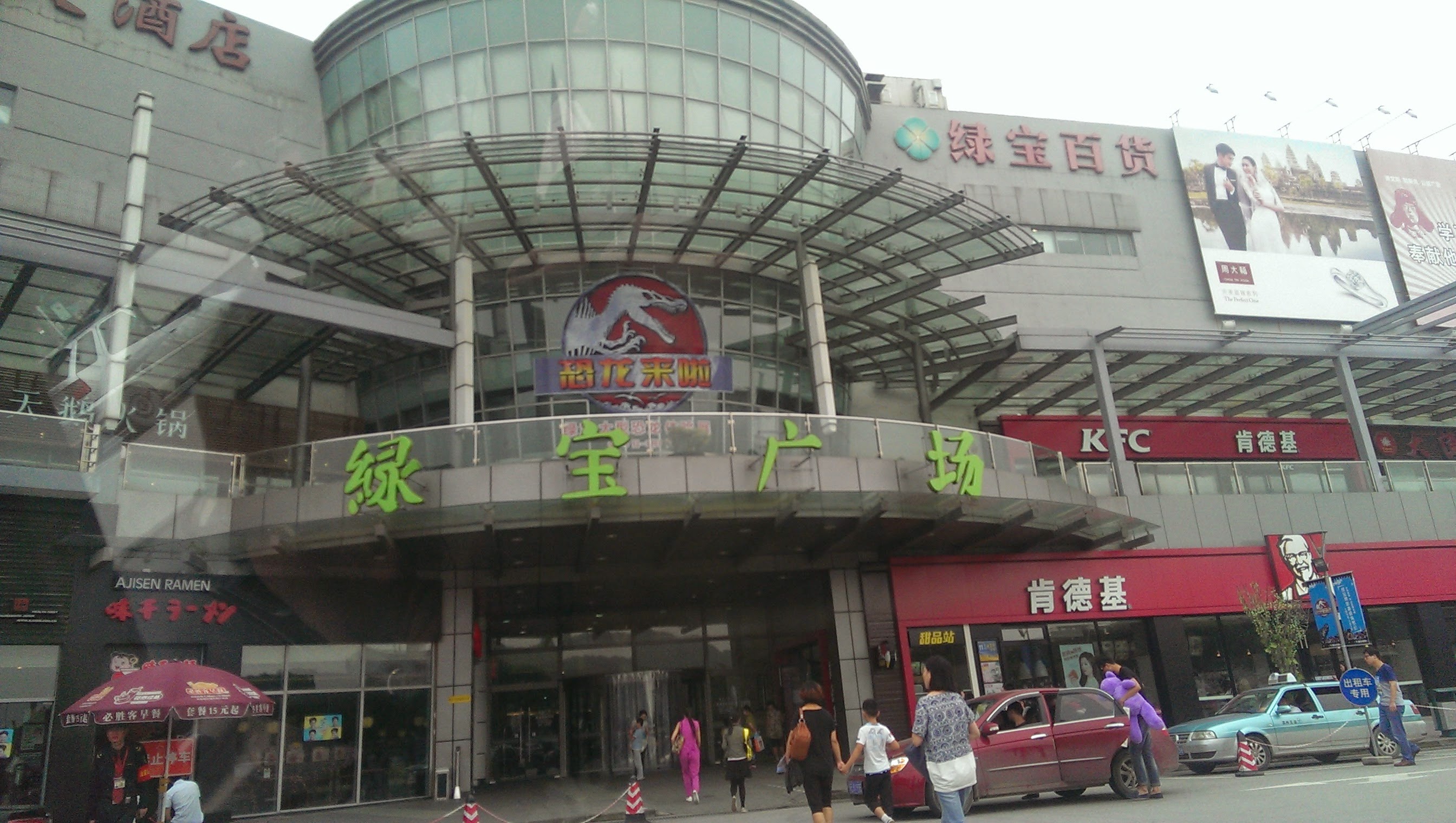
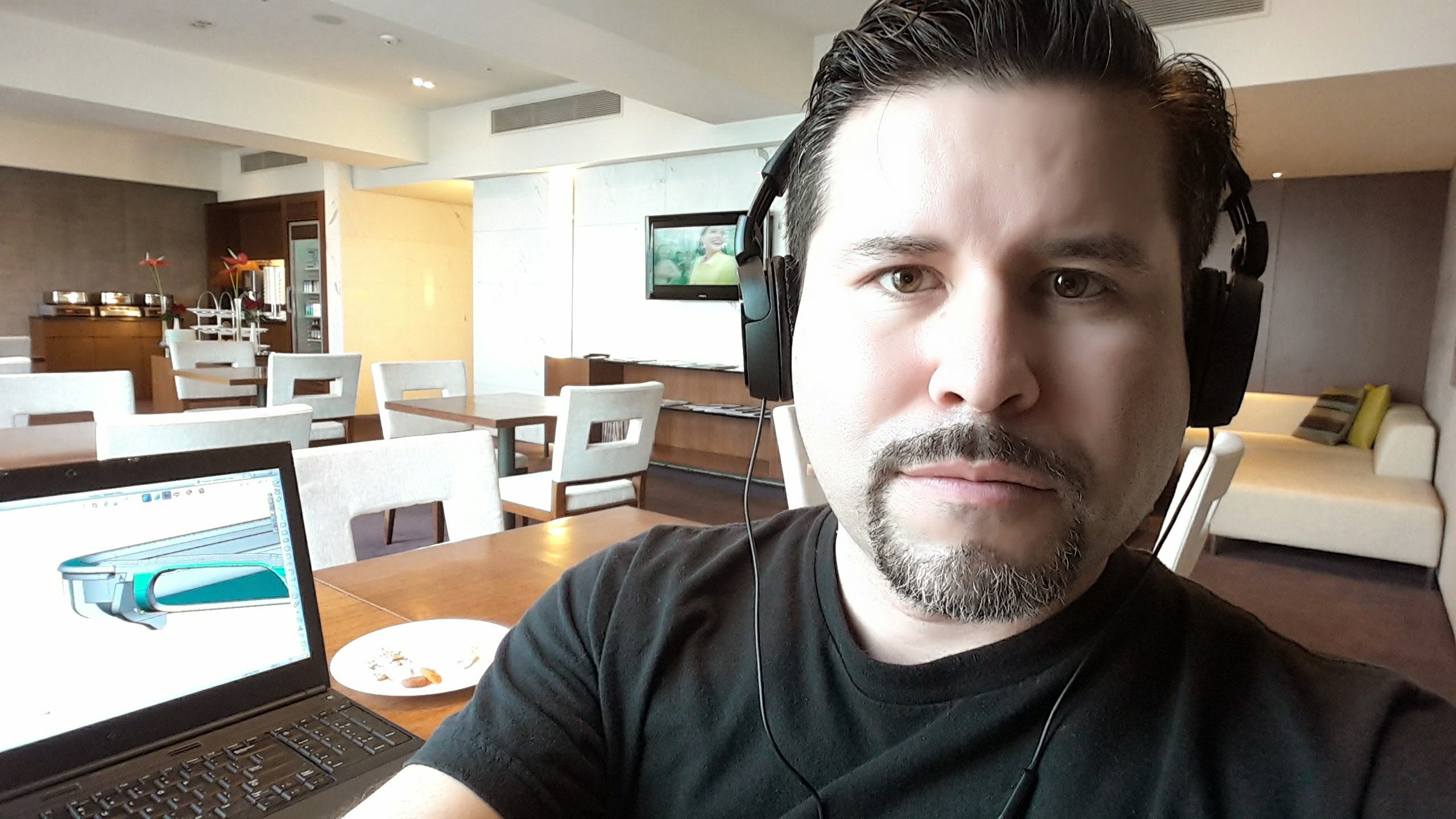
San Diego


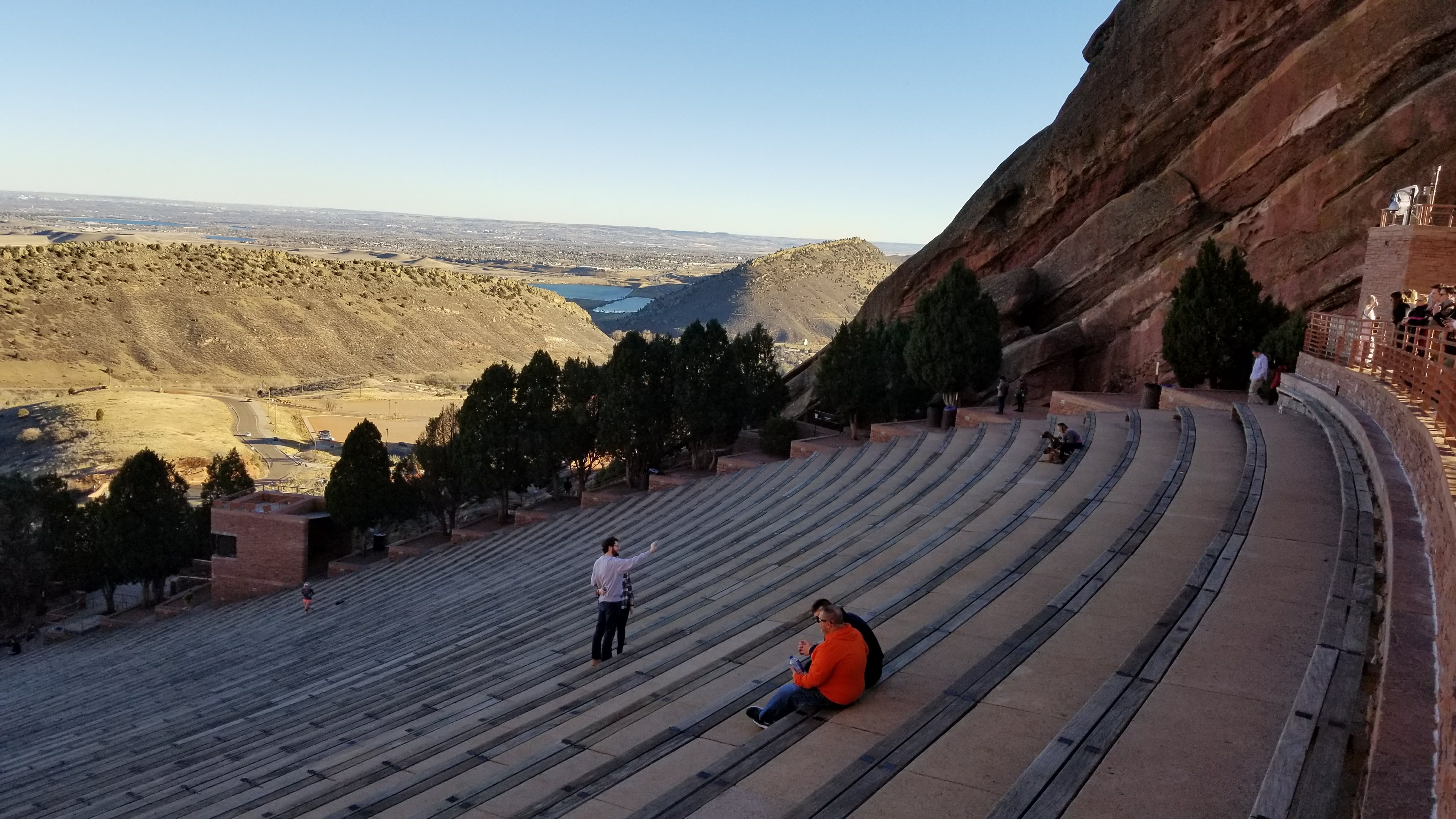
Colorado


Suzhou


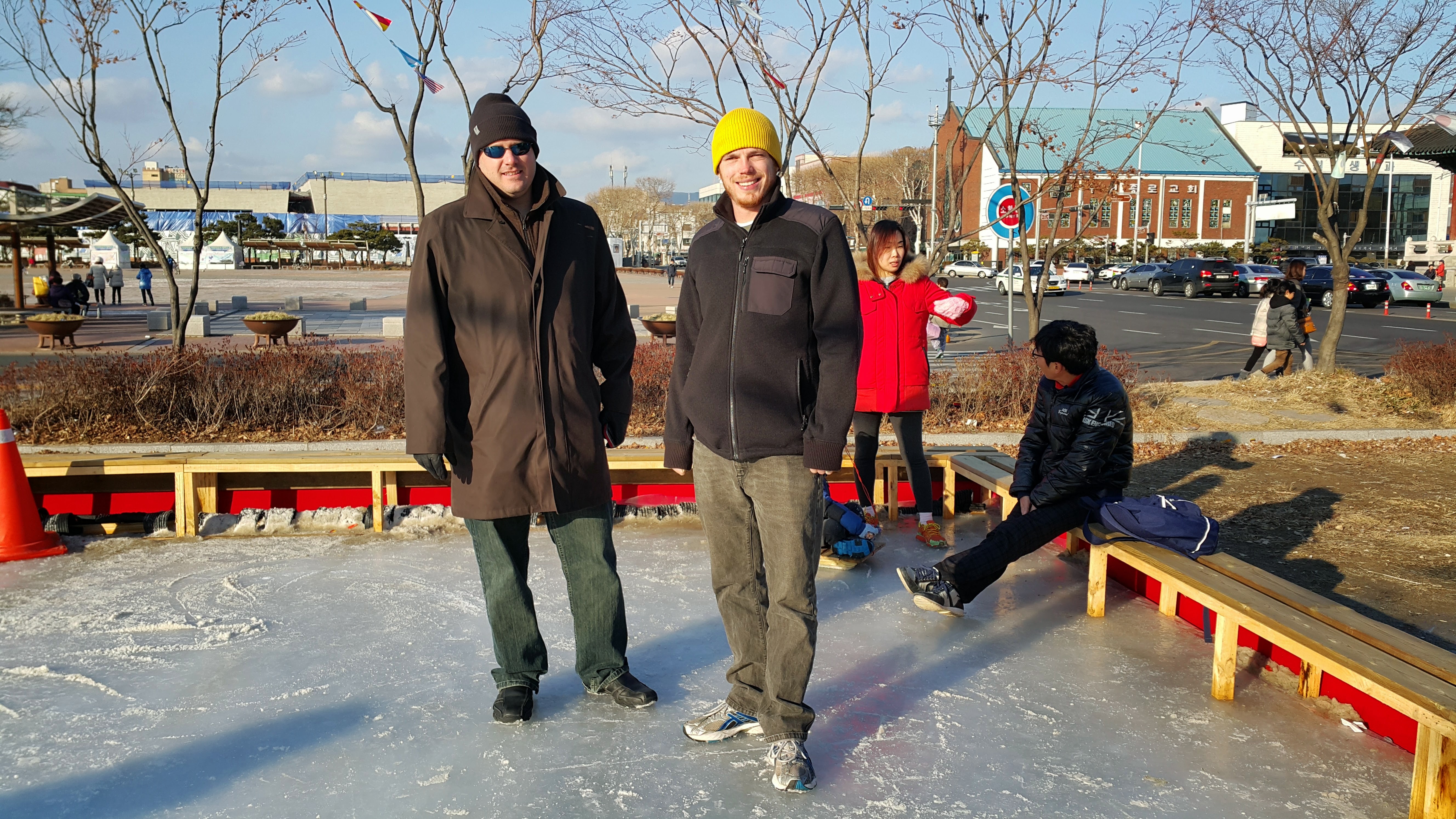
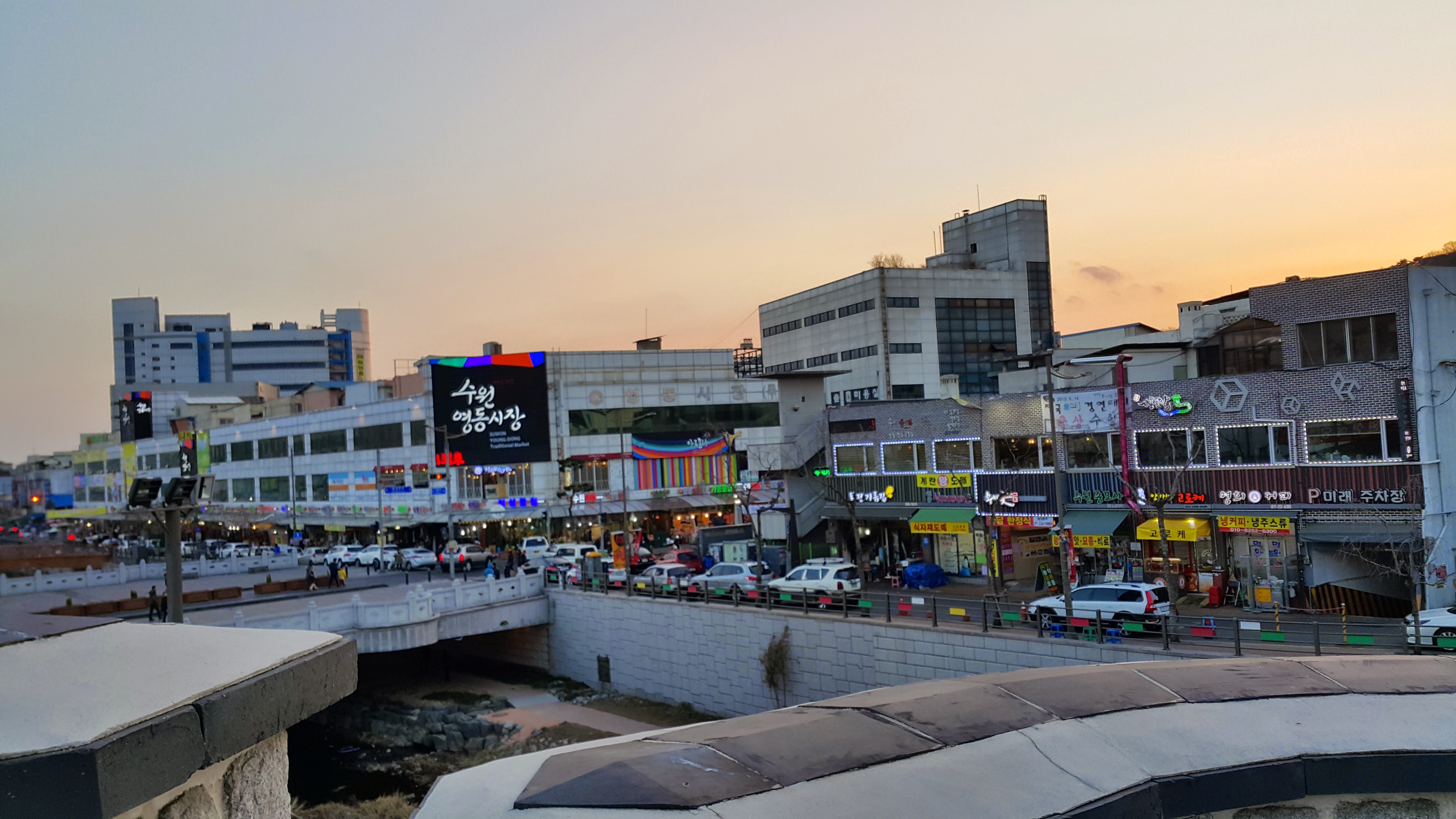
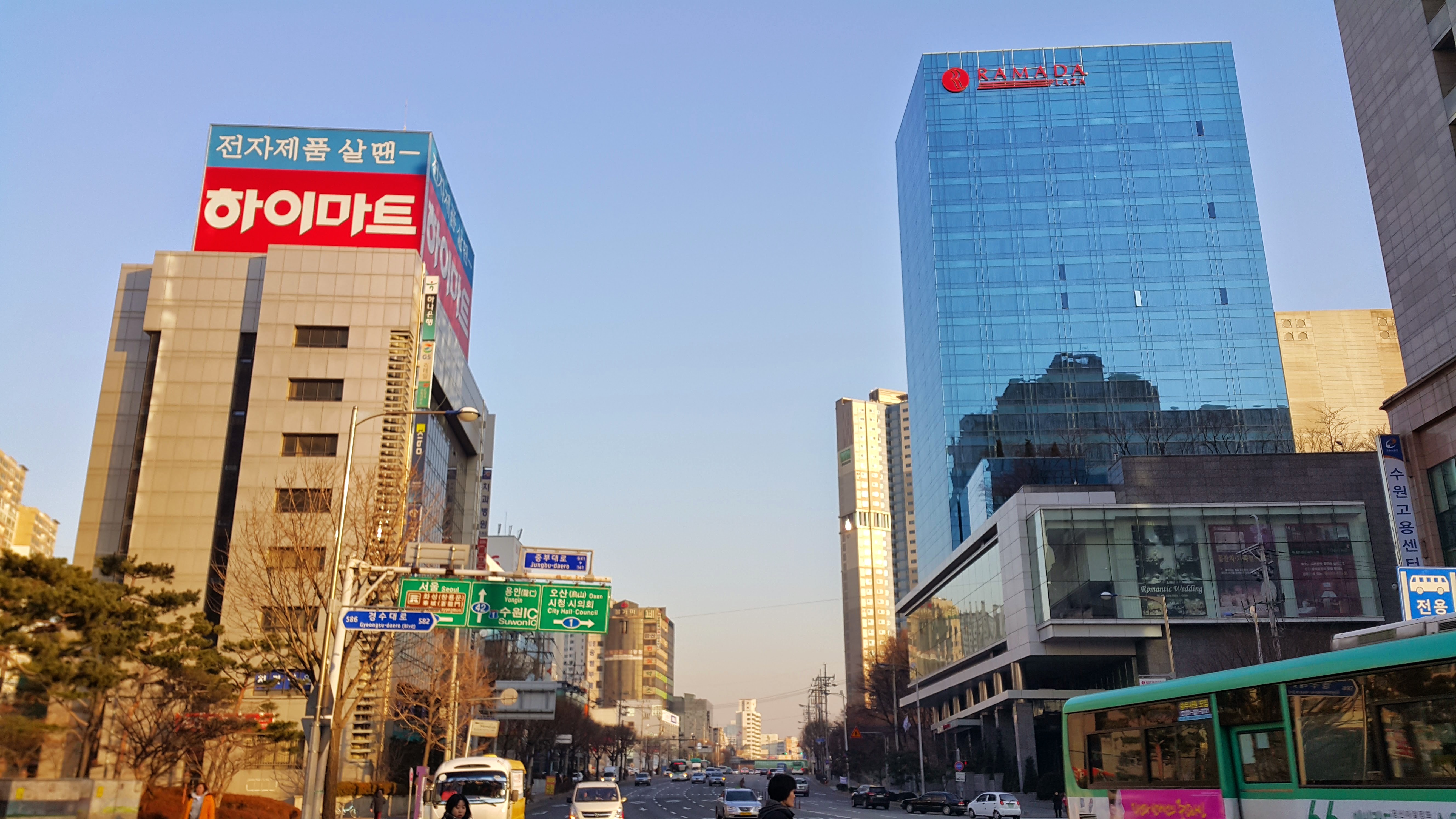
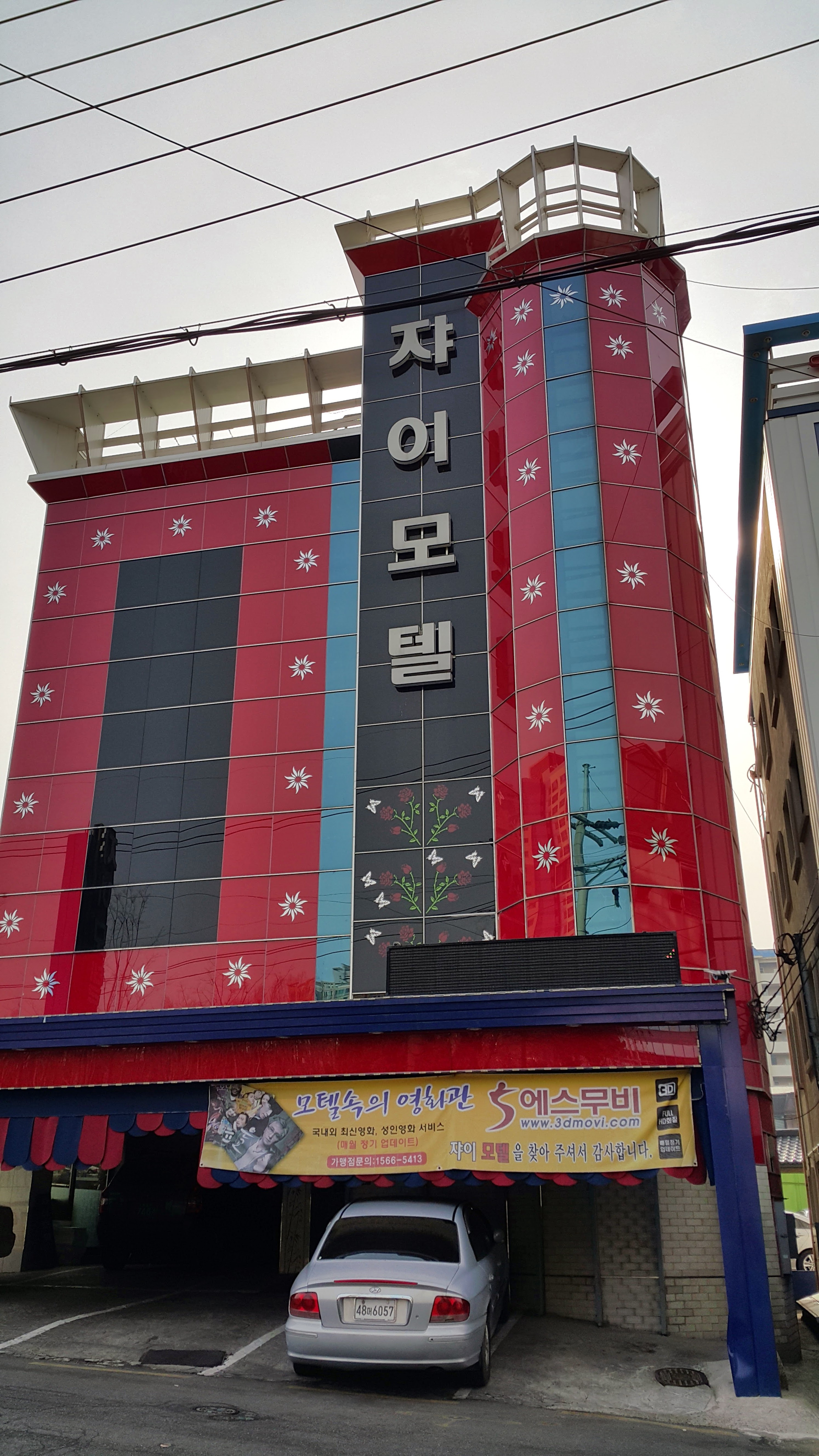
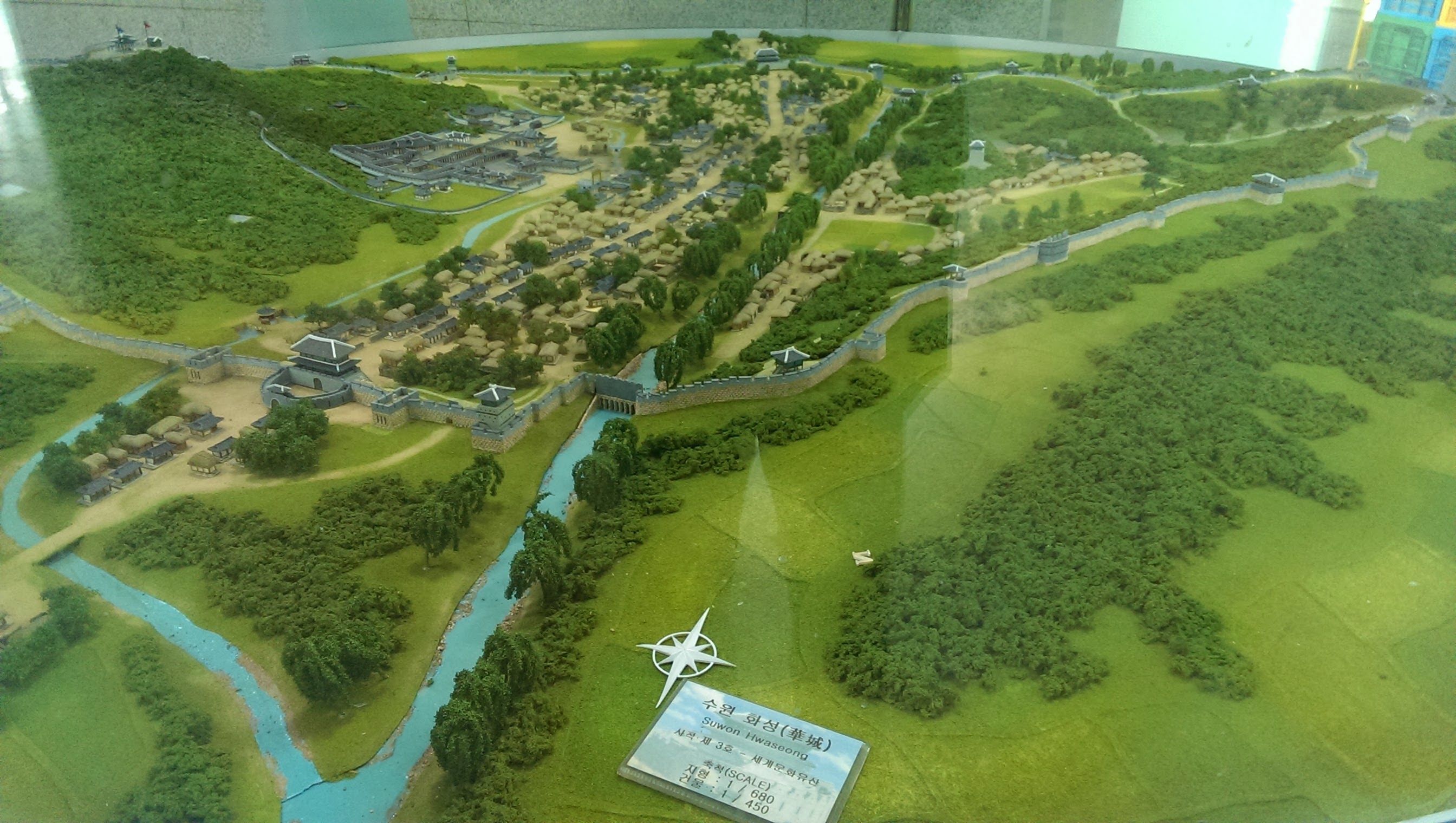
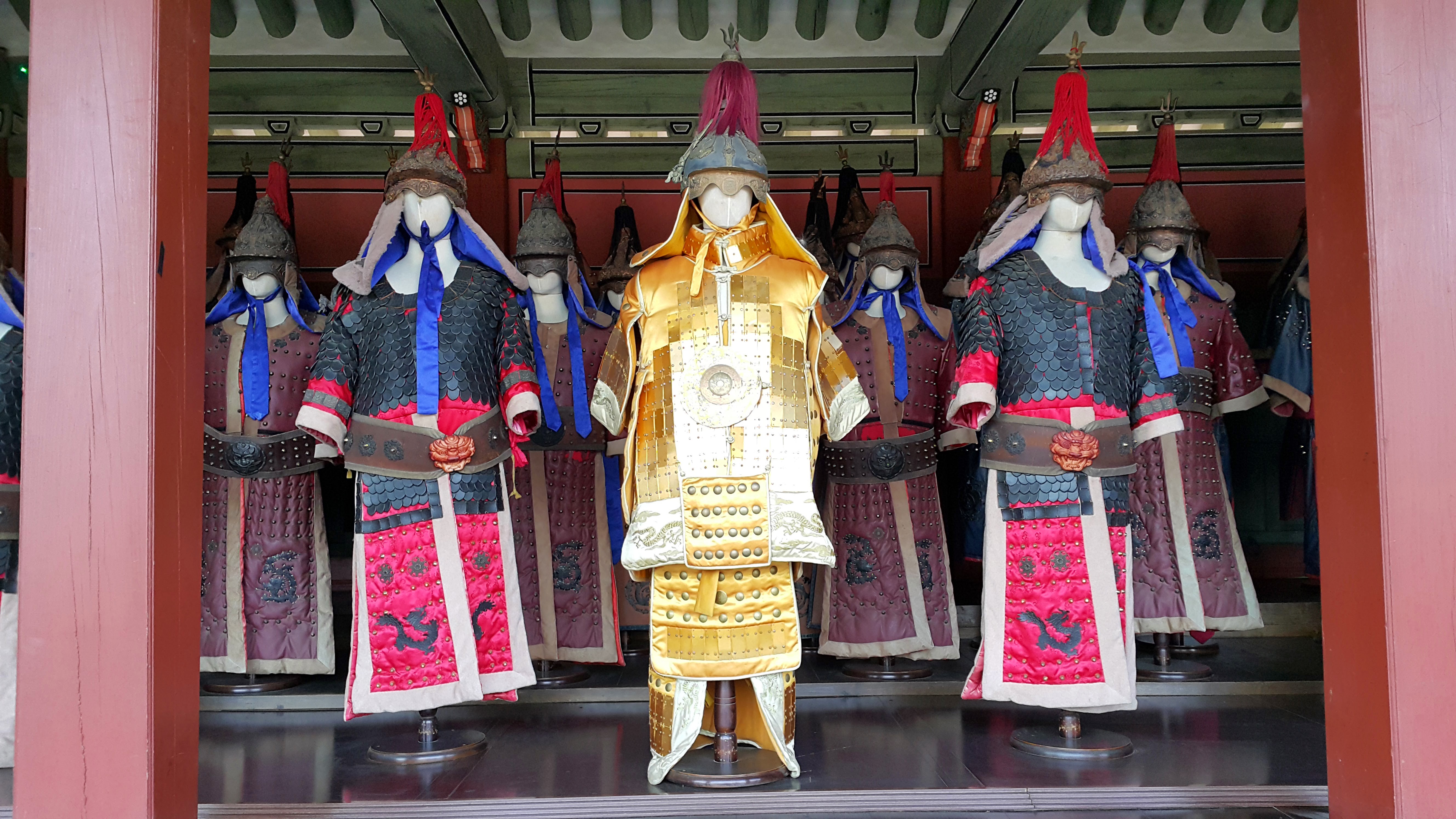
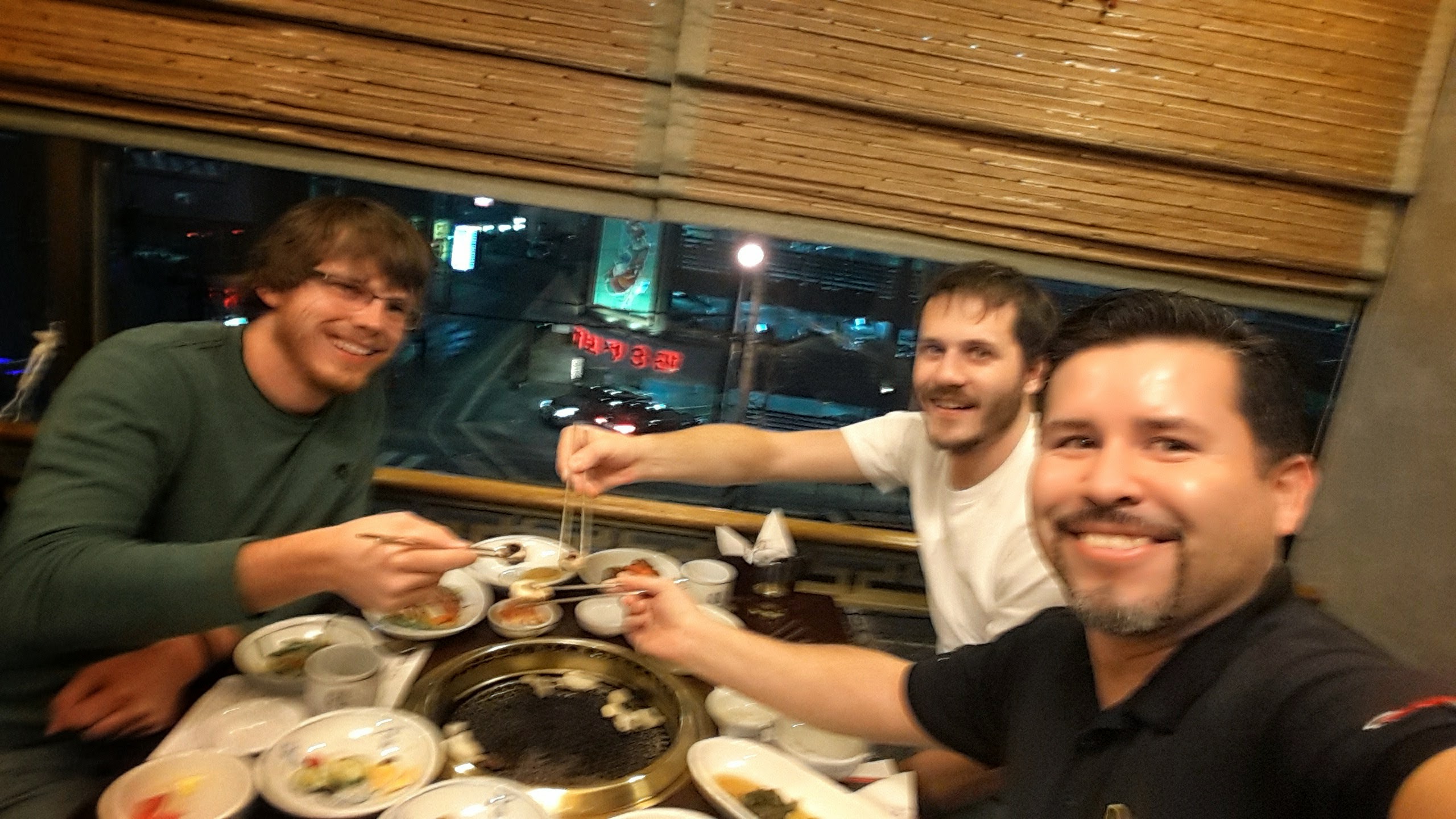
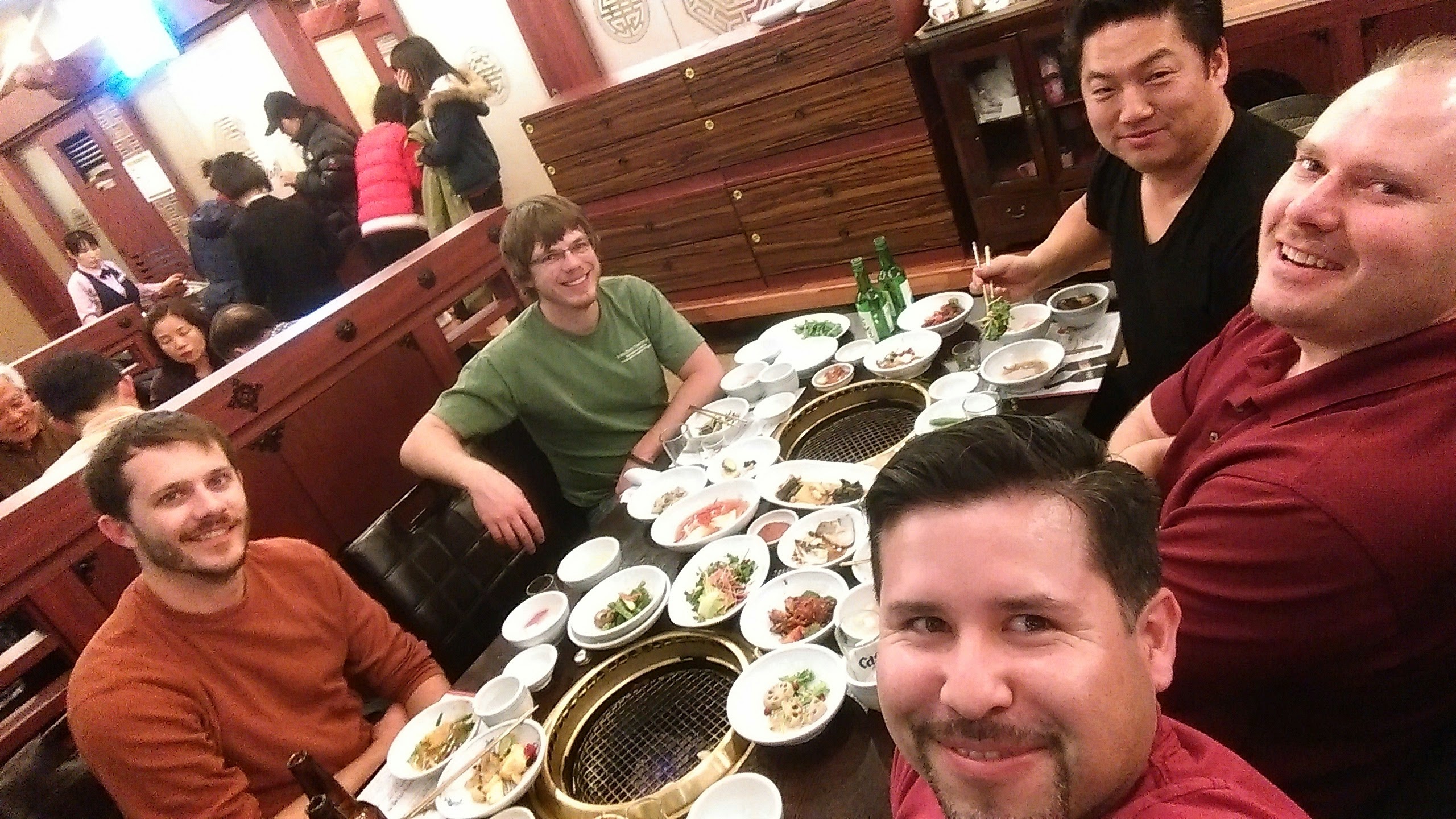
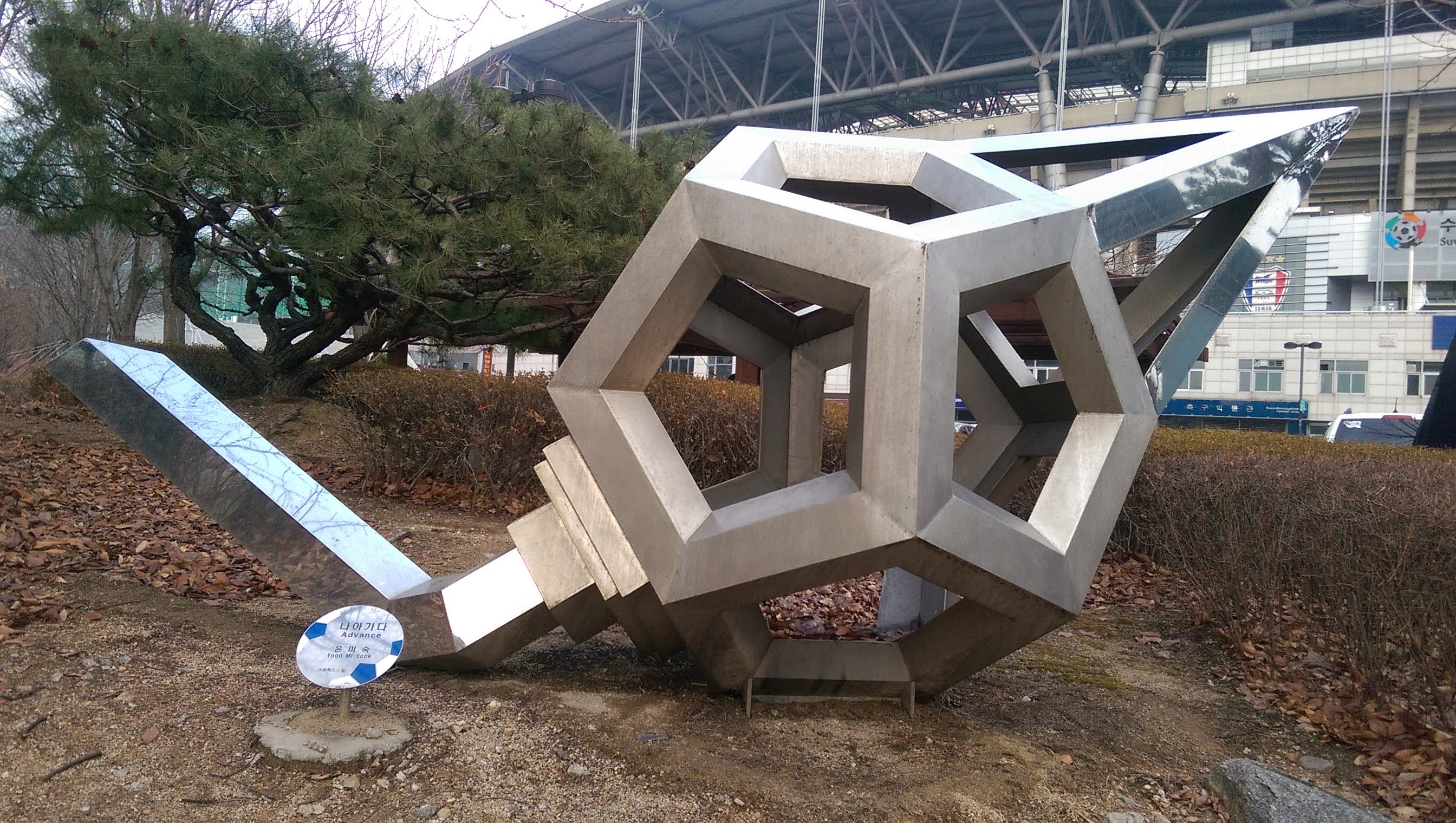
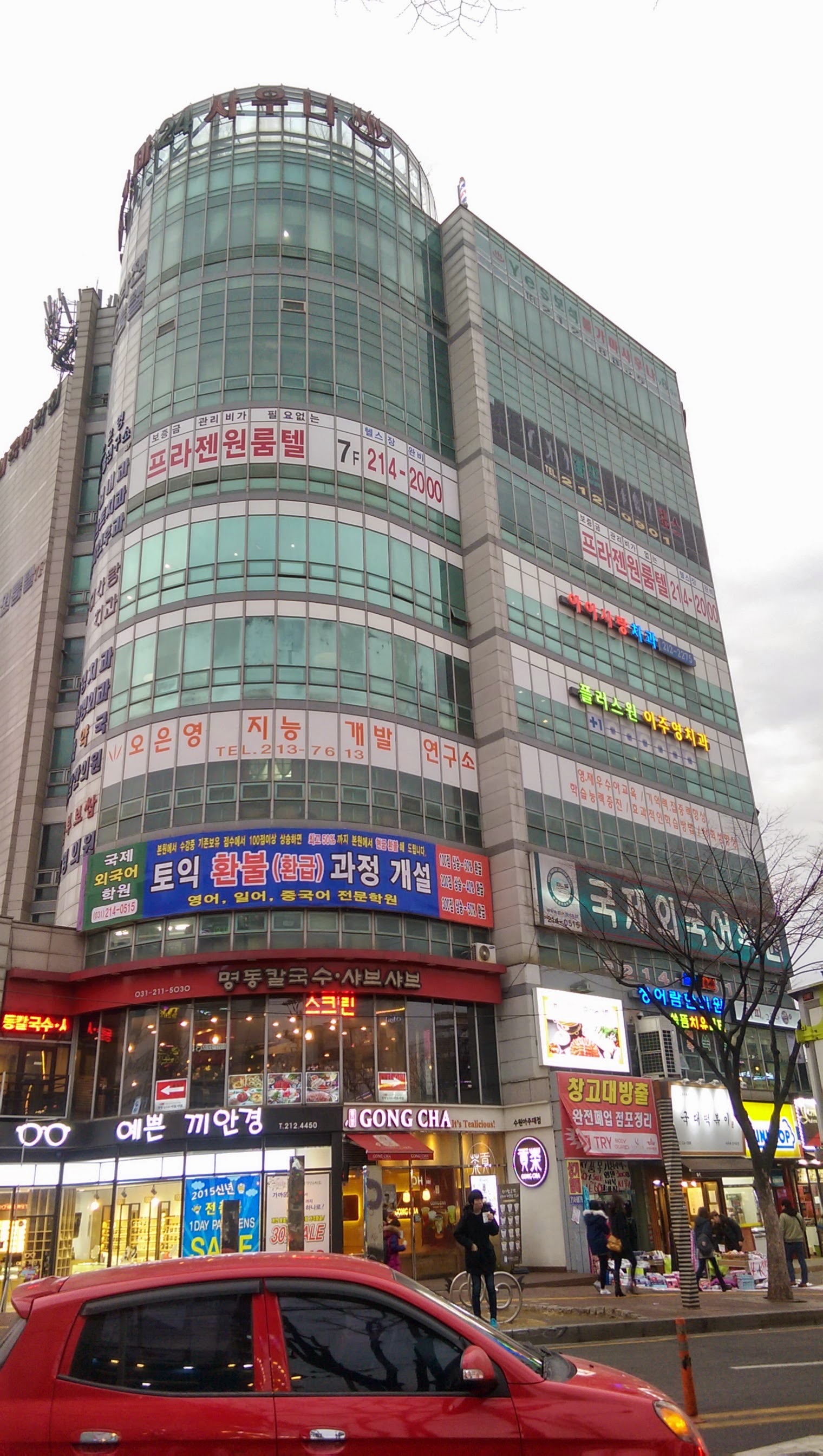
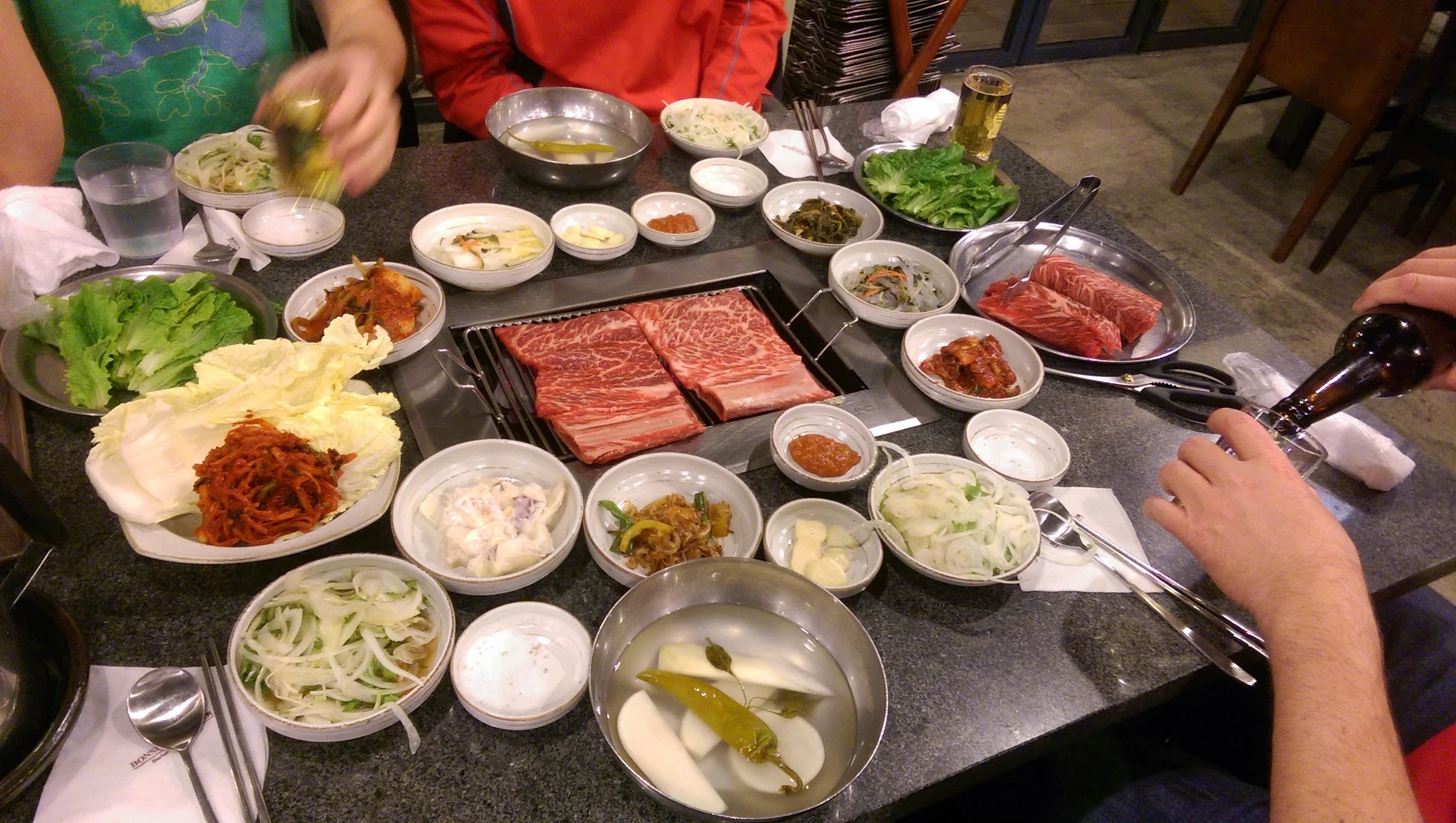
Suwon


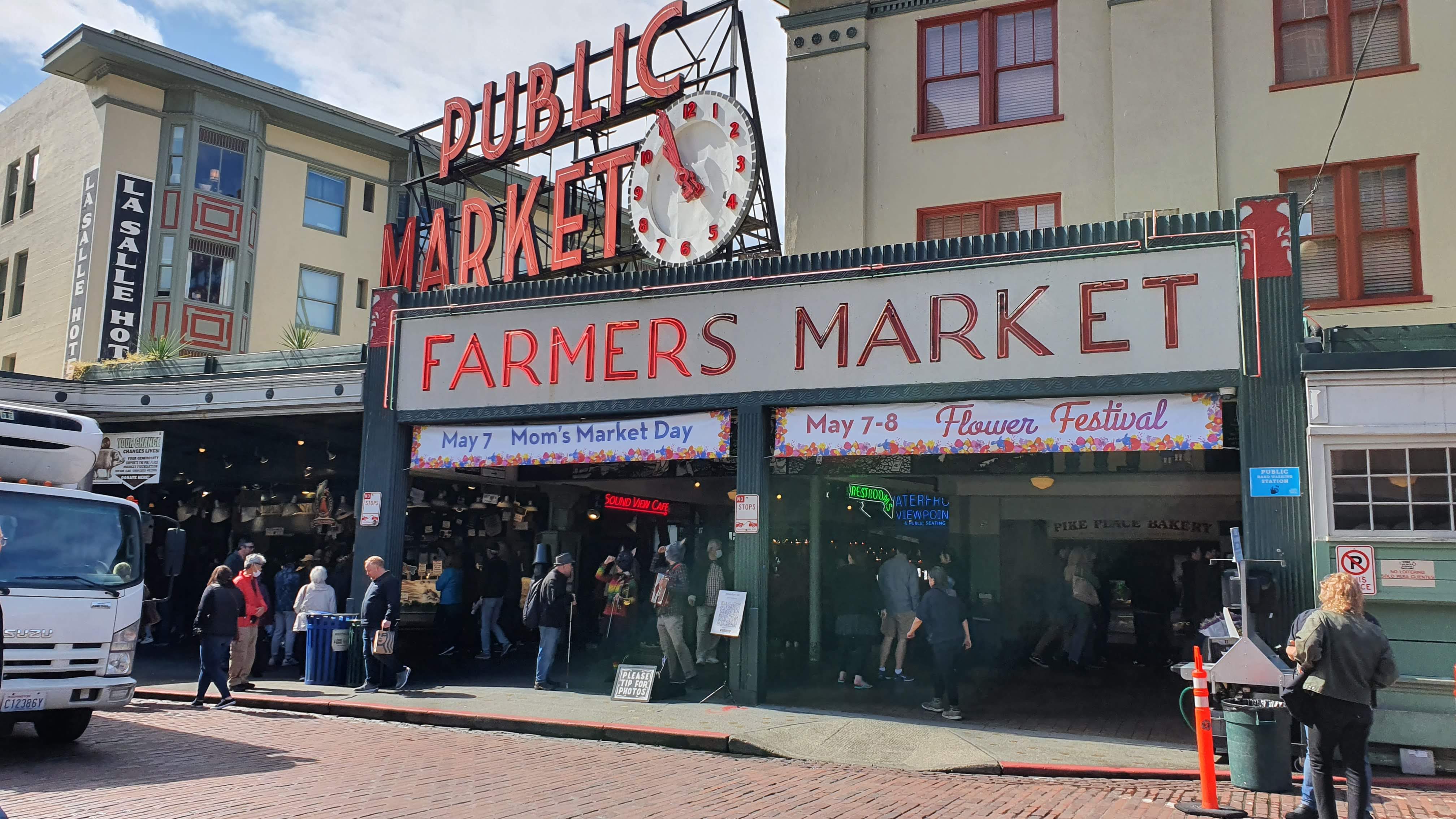
Seattle


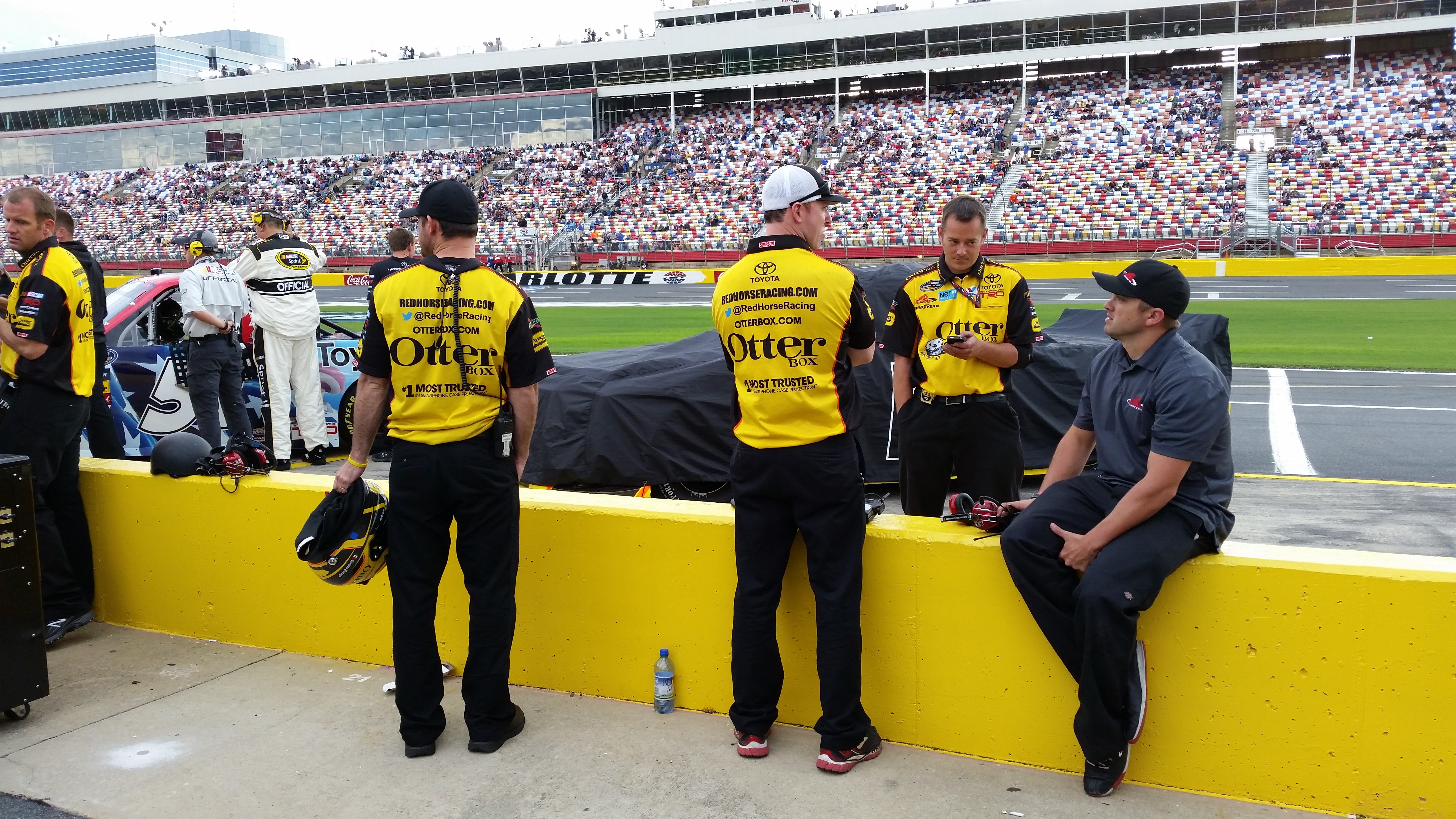
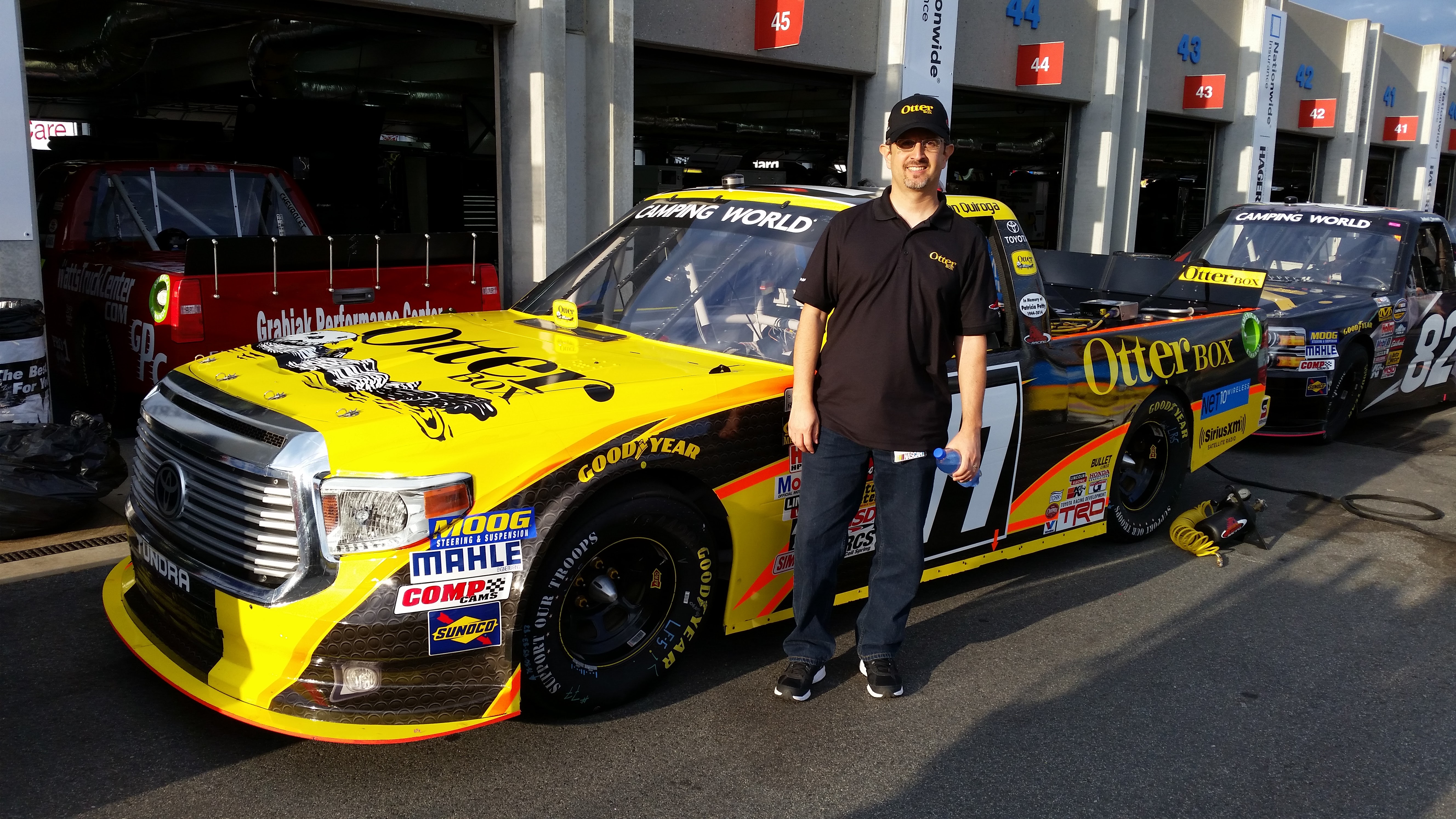
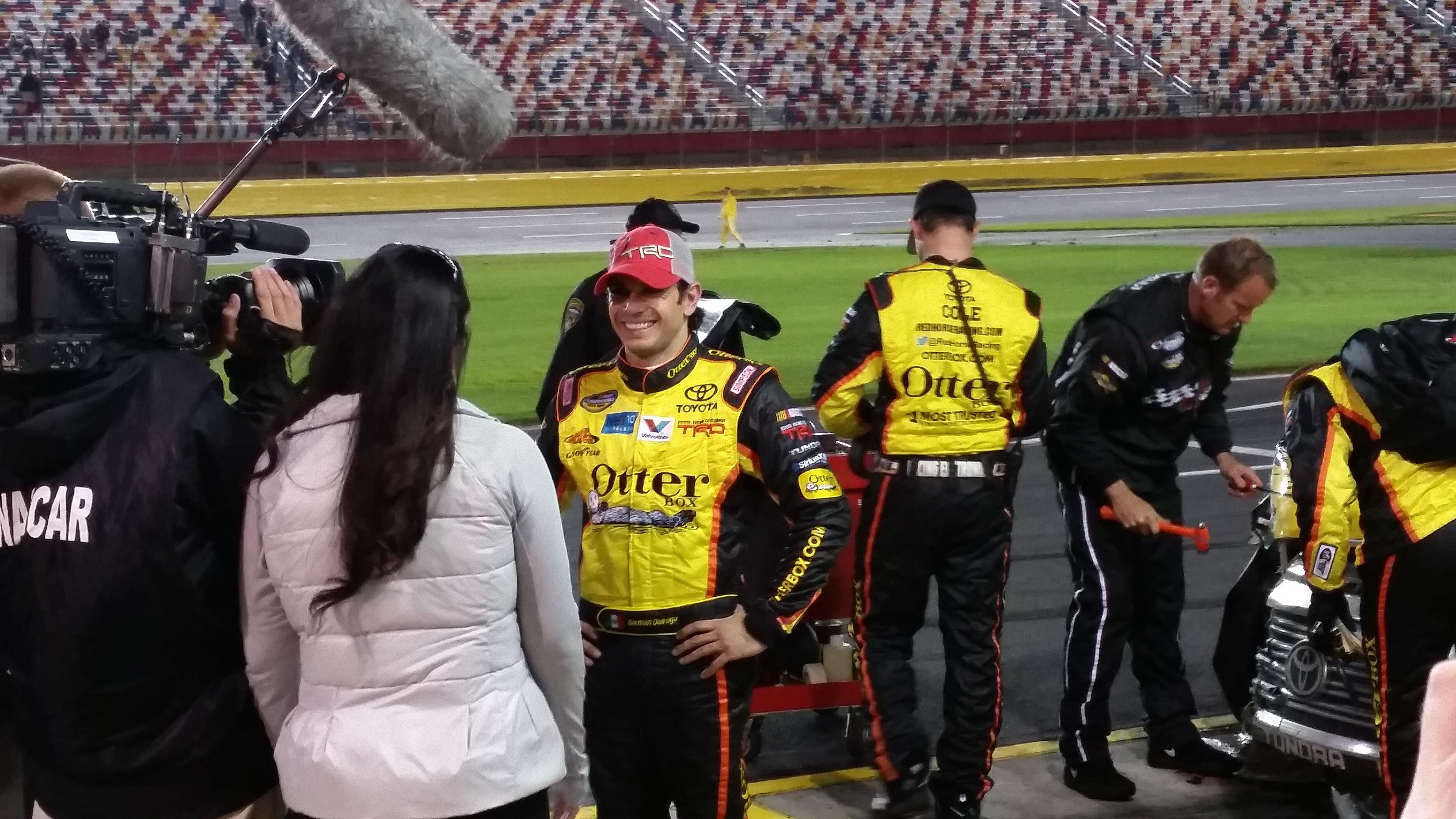
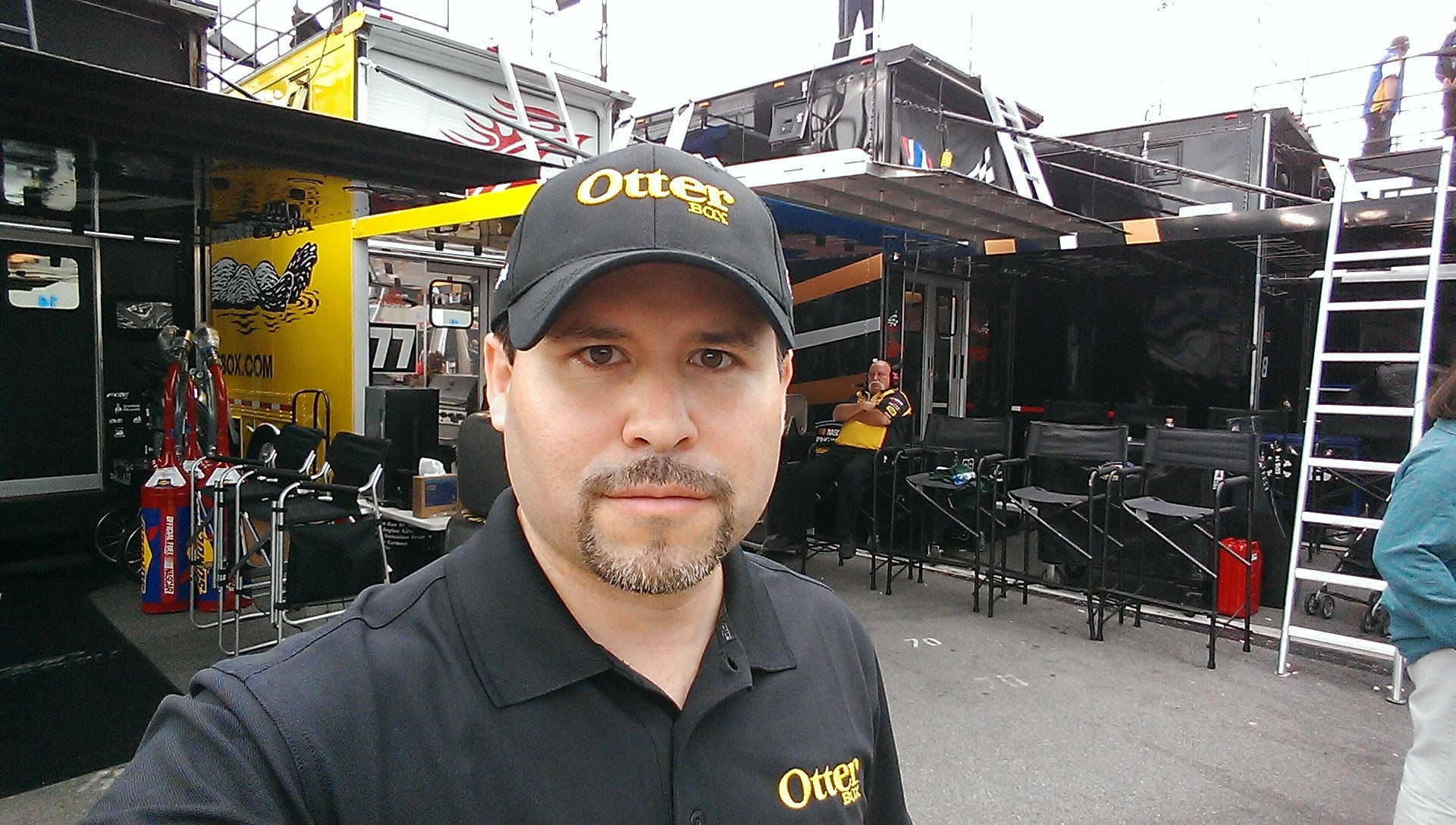
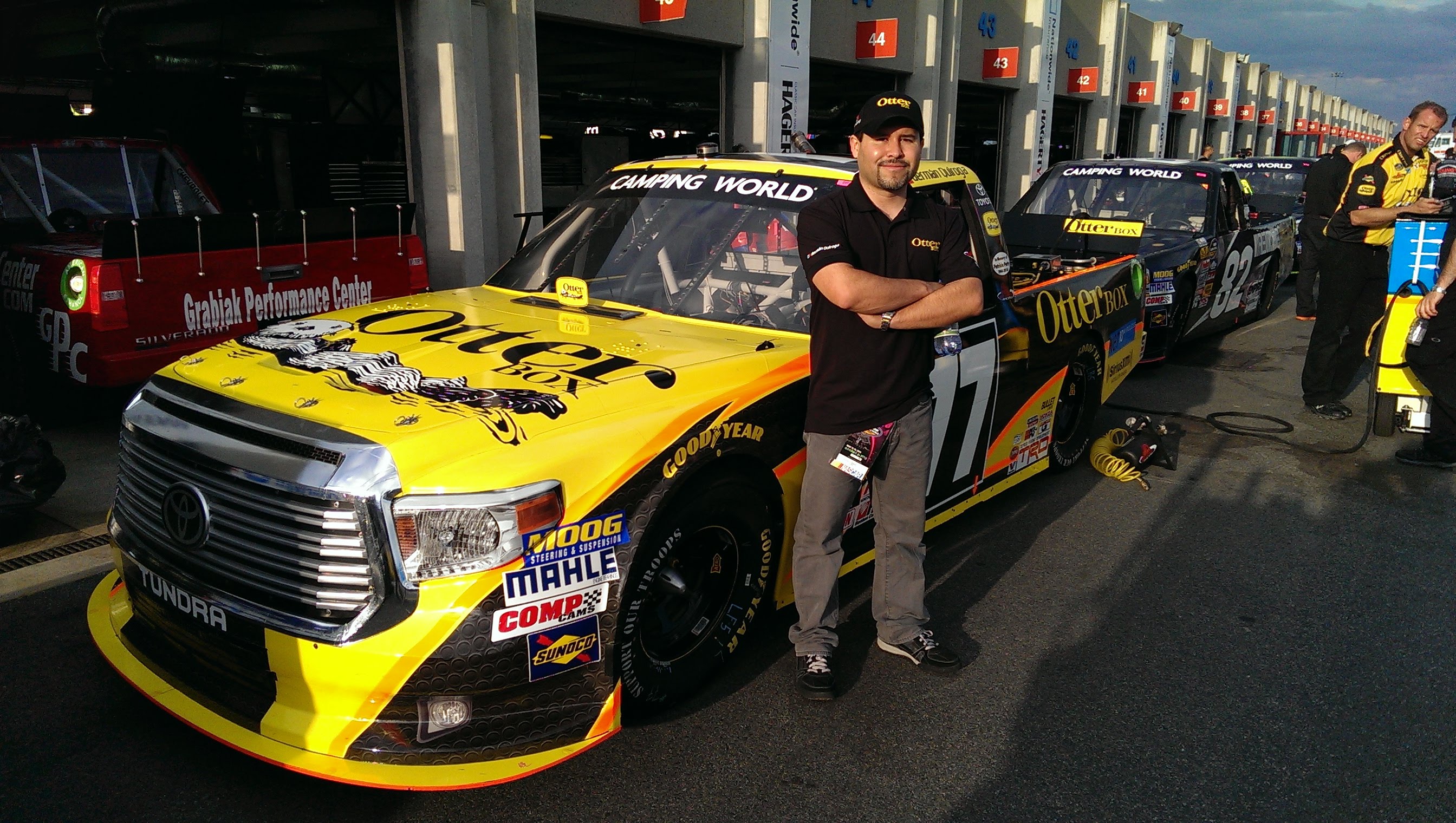
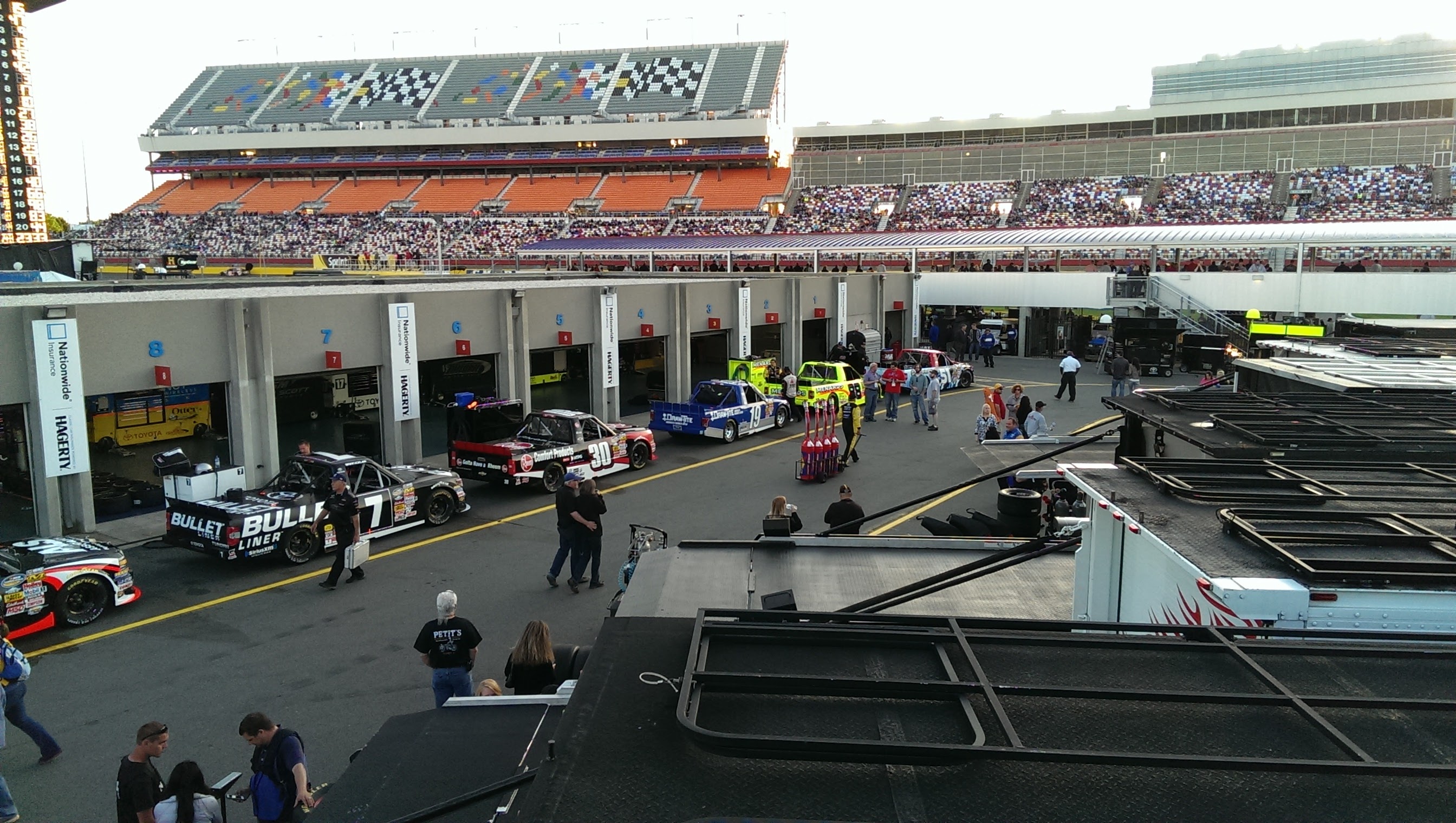
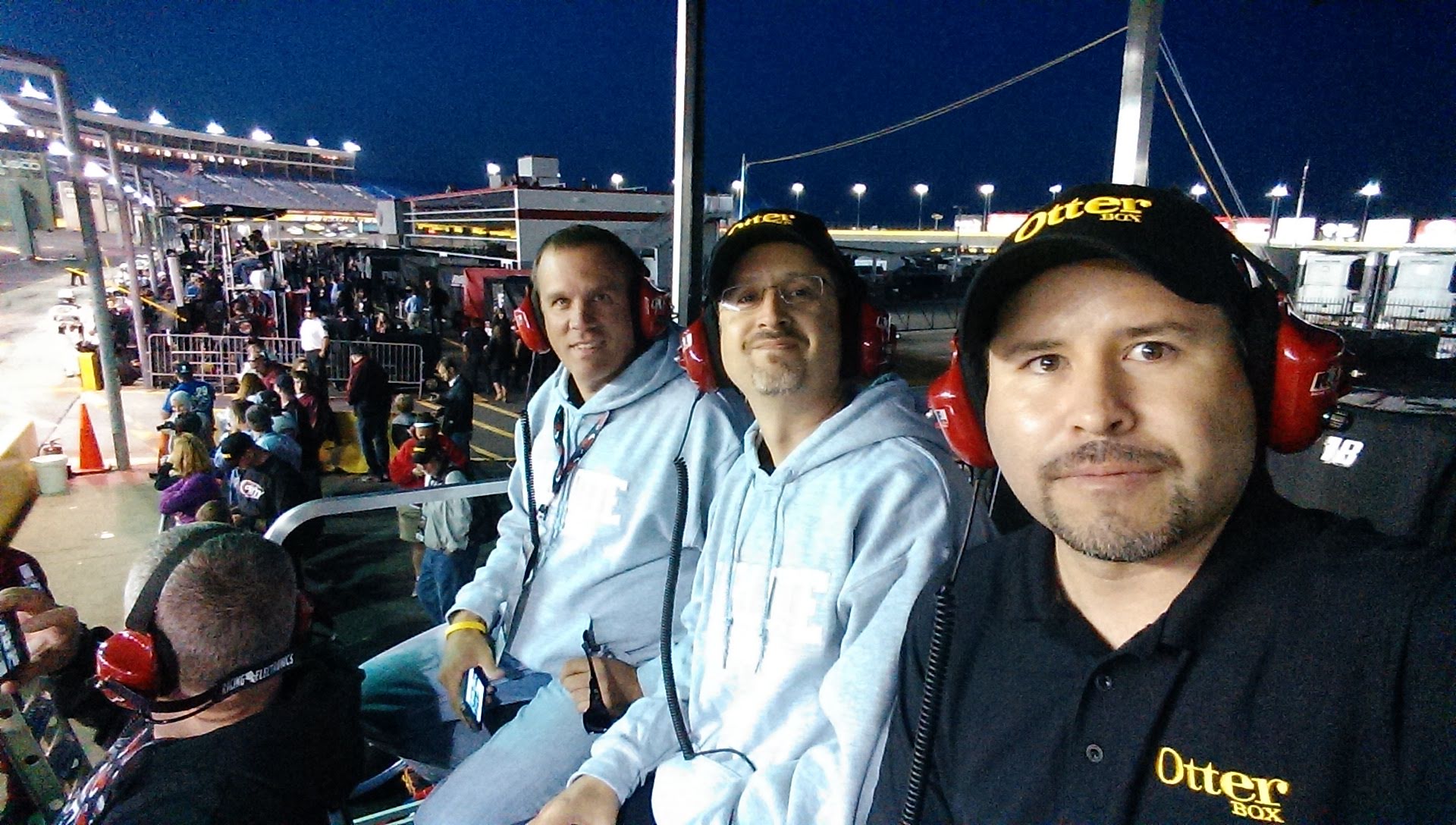
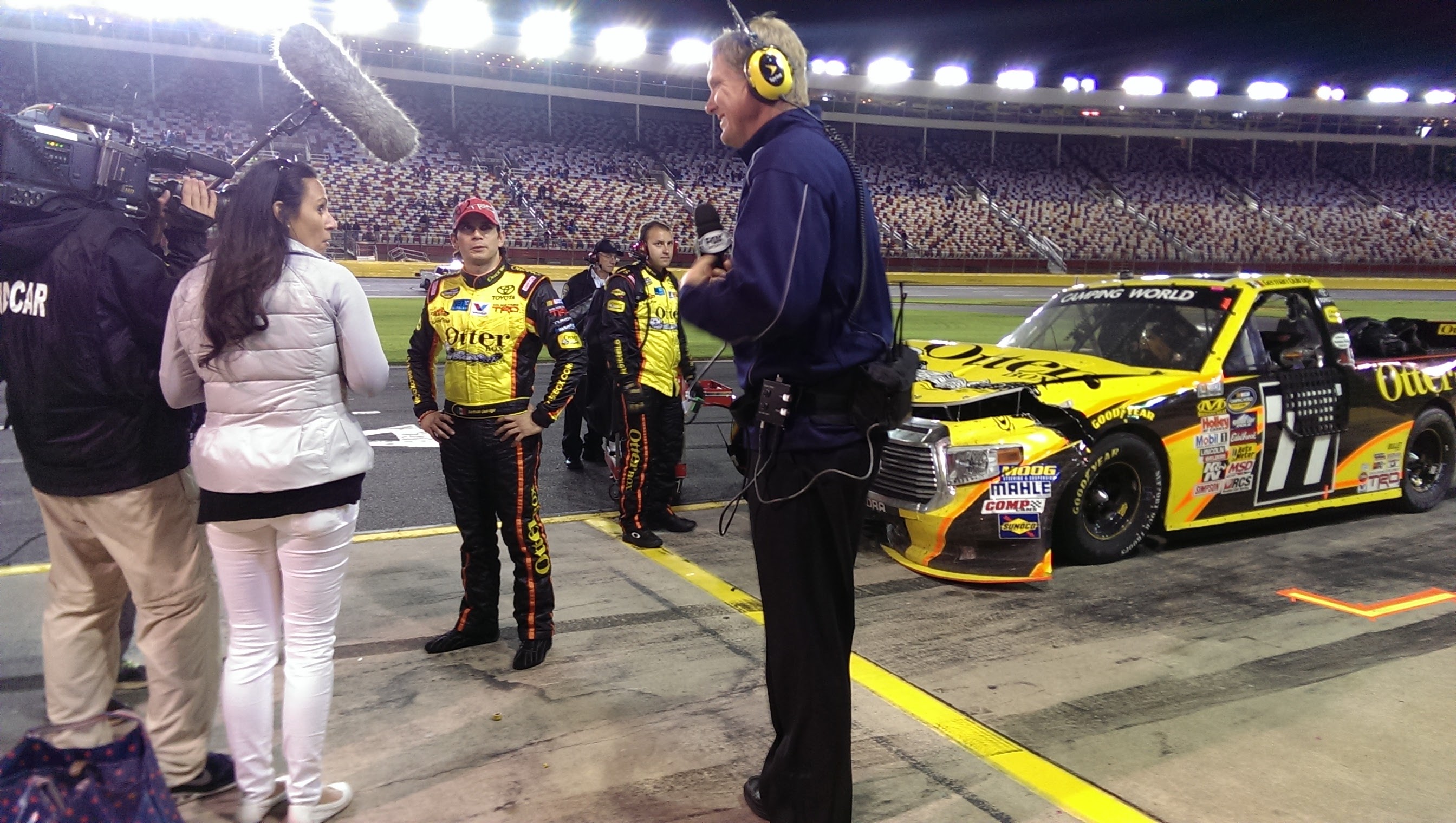
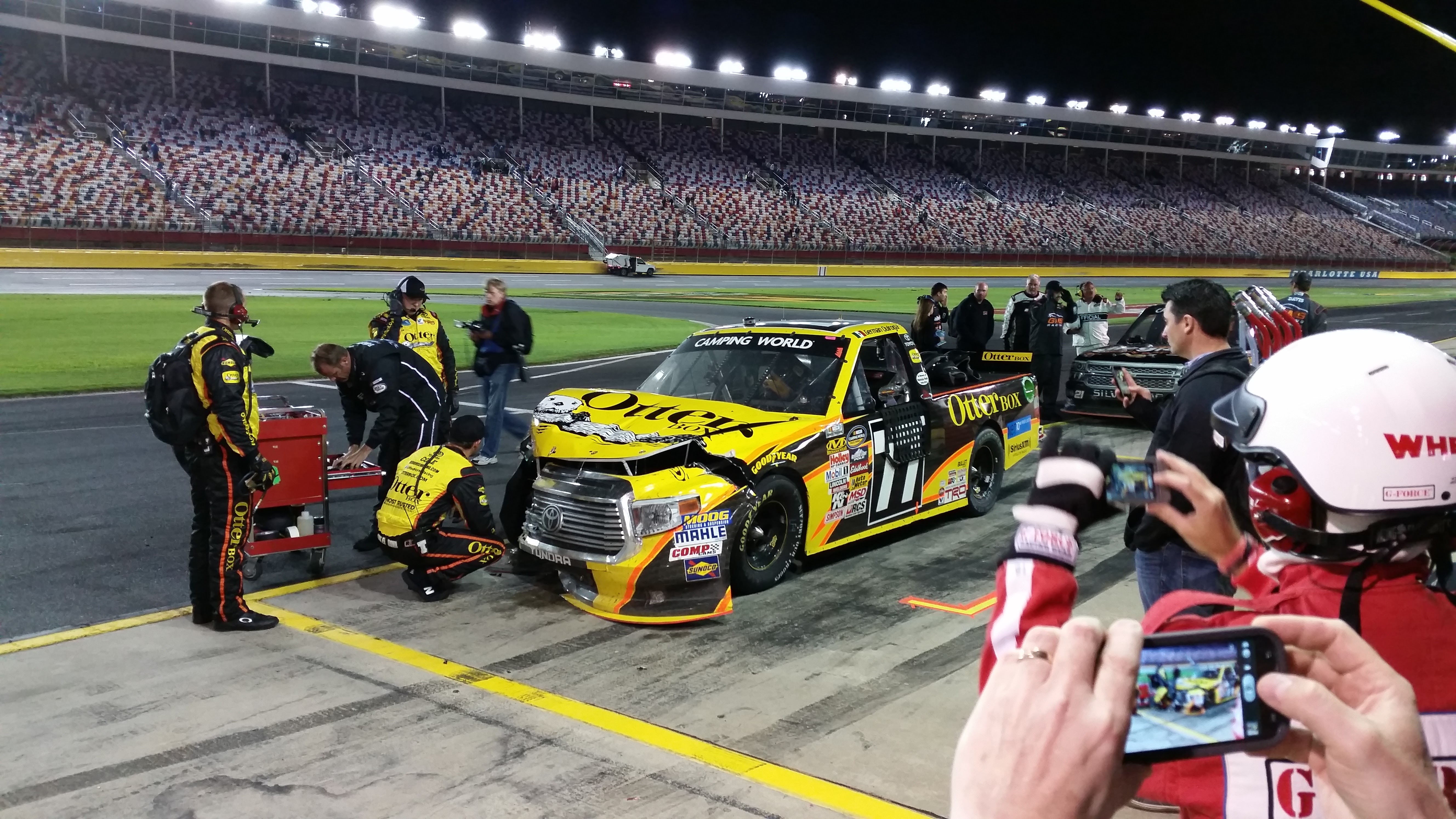
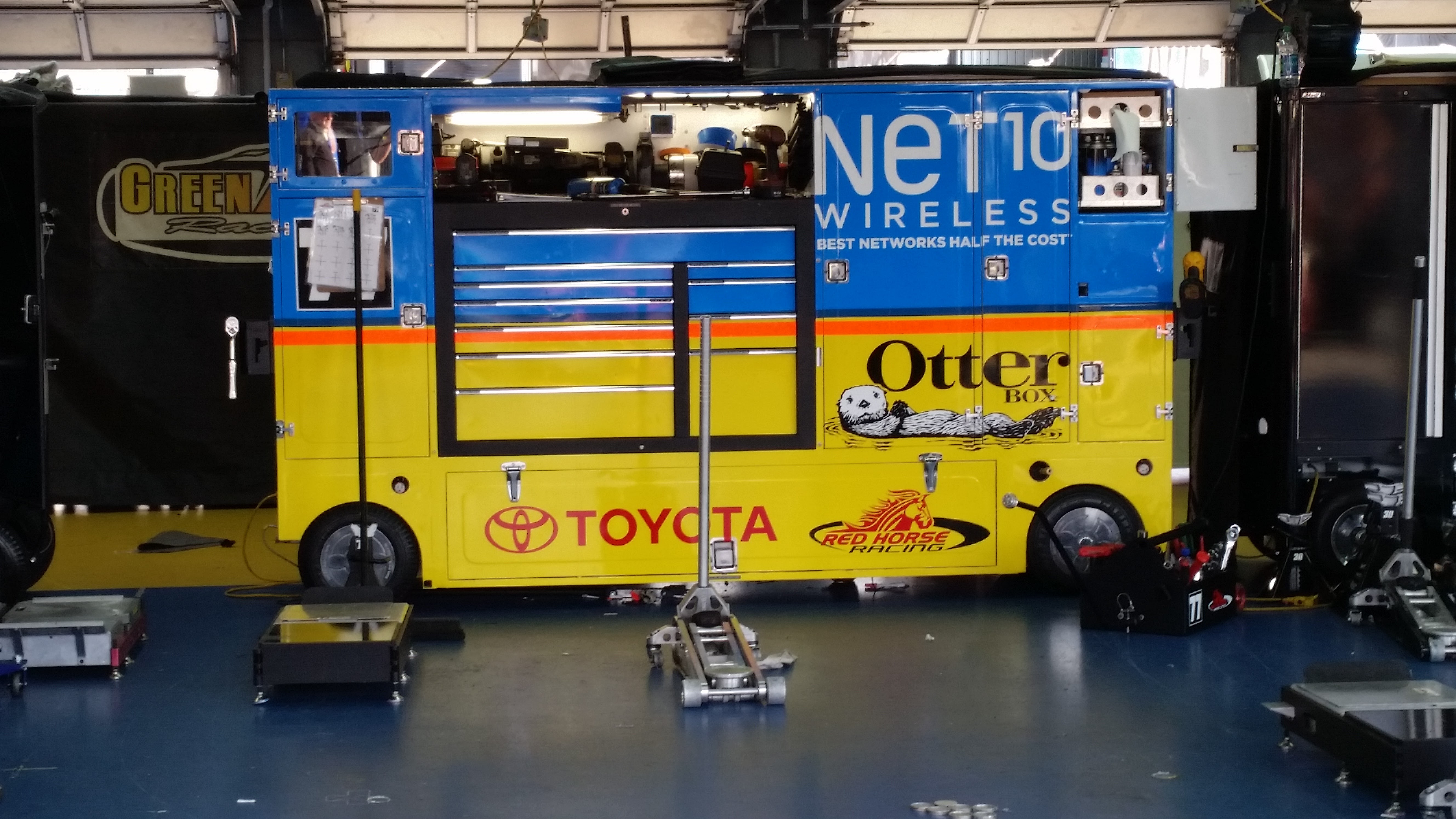
Charlotte Motor Speedway


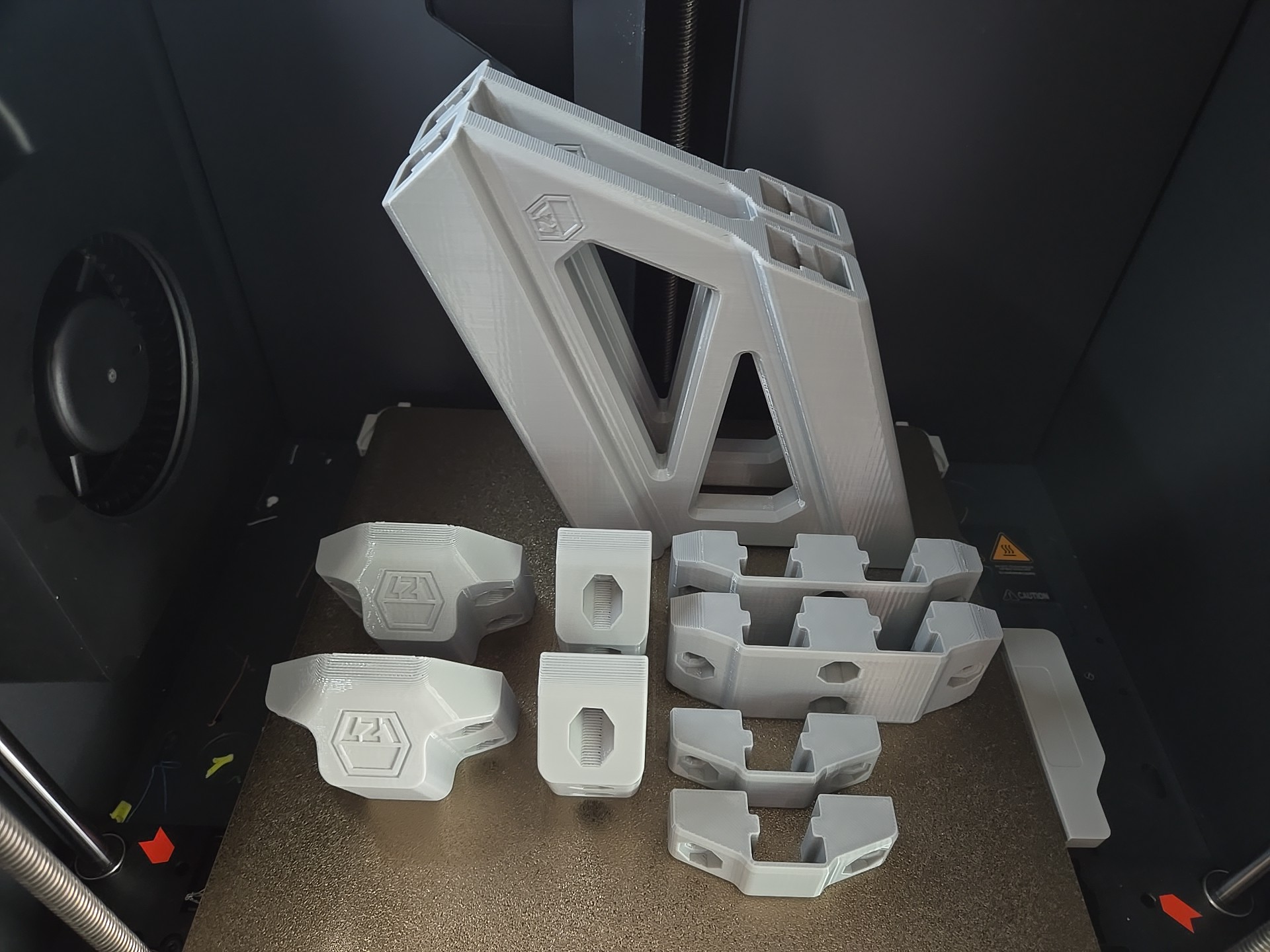
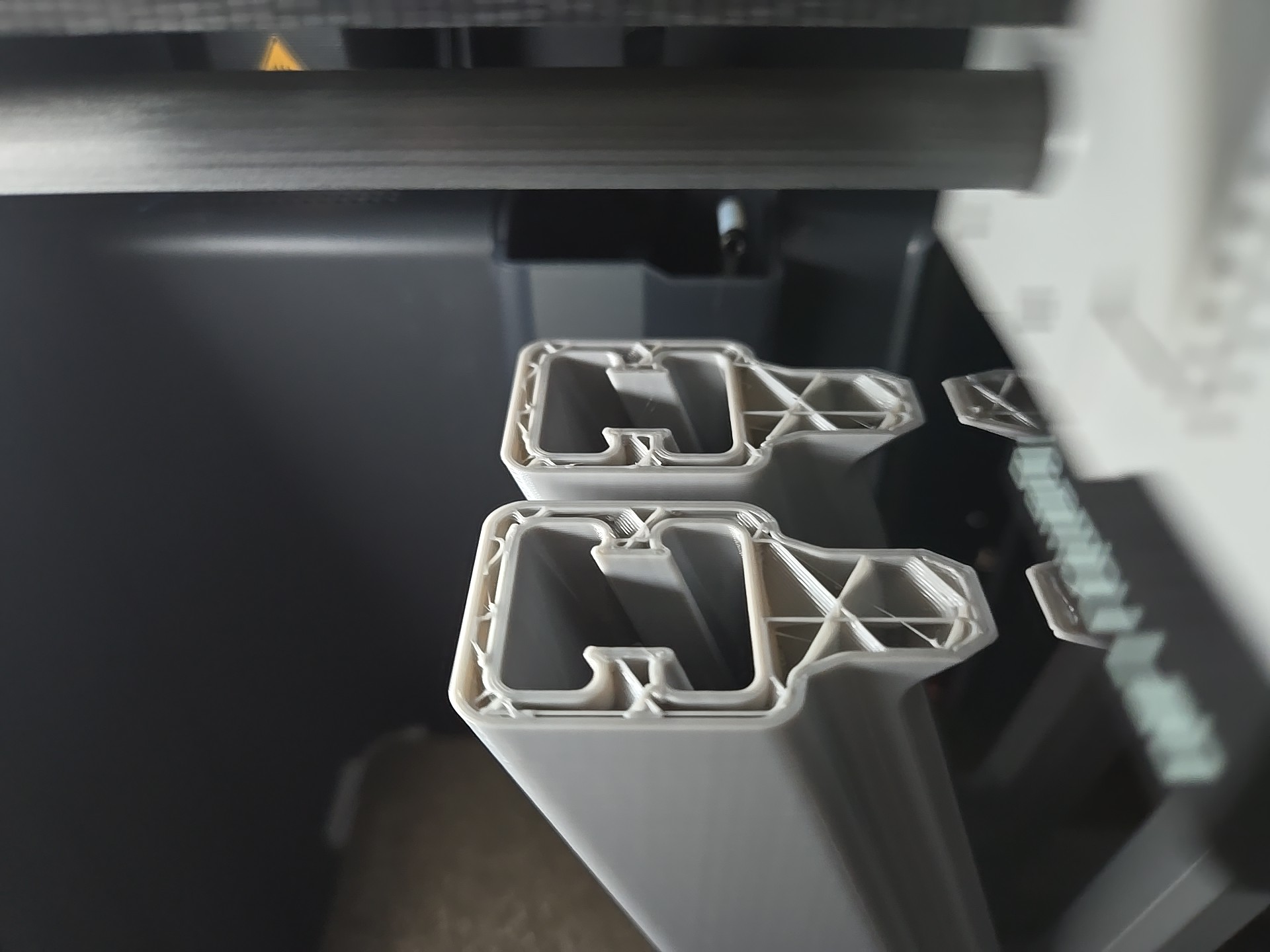
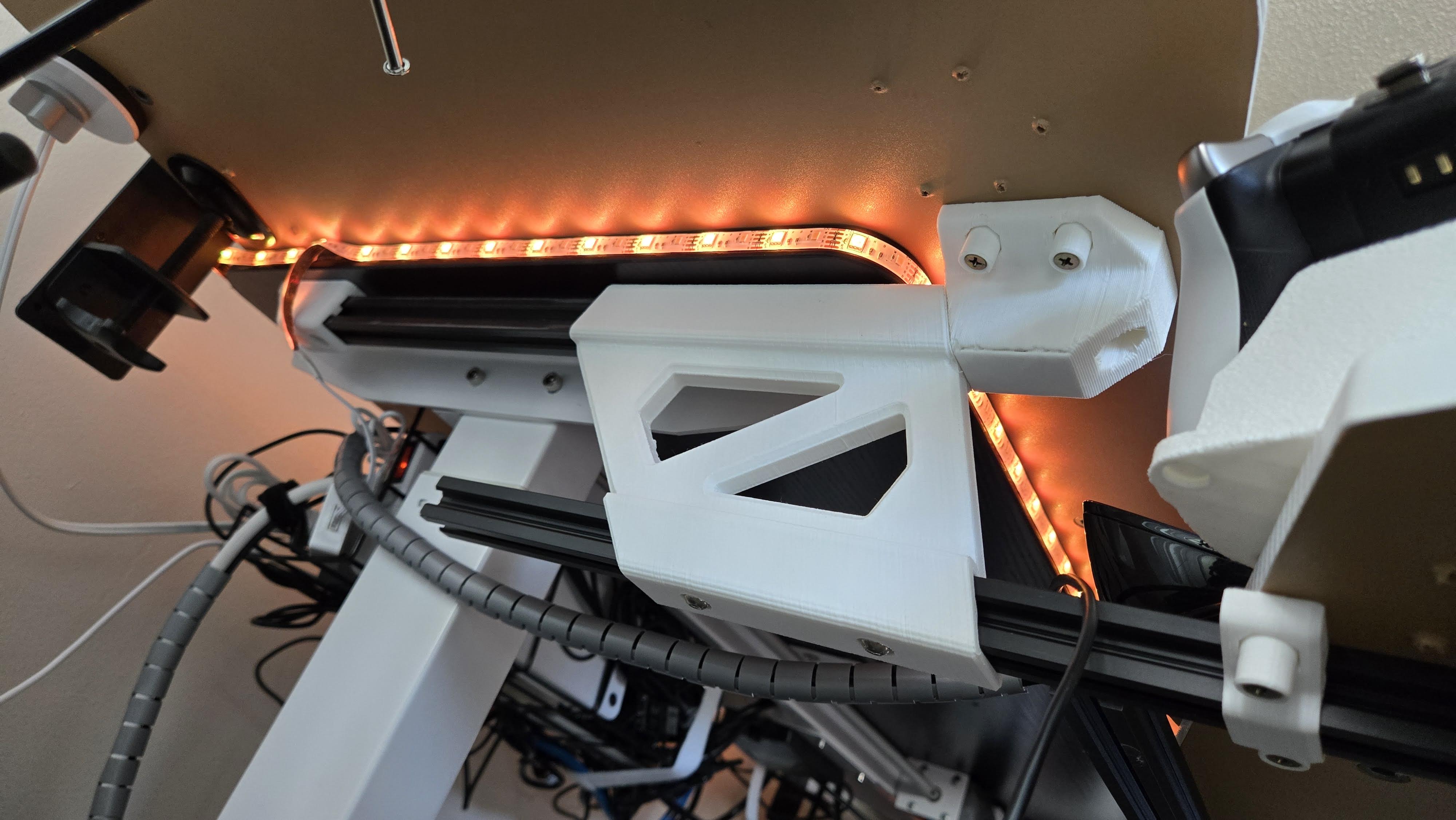
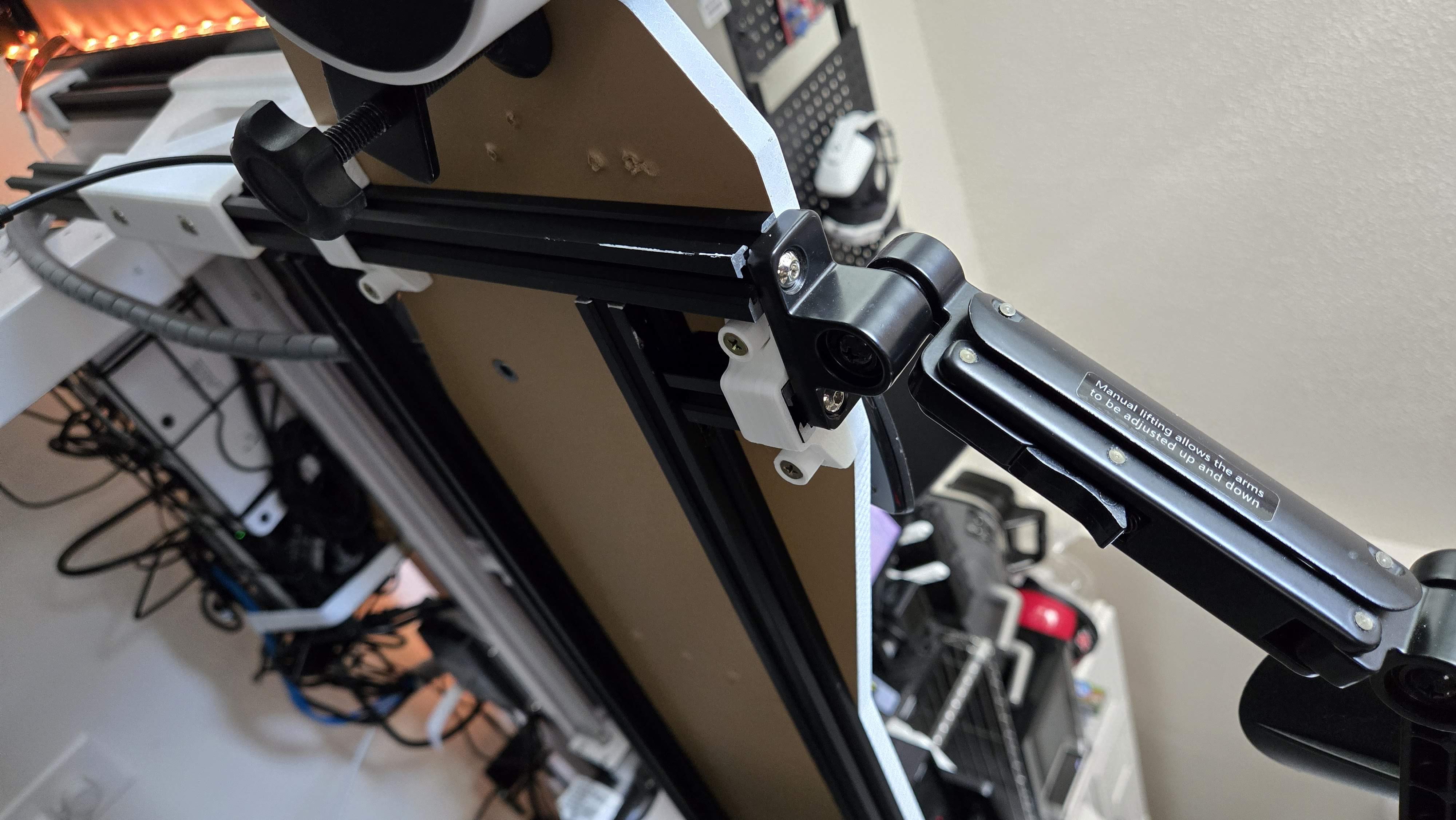
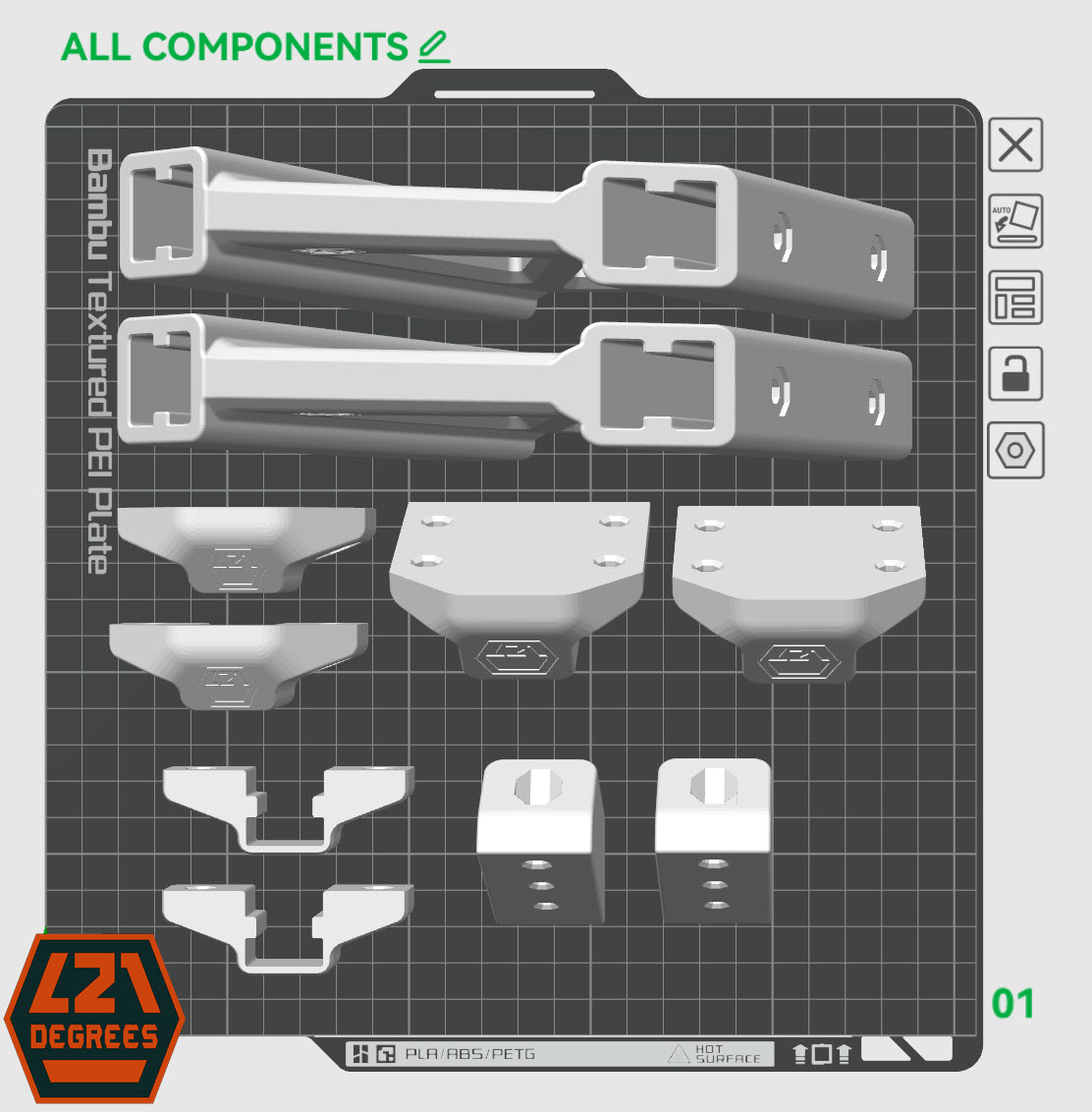
I decided to print my keyboard shelf parts on the P1S on PETG and gray color. But before that, I wanted to implement some changes to improve the mounting and sliding action.
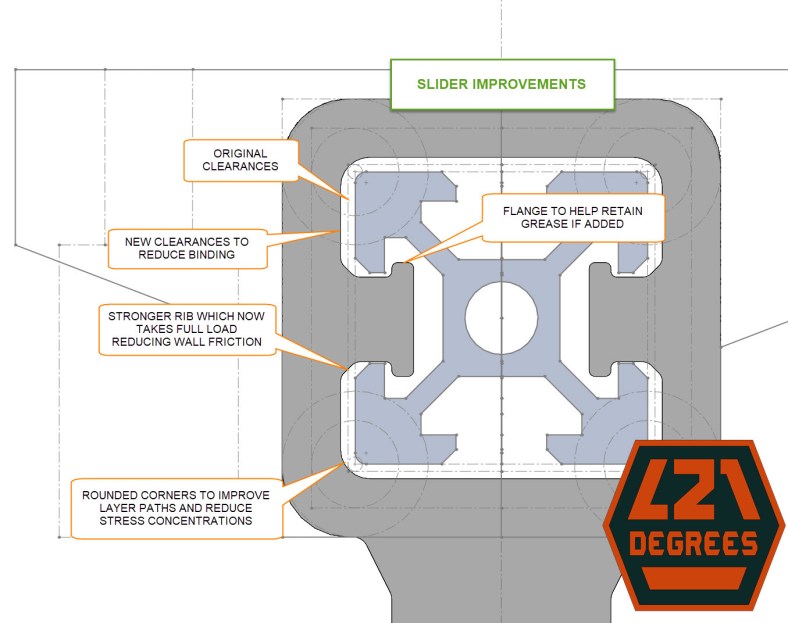
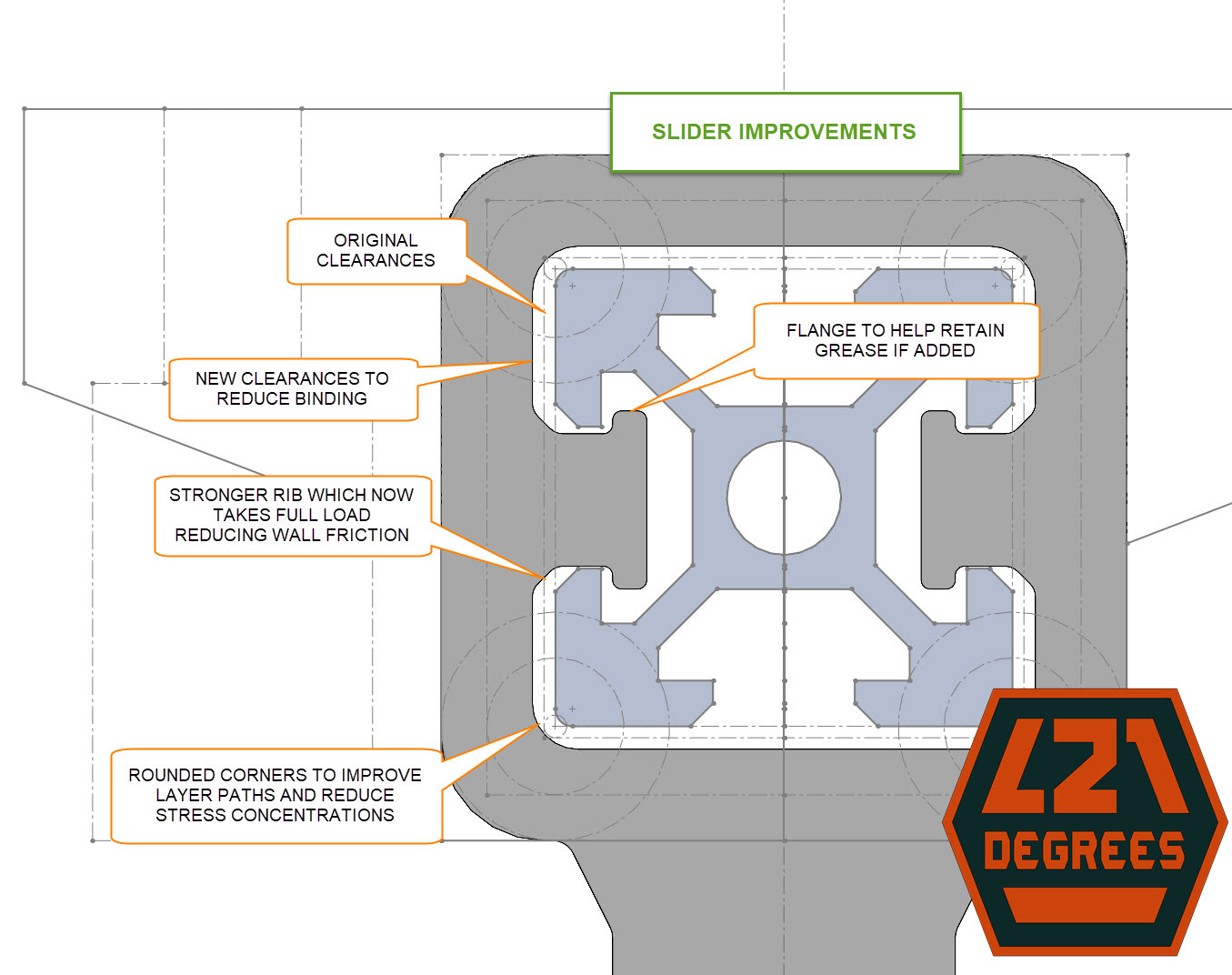
Things I wanted to address in order of importance:
The image below shows the changes but in summary, I increased the side clearances to reduce/eliminate wall friction, strengthened the slider ribs and added a flange to help retain grease if added, and increased corner fillets (rounding) to reduce/eliminate stress concentrations:

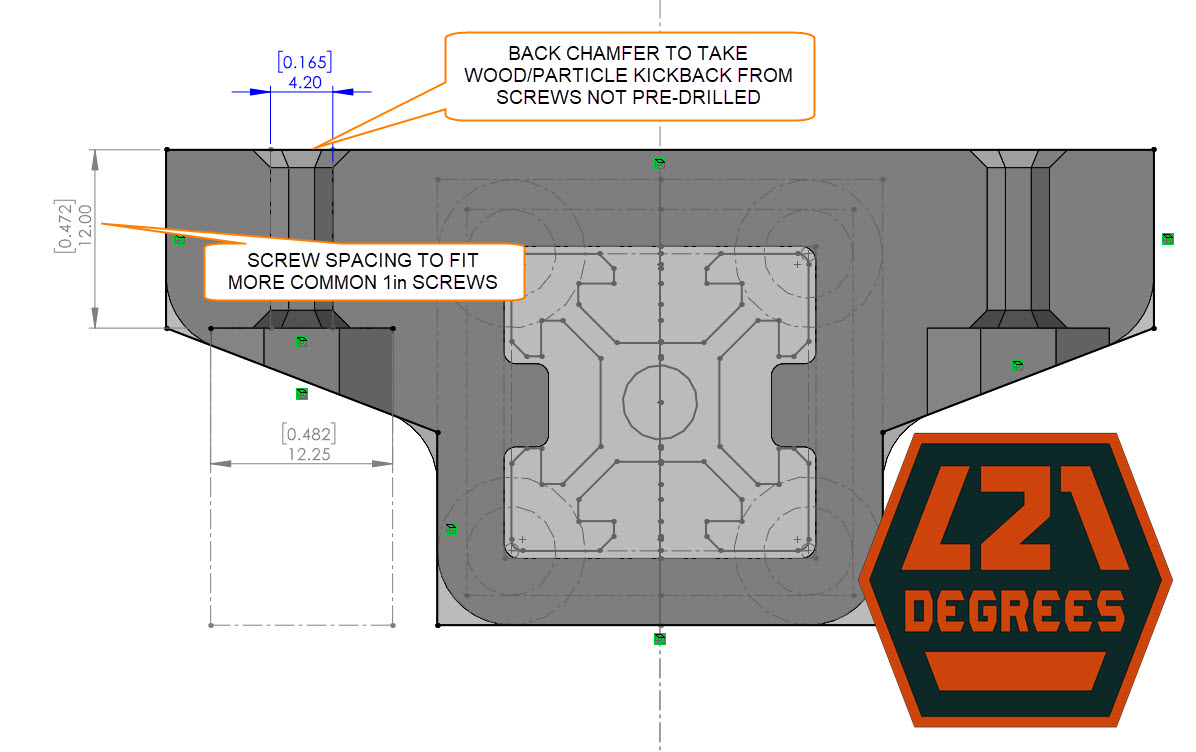
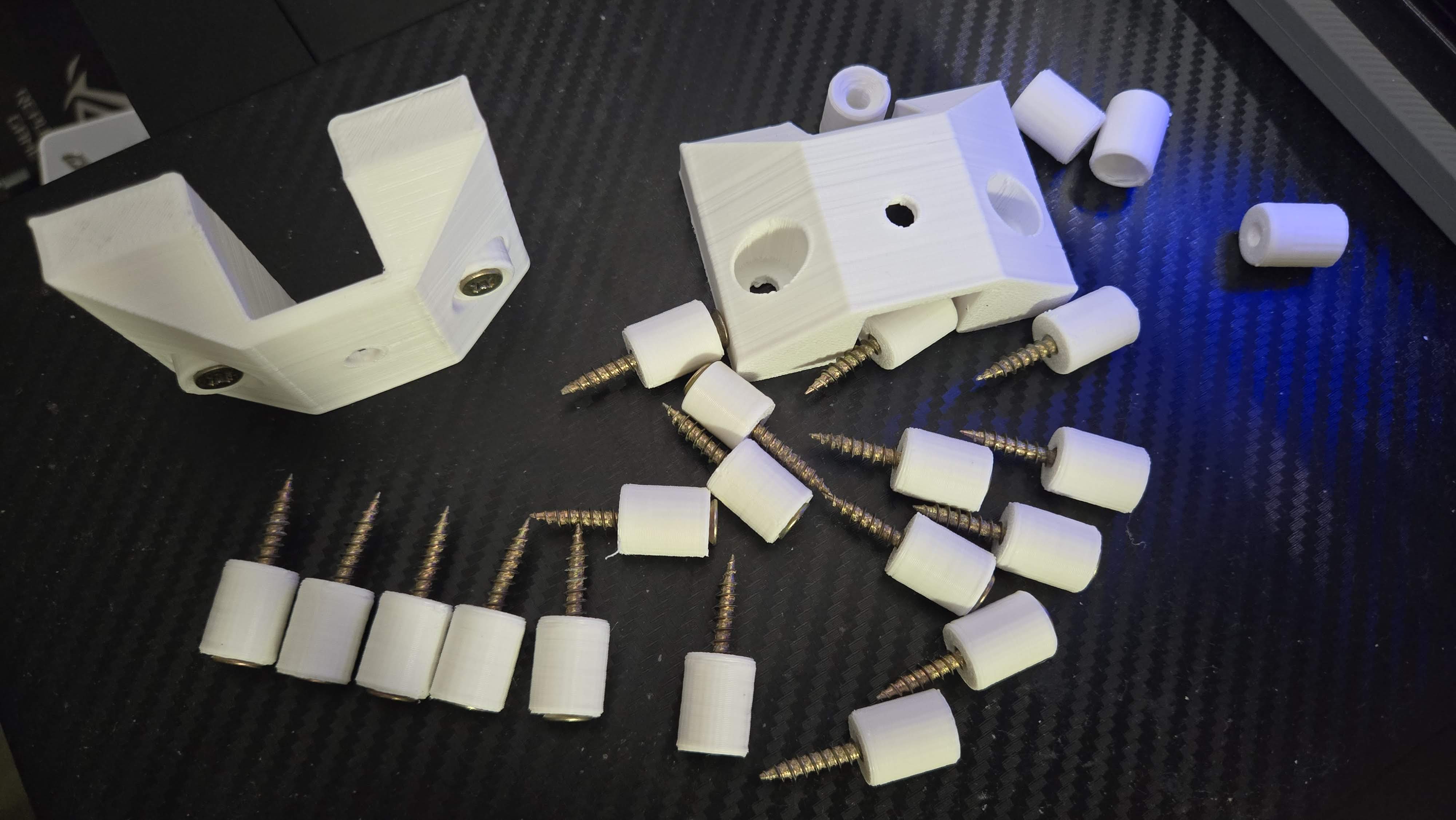
For the screw mounting, the shortest screw length I found at the hardware store was 1″ so I adjusted the mount spacing to take 1/2″ so they would thread 1/2″ into my 3/4″ desktop. Also, I didn’t pre-drill holes for them so some material would kick-back/lift out around the screw which separated the flat surface on the mounting brackets so I added chamfering around the mounting holes to help take it:

Available to download at MakerWorld: https://makerworld.com/en/models/878613
And recently uploaded to Printables: https://www.printables.com/model/1144913-keyboard-megashelf-sliding-keyboard-and-peripheral
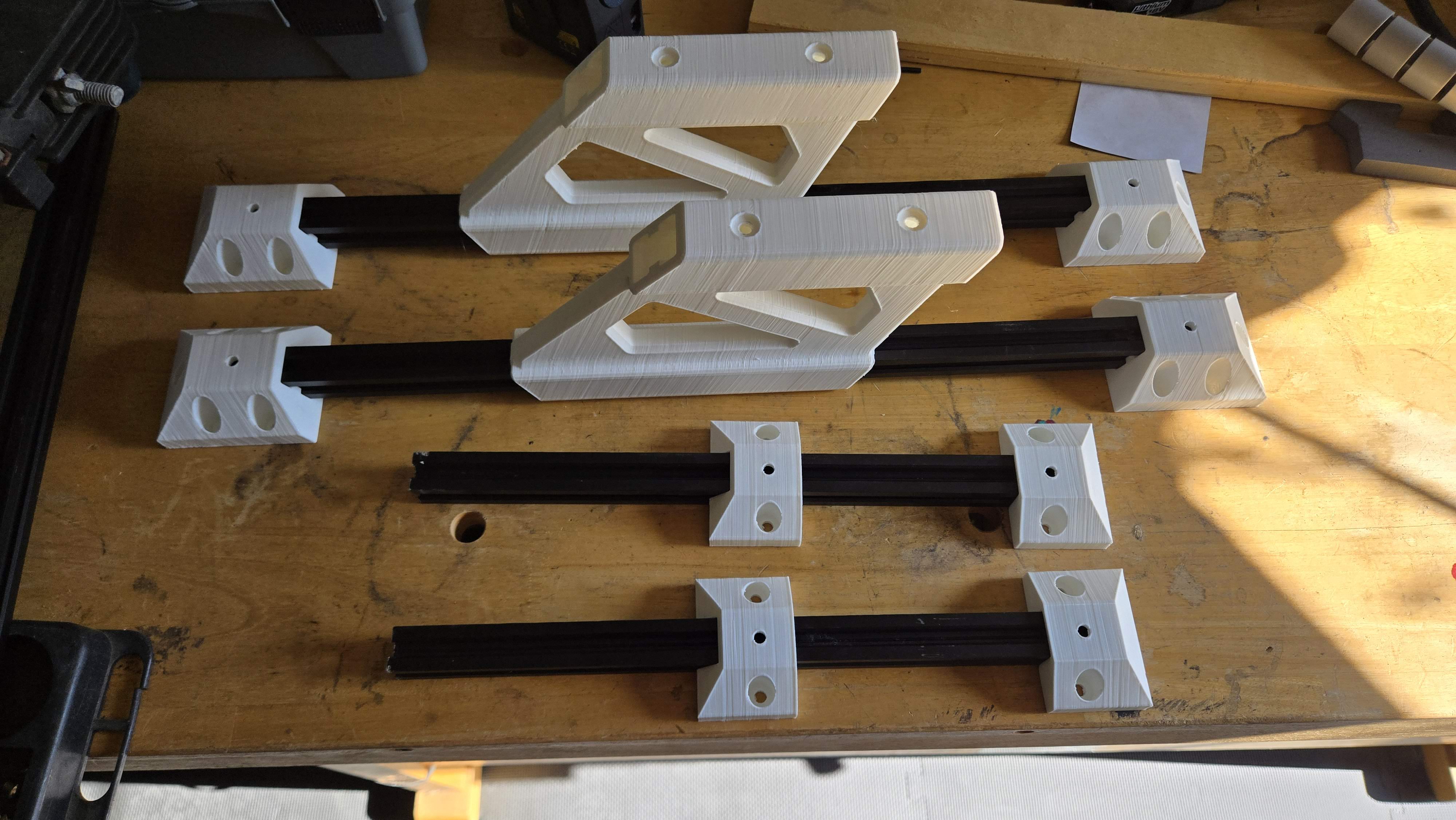
Here’s a gallery of the newly printed components:


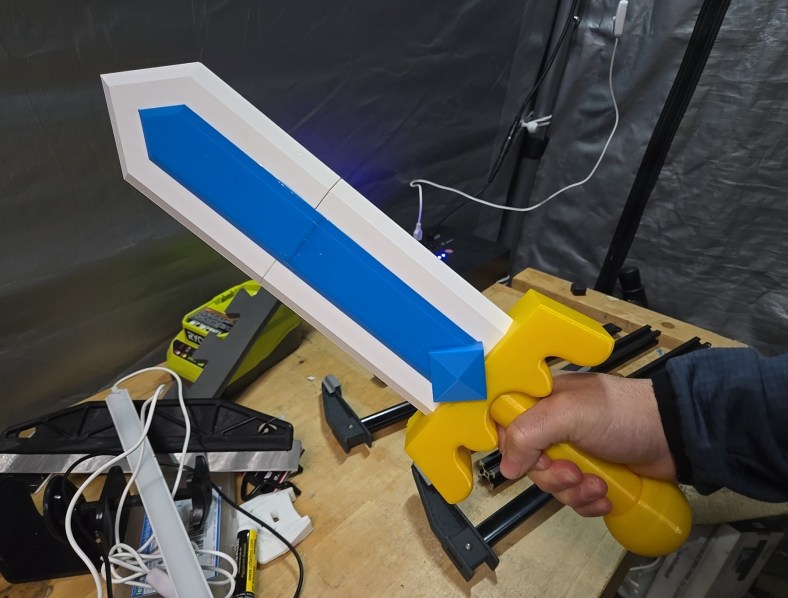
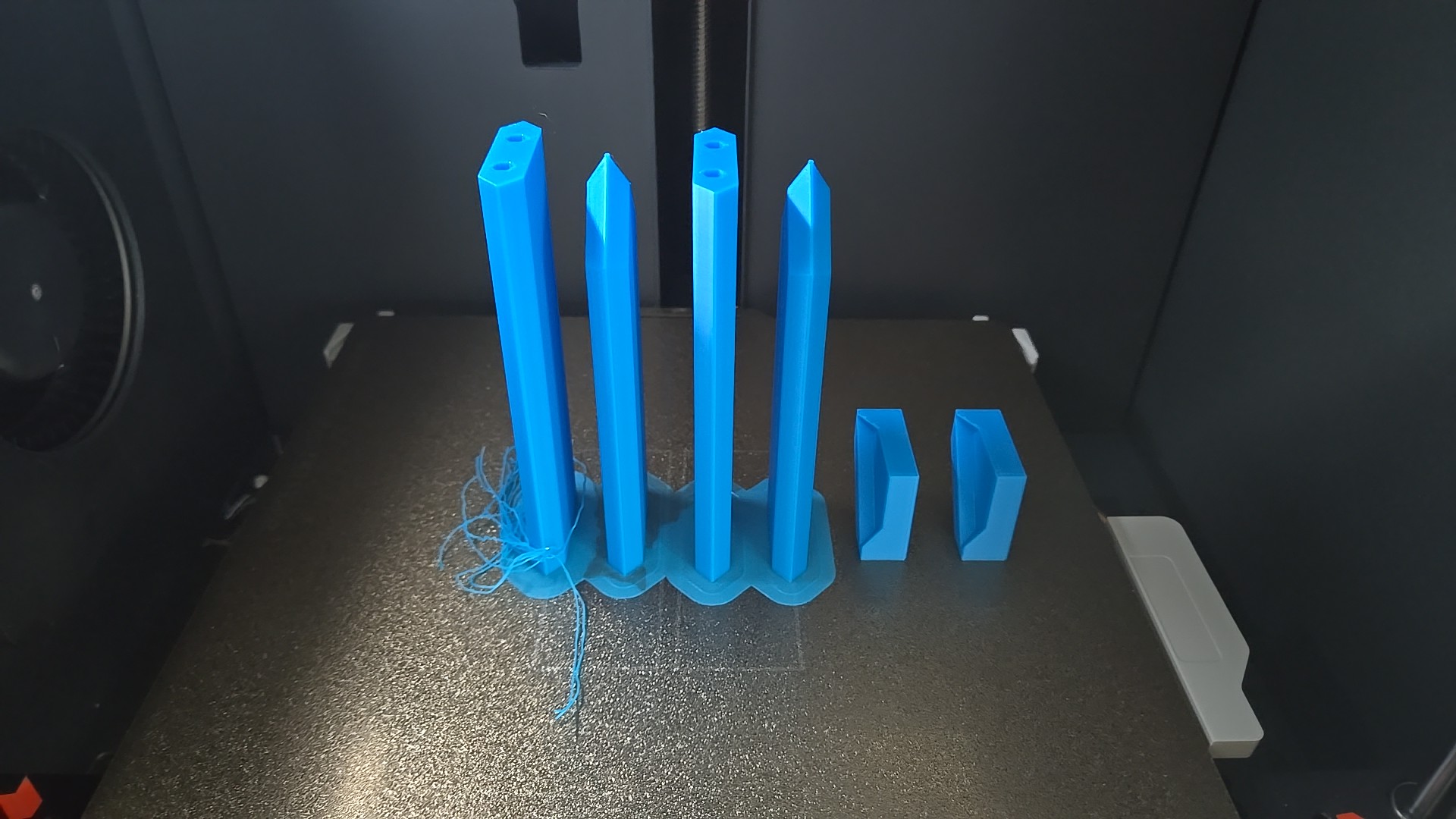
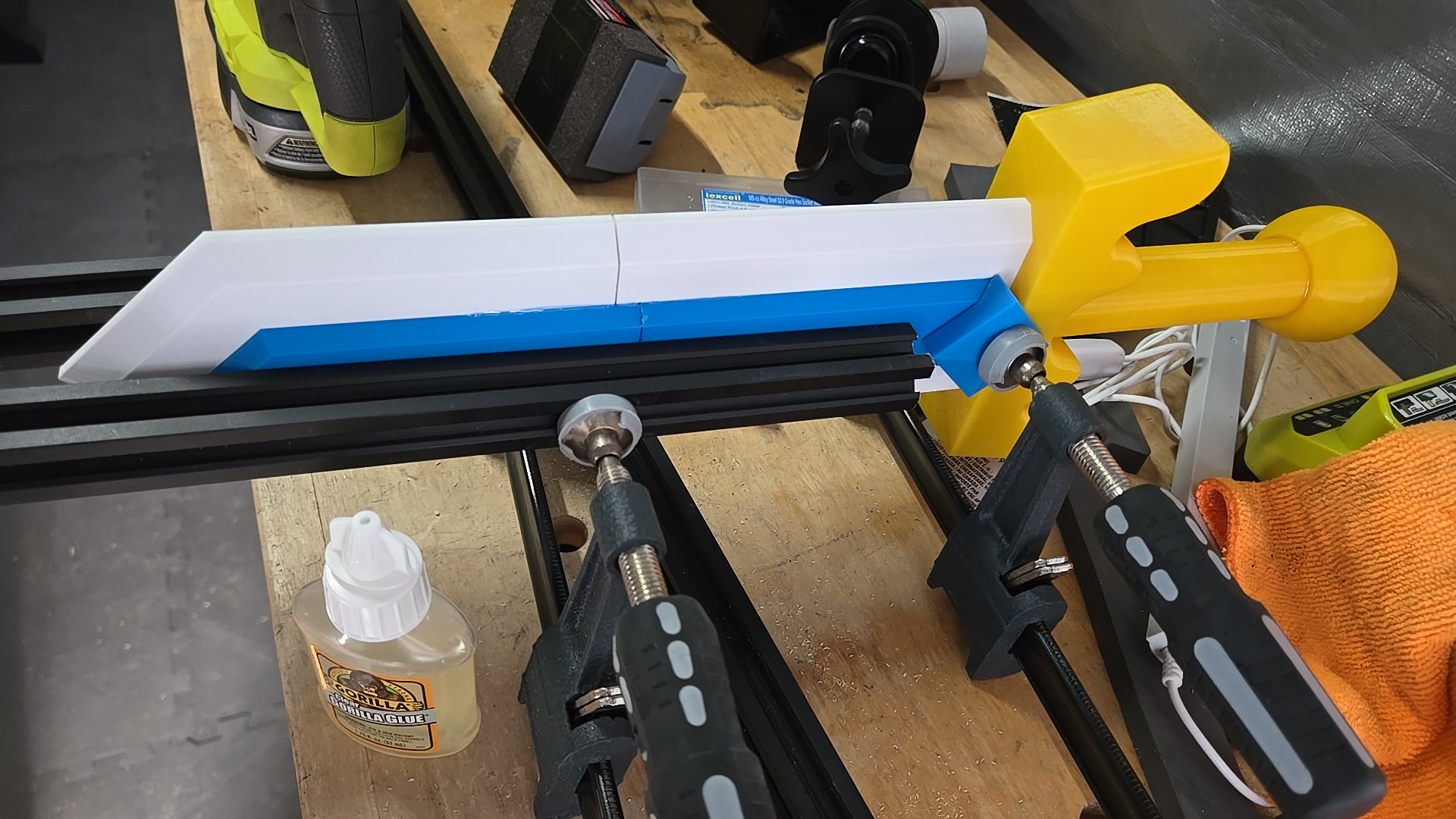
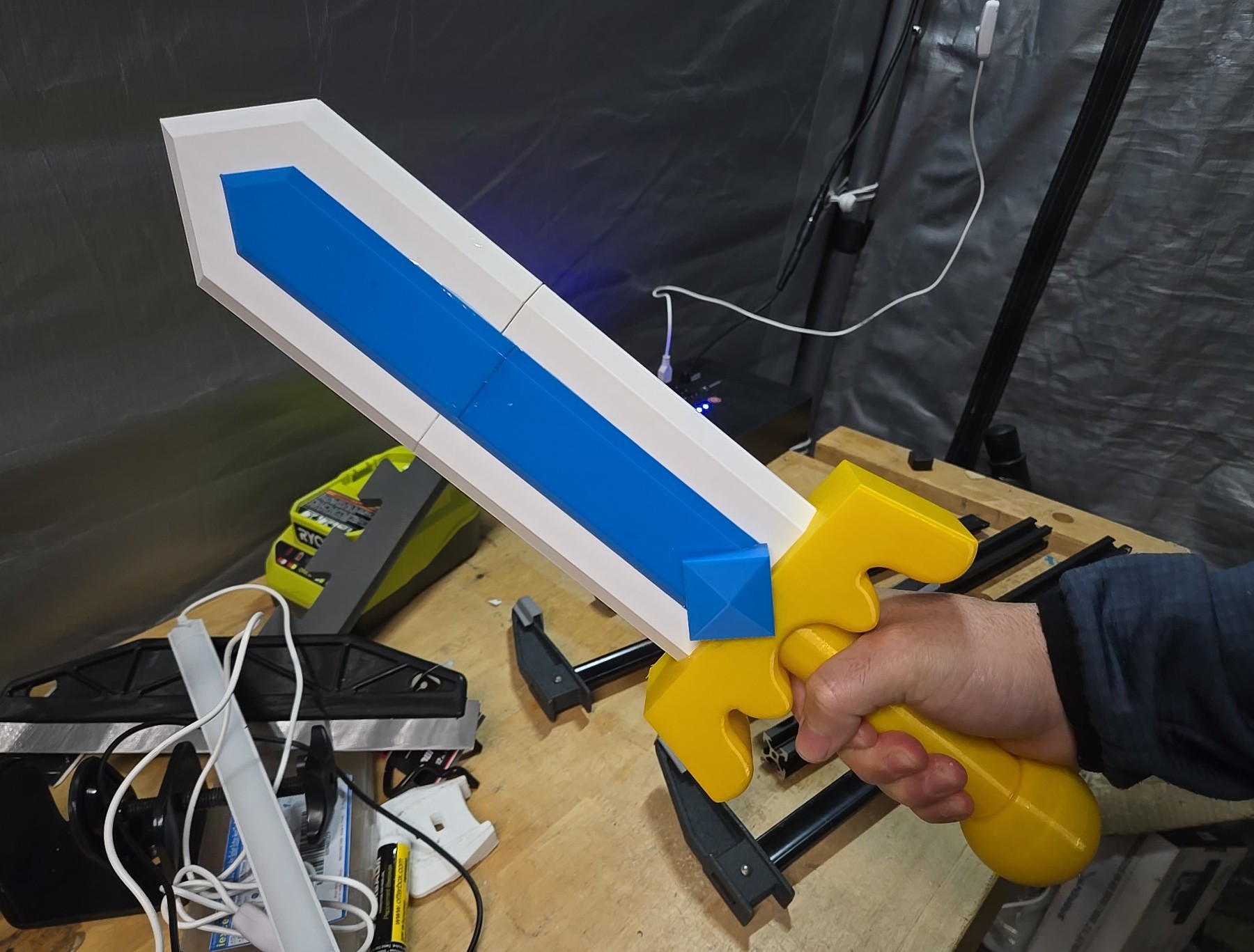
My daughter’s birthday is coming up pretty soon and she is a huge fan of the Cookie Run Kingdom mobile game, she is also a fan of my 3D printer and she’s requested stuff to print before. No special request from her this time but I decided to print something related to that franchise and stumbled upon a prop from a character she likes, Sea Fairy’s sword.
This is a very straightforward print, I didn’t have gold color on hand so I used yellow on PETG, the accents required two different blue hues but had only one. Total print time was 15h25m.


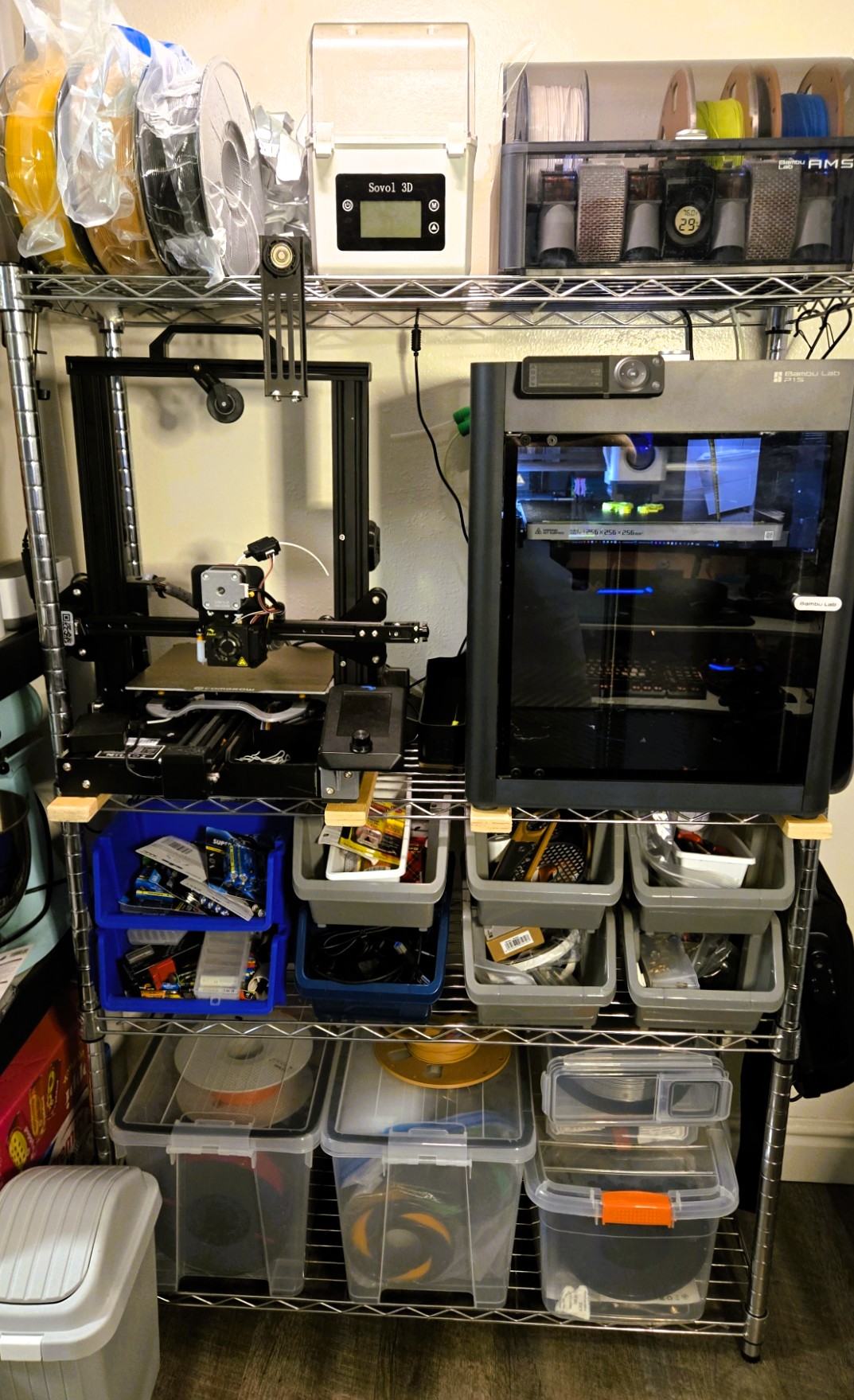
Recently consolidated and organized my 3D printing corner and here it is going from the bottom-up left to right:
Bottom shelf: Bulk filament storage, first two containers were air sealed using weatherstripping, there’s also two air-tight cereal box containers which will be transformed into sealed individual filament dispensers
Next shelf: Small materials, tools and supplies, batteries, magnets, bearings, glue/resin, foam and tooling and replacement parts for the two printers
Printer shelf:
Top shelf: filament dispensing and storage, there’s some recently used filament spools inside vacuum sealed bags, a dual filament dryer which I use to also dry desiccant and the amazing Bambu Lab AMS (Automatic Material System) which is the next biggest thing for 3D printing. I got this AMS as a bundle with the P1S and I totally love it, besides multi-color printing, it contains four material/color spools ready to go at any given time in a semi-sealed container. I printed desiccant containers to add inside to help reduce/eliminate moisture.
This was a quick tour, nothing much or big but finally organized and ready to go.
Print settings:

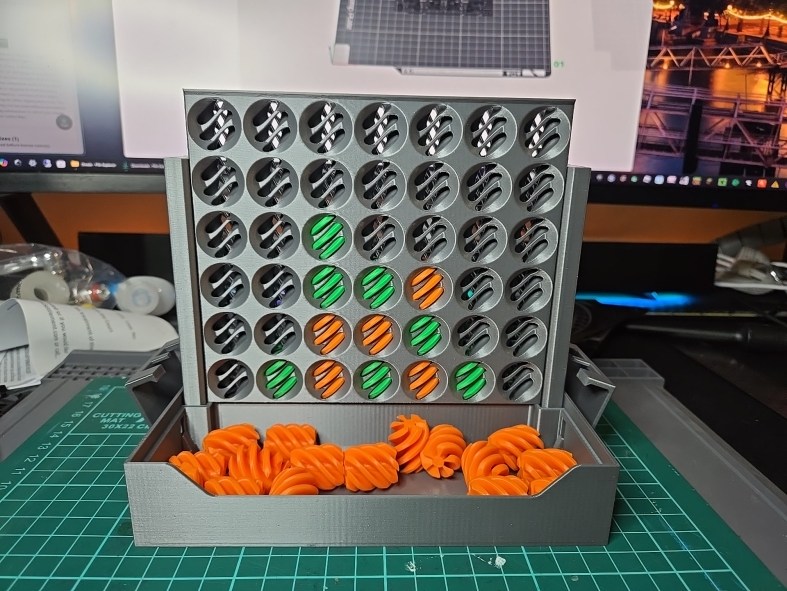
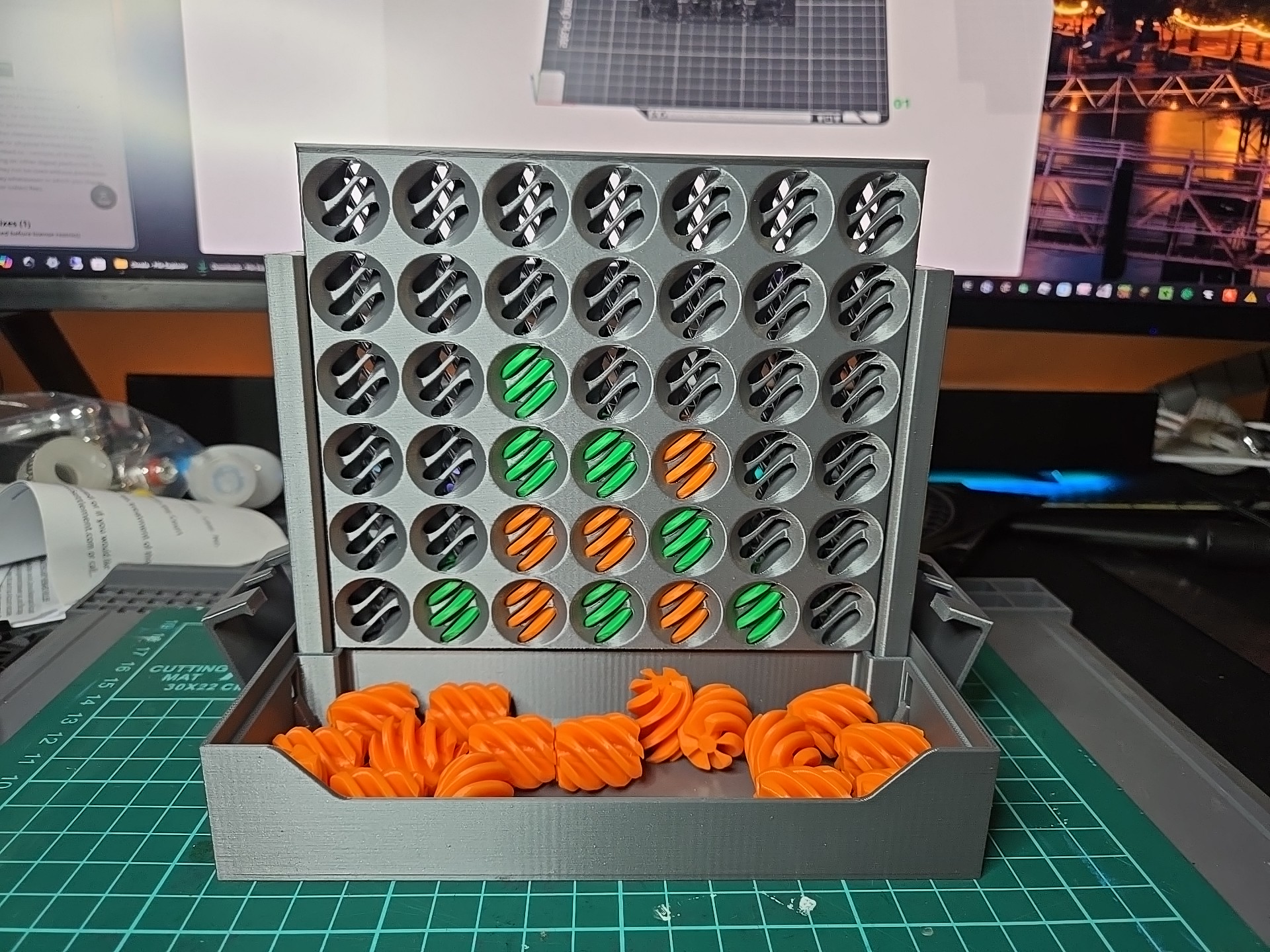
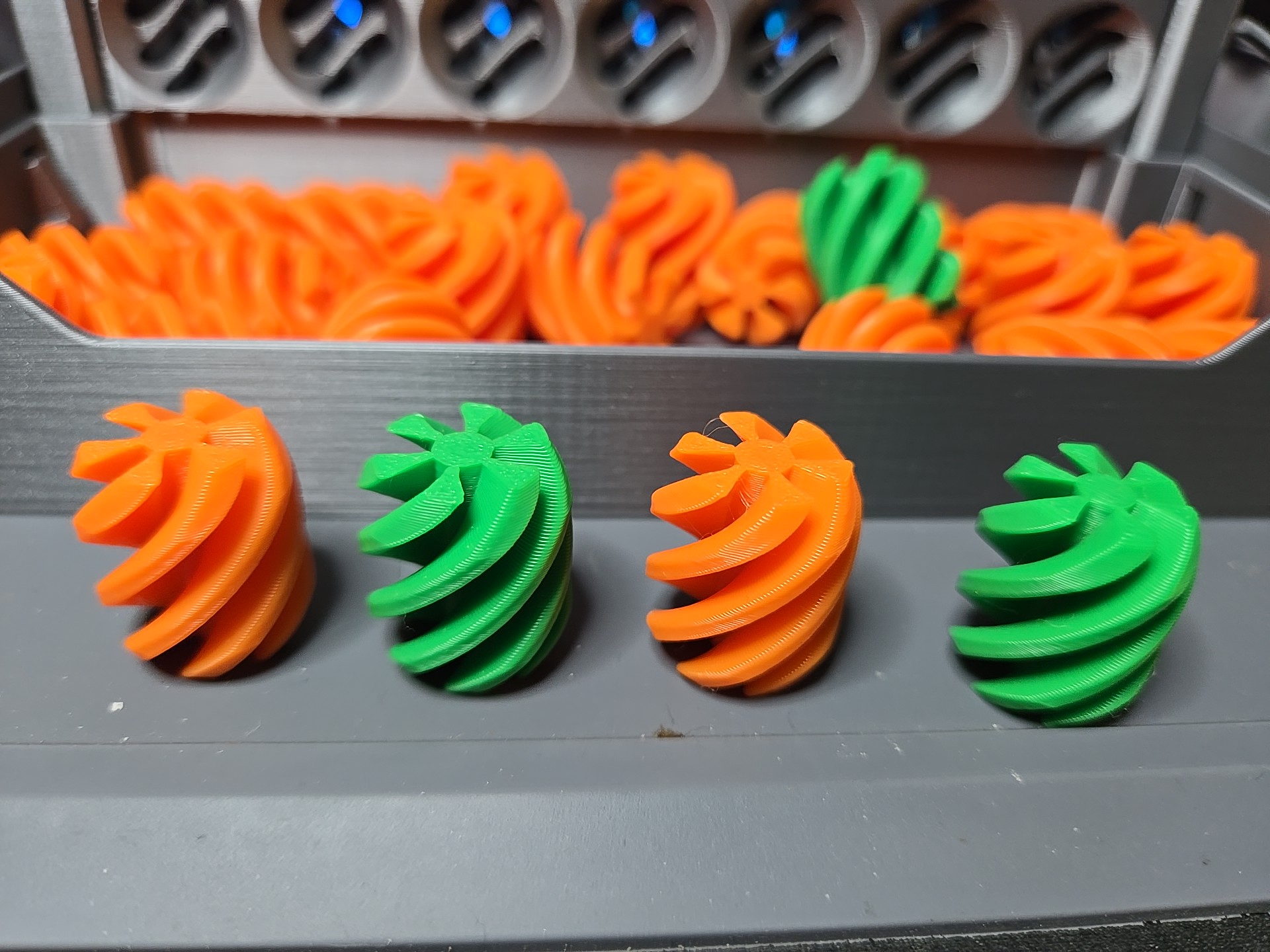
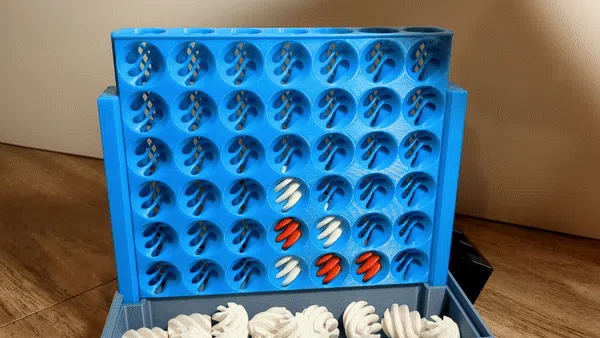
This is an awesome “spin” on this classic game, only reasonably possible with additive manufacturing. Every column is a spiral cut all the way from the top to bottom, the pieces are shaped as an offset of the spiral cuts which slide down slowly in a very satisfying drop.
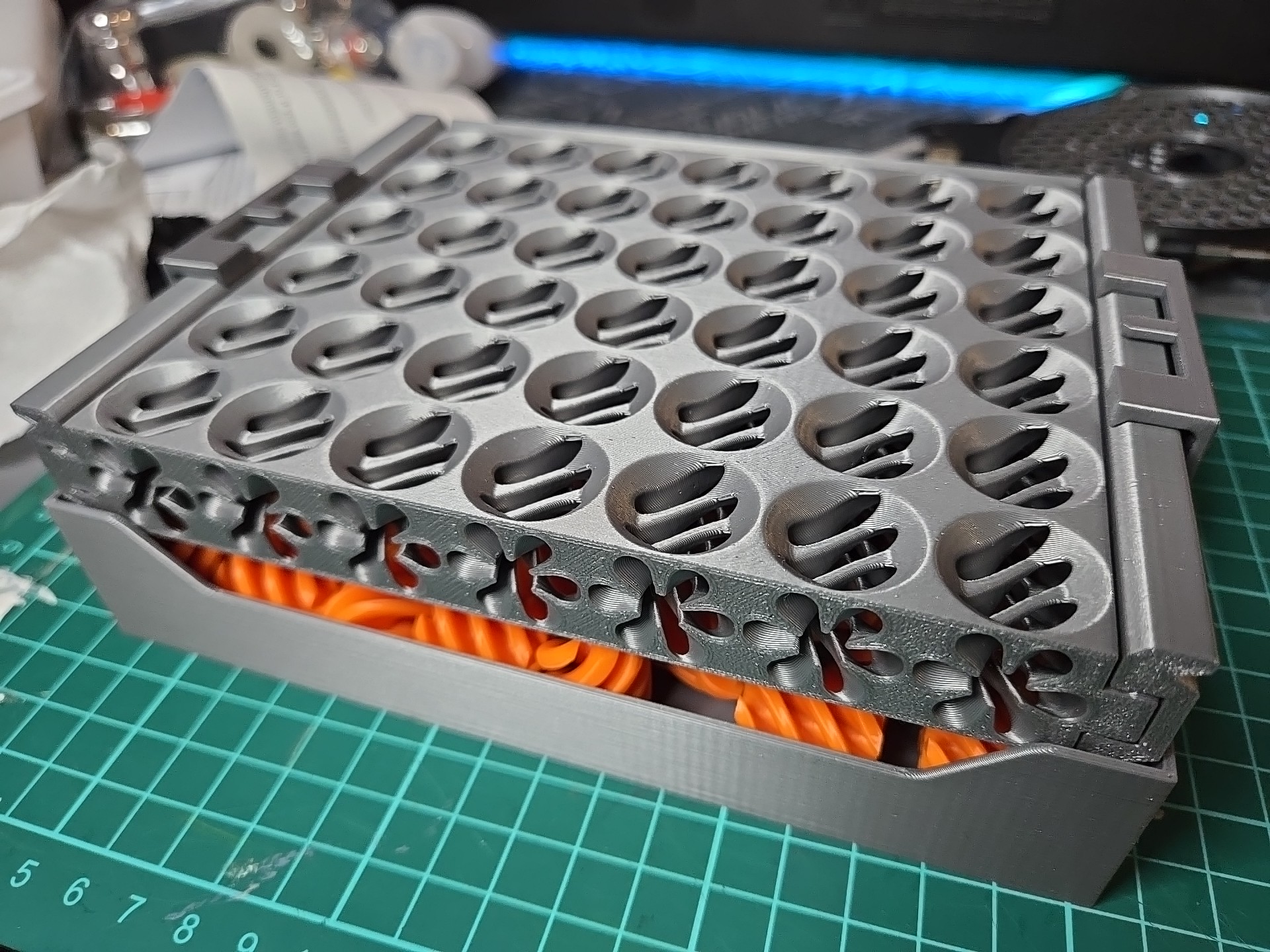
When the game ends, the game part can be lifted enough to allow one row of pieces to be exposed, the side clasps will retain it and then players can push the pieces to their respective side.

Another function of the clasps is to retain the game part as a cover to stow the whole thing away.


Designer/Uploader: @evets17, download: MakerWorld.


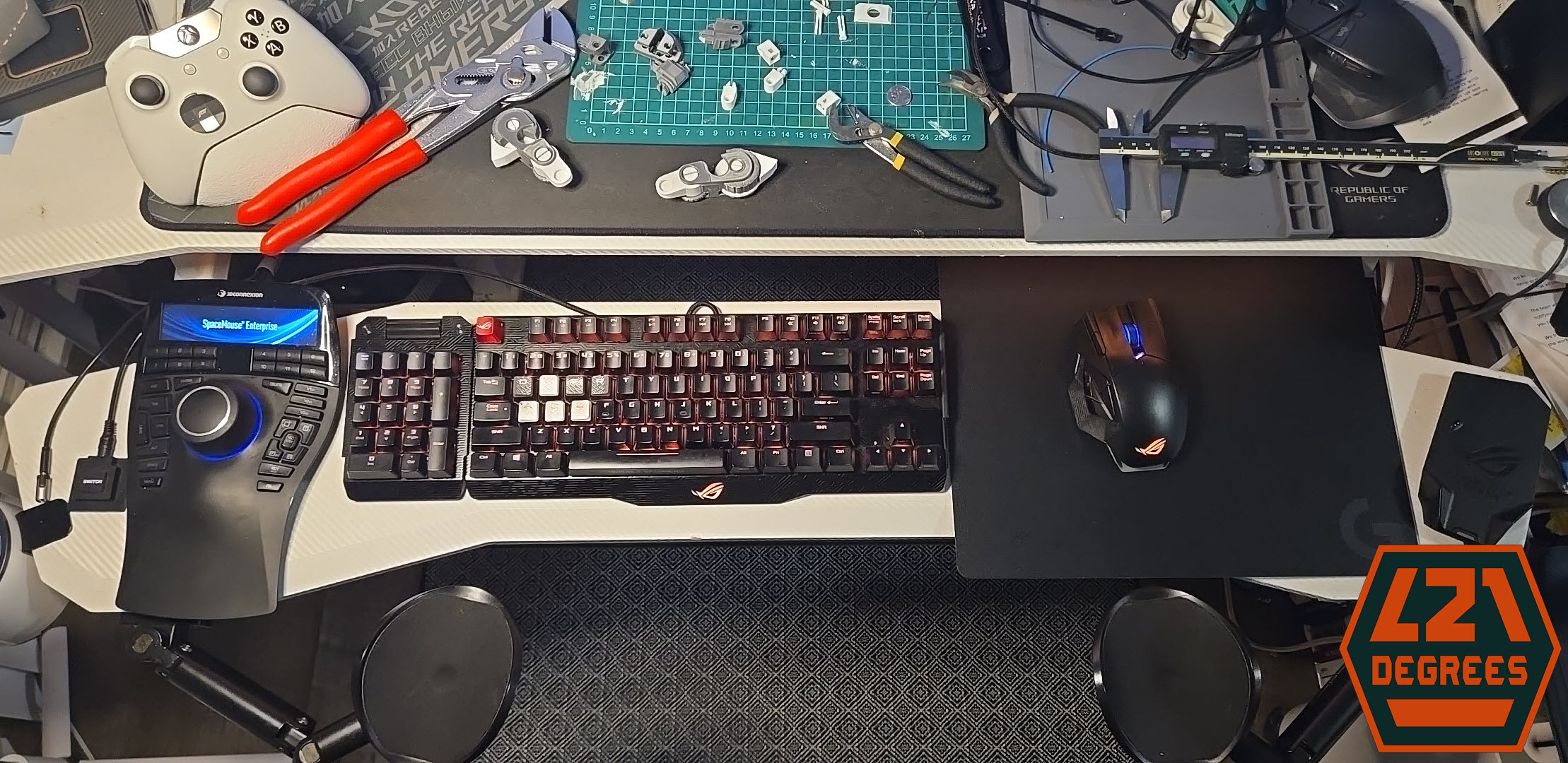
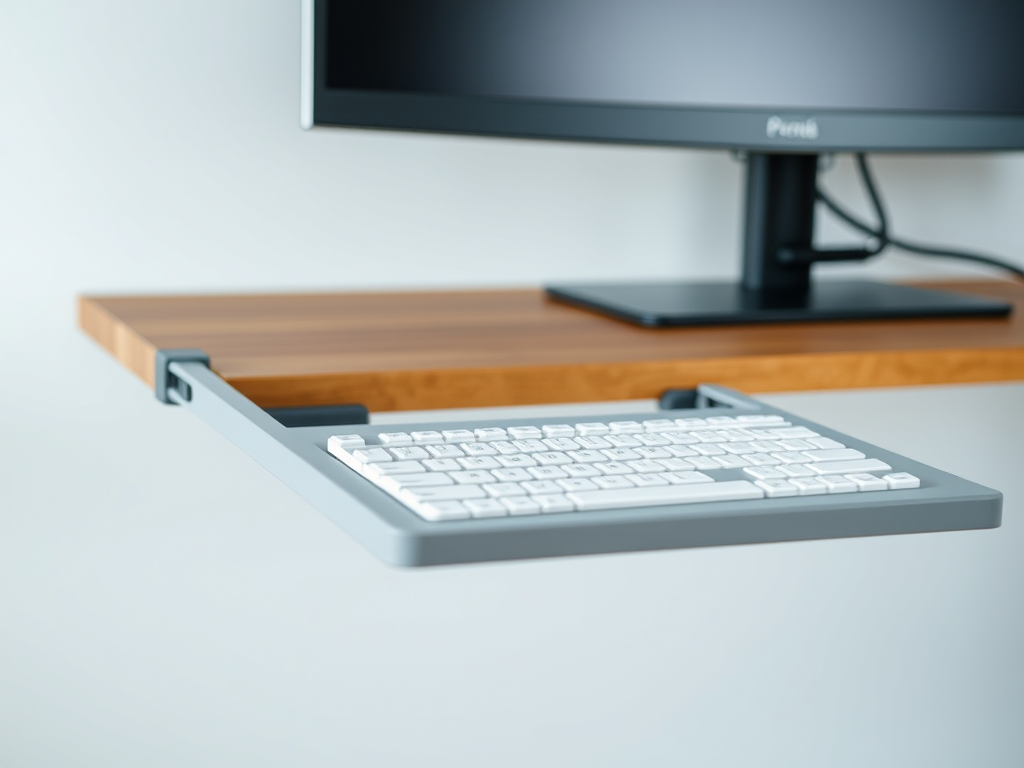
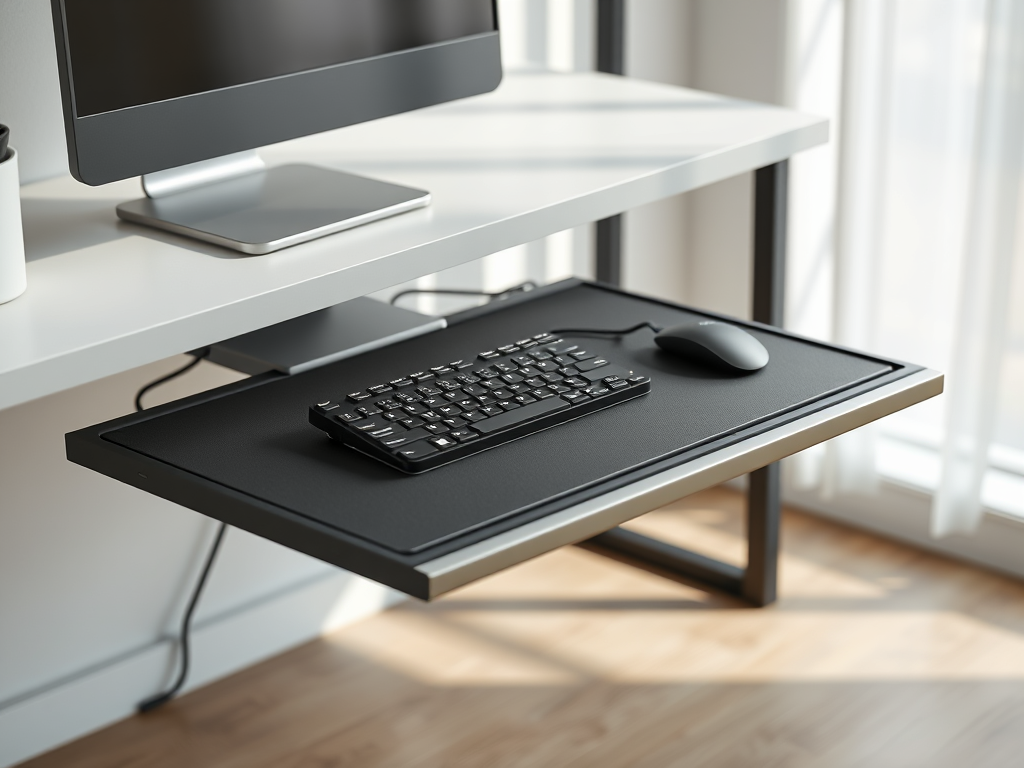
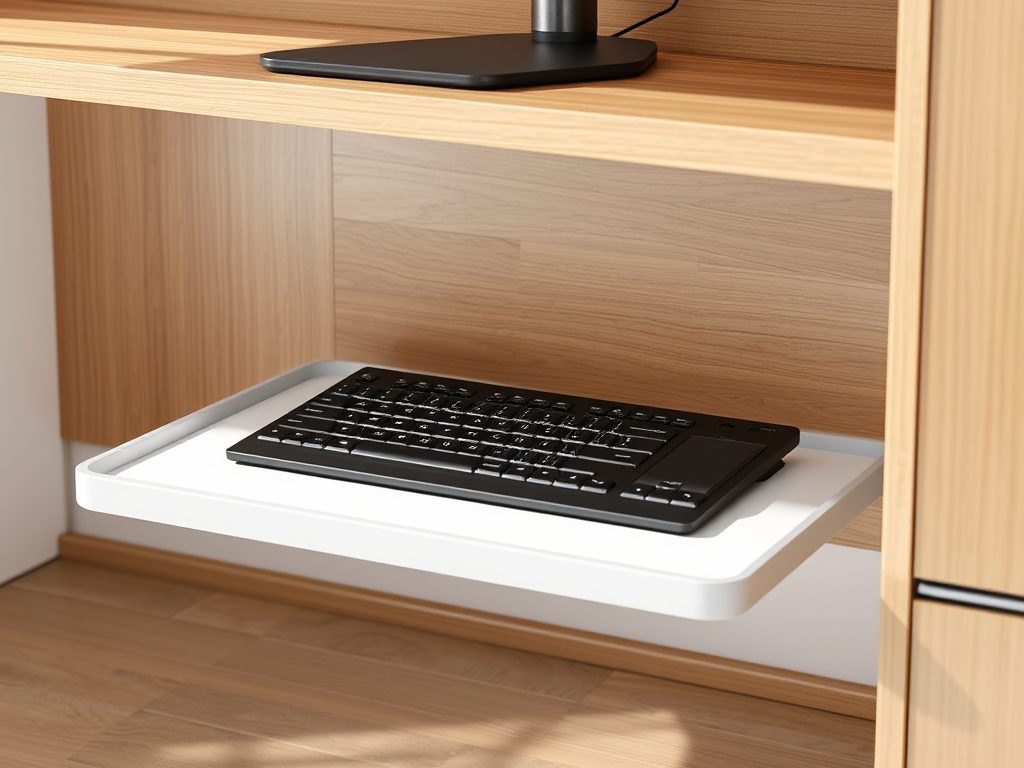
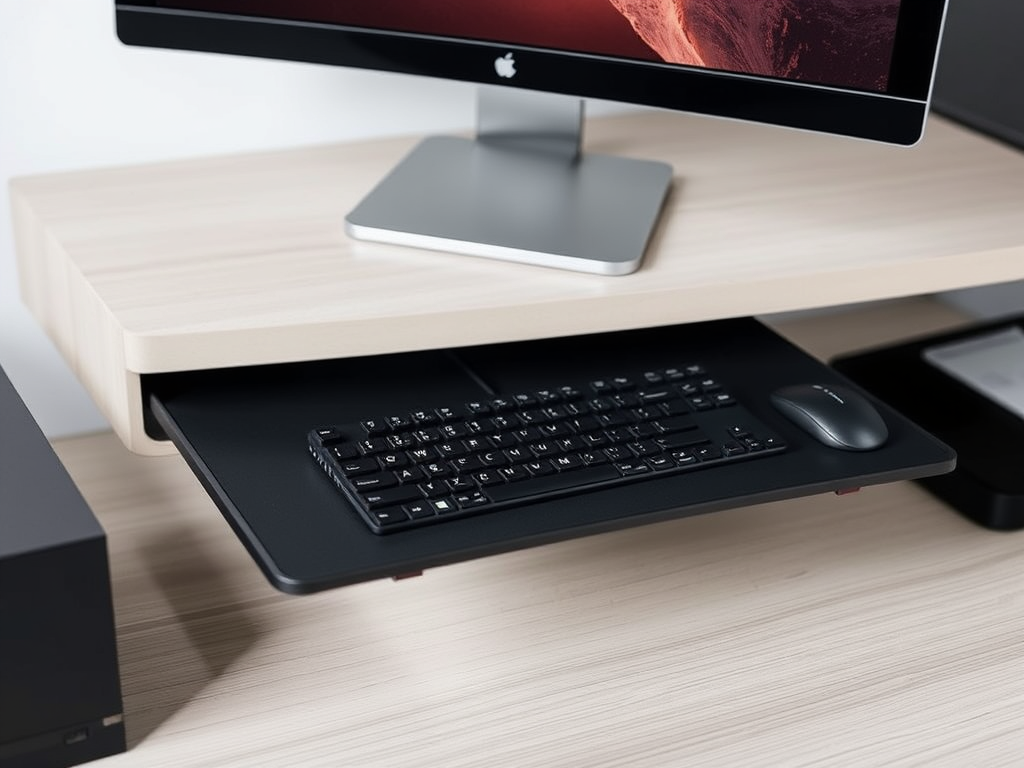
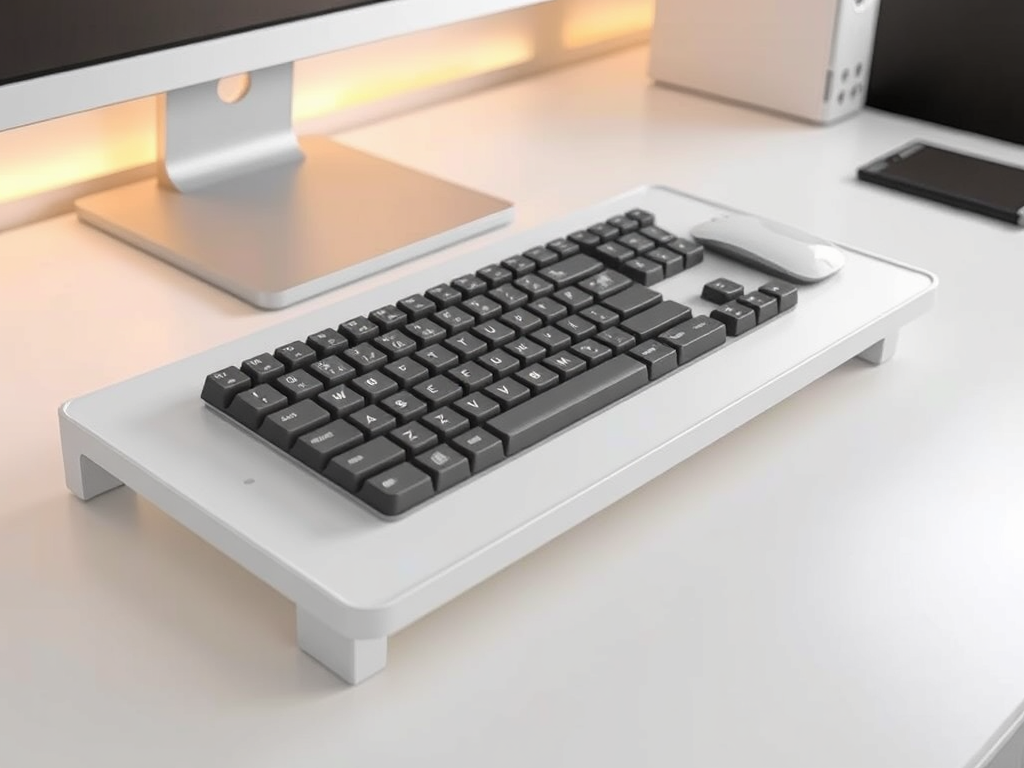
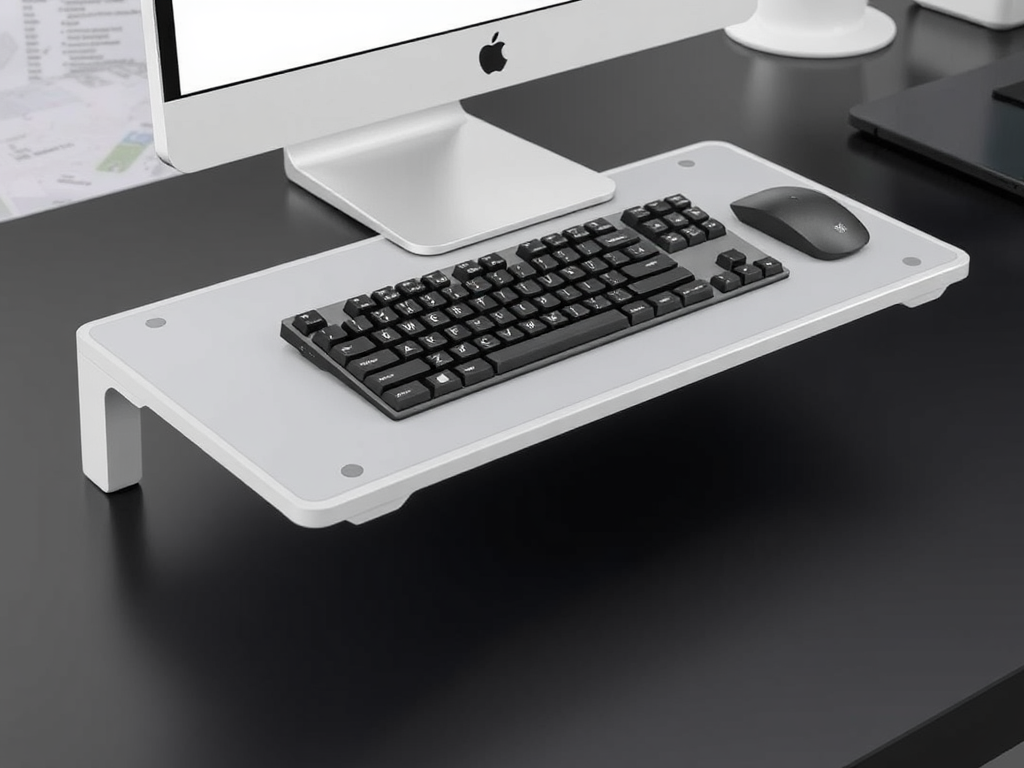
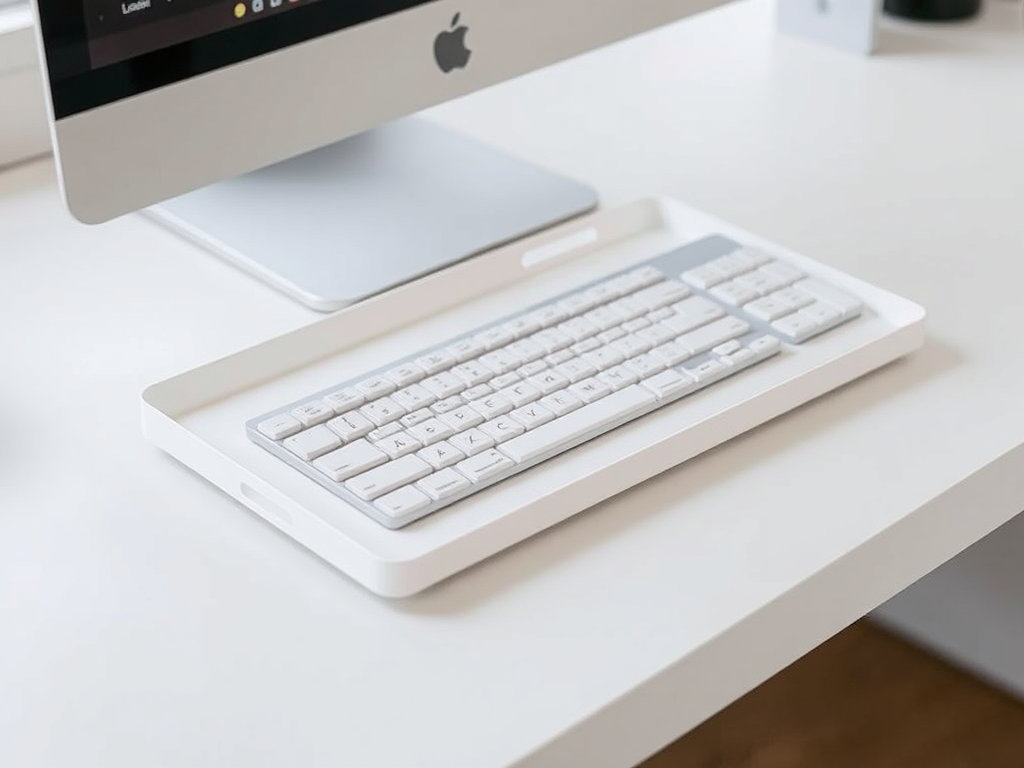
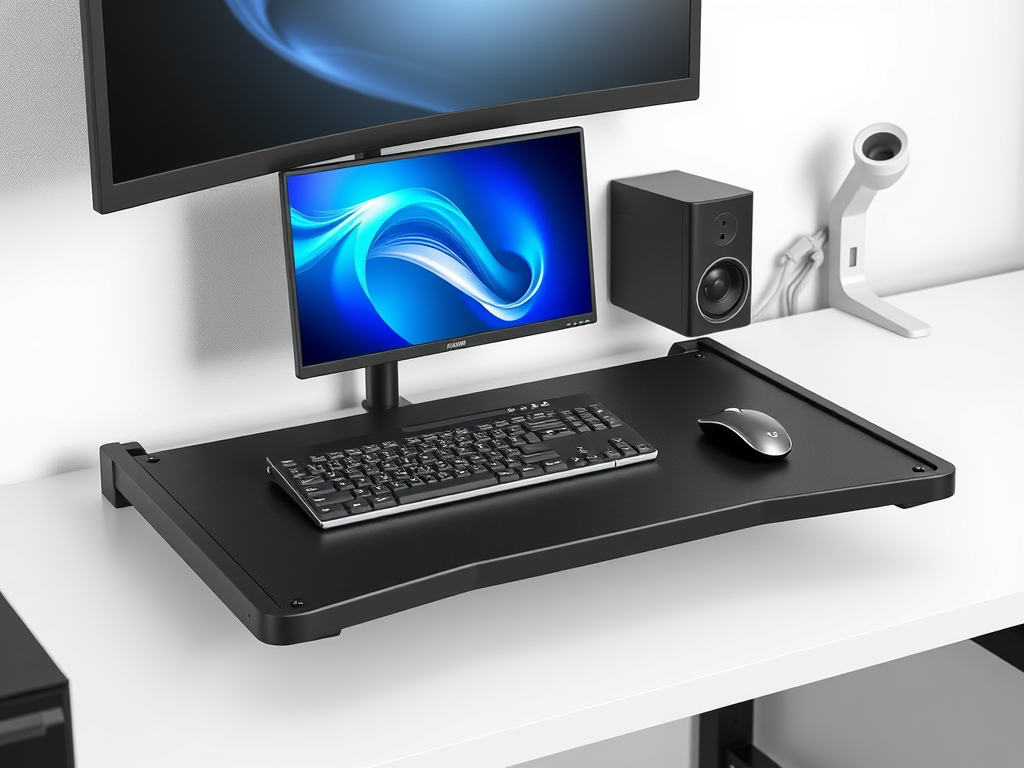
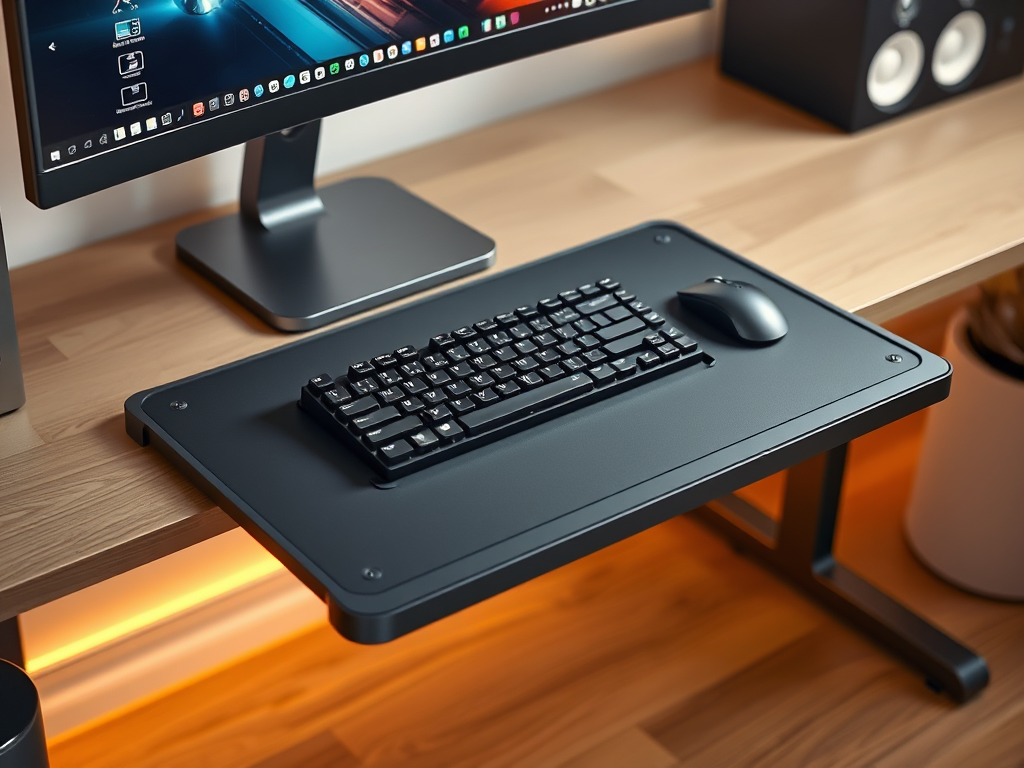
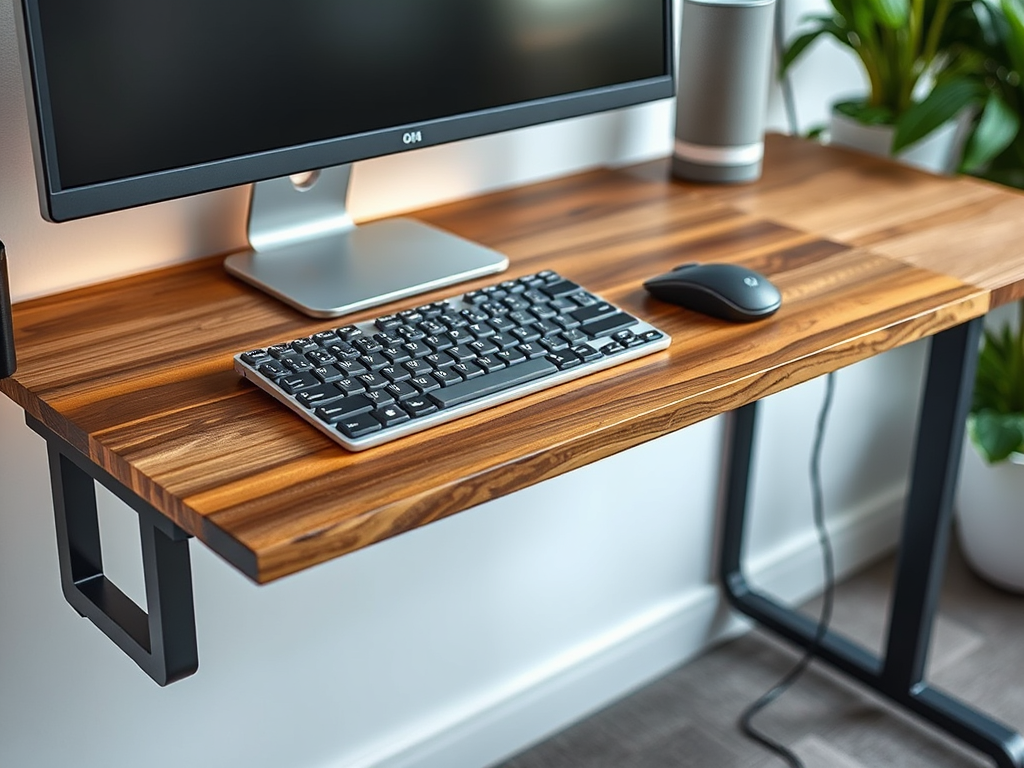
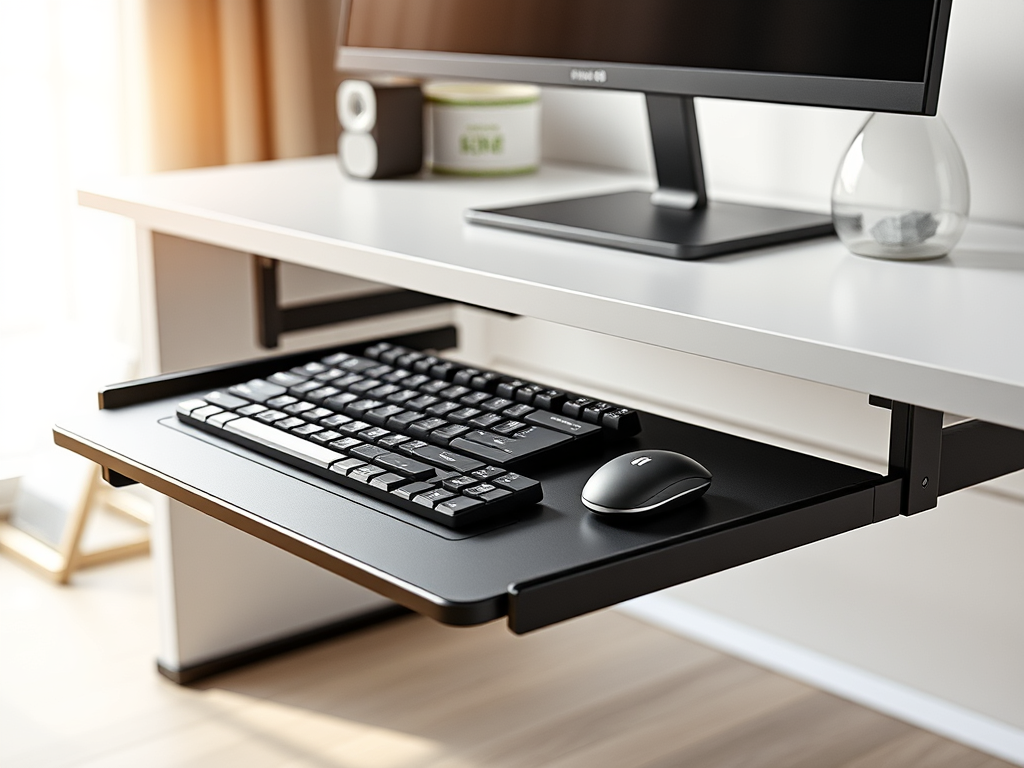
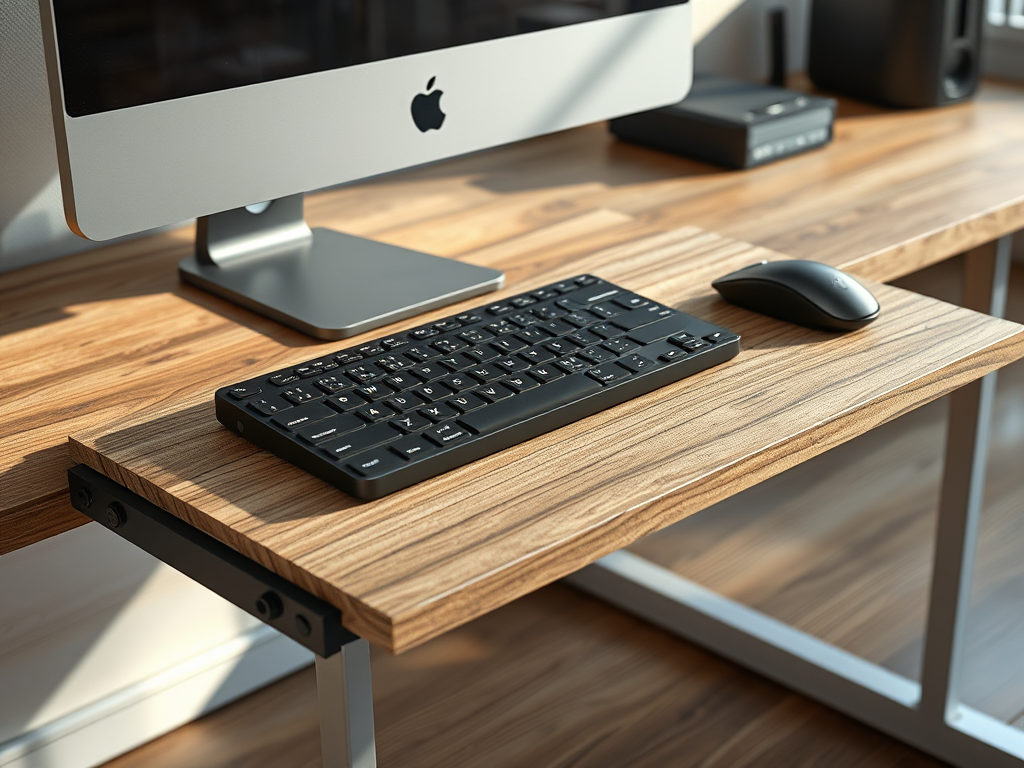
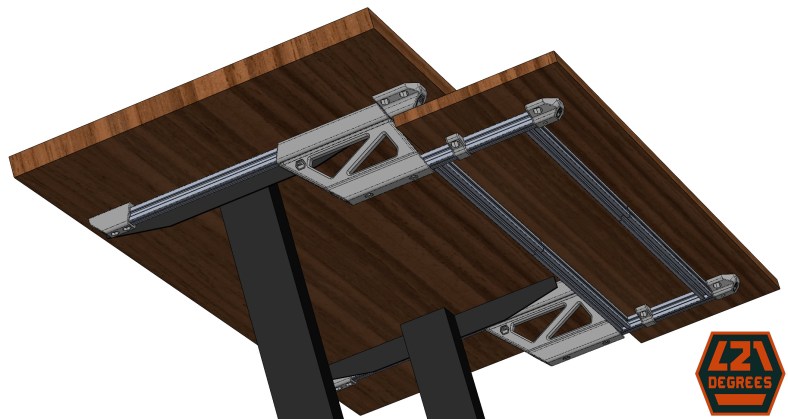
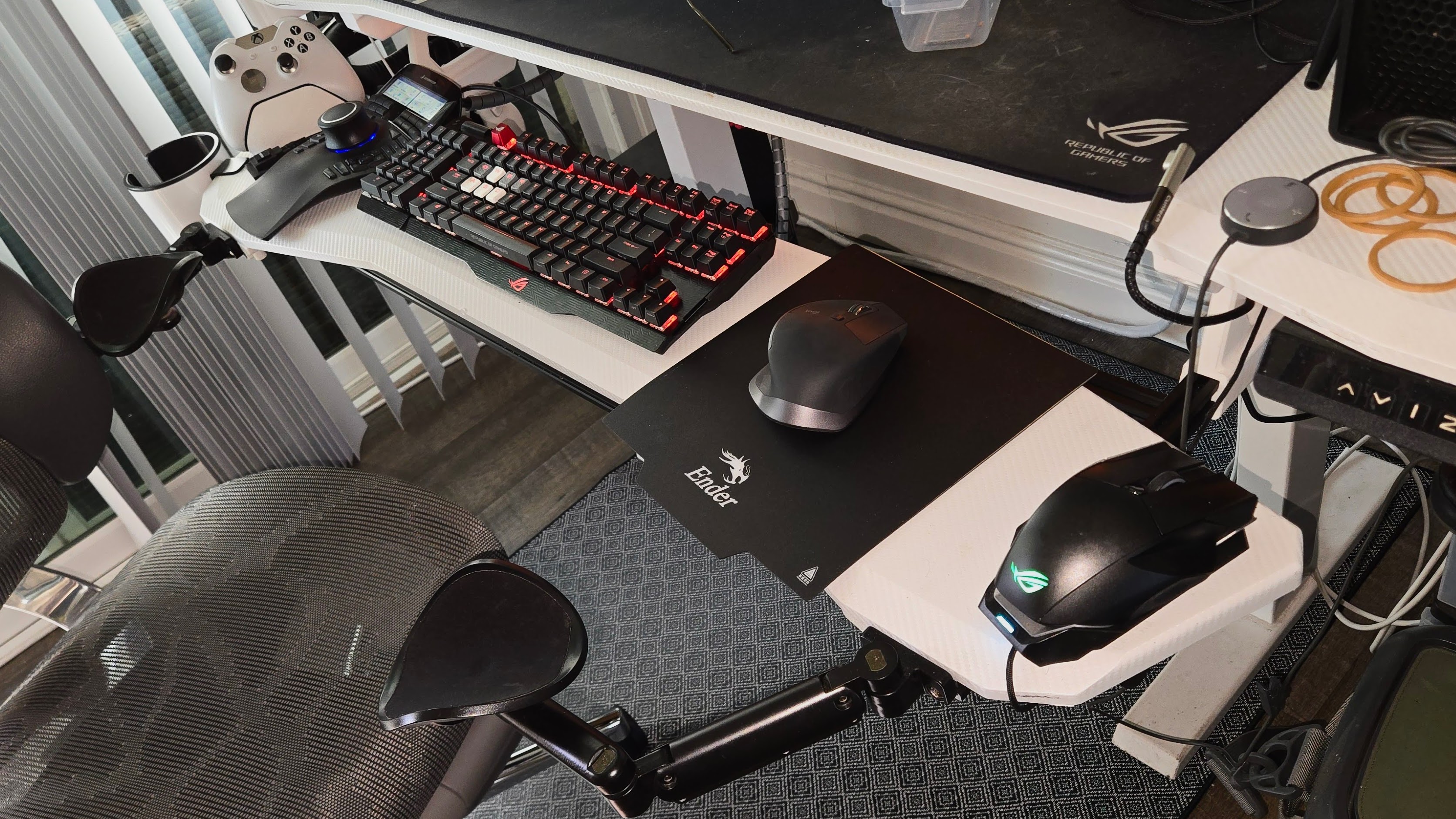
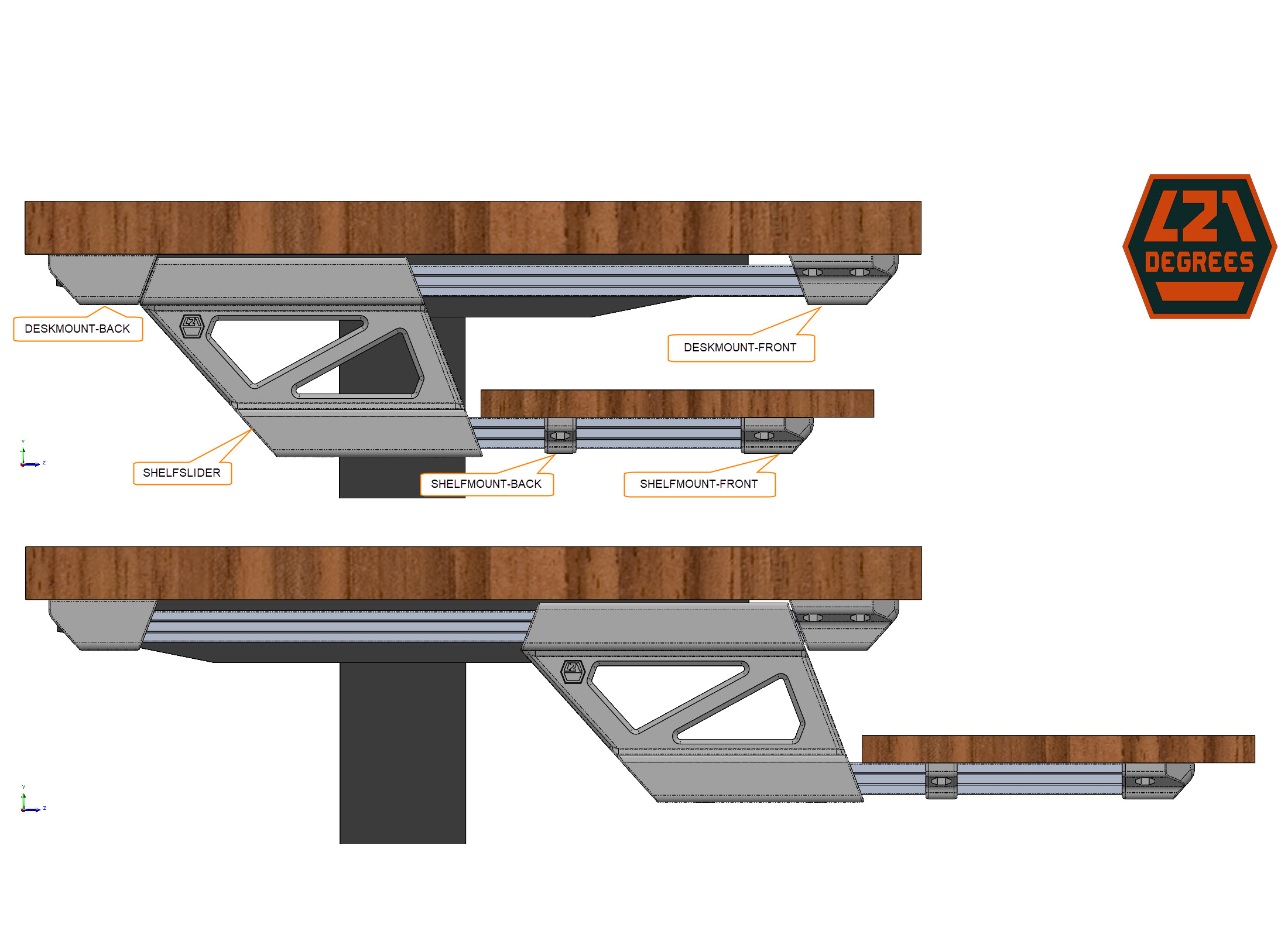
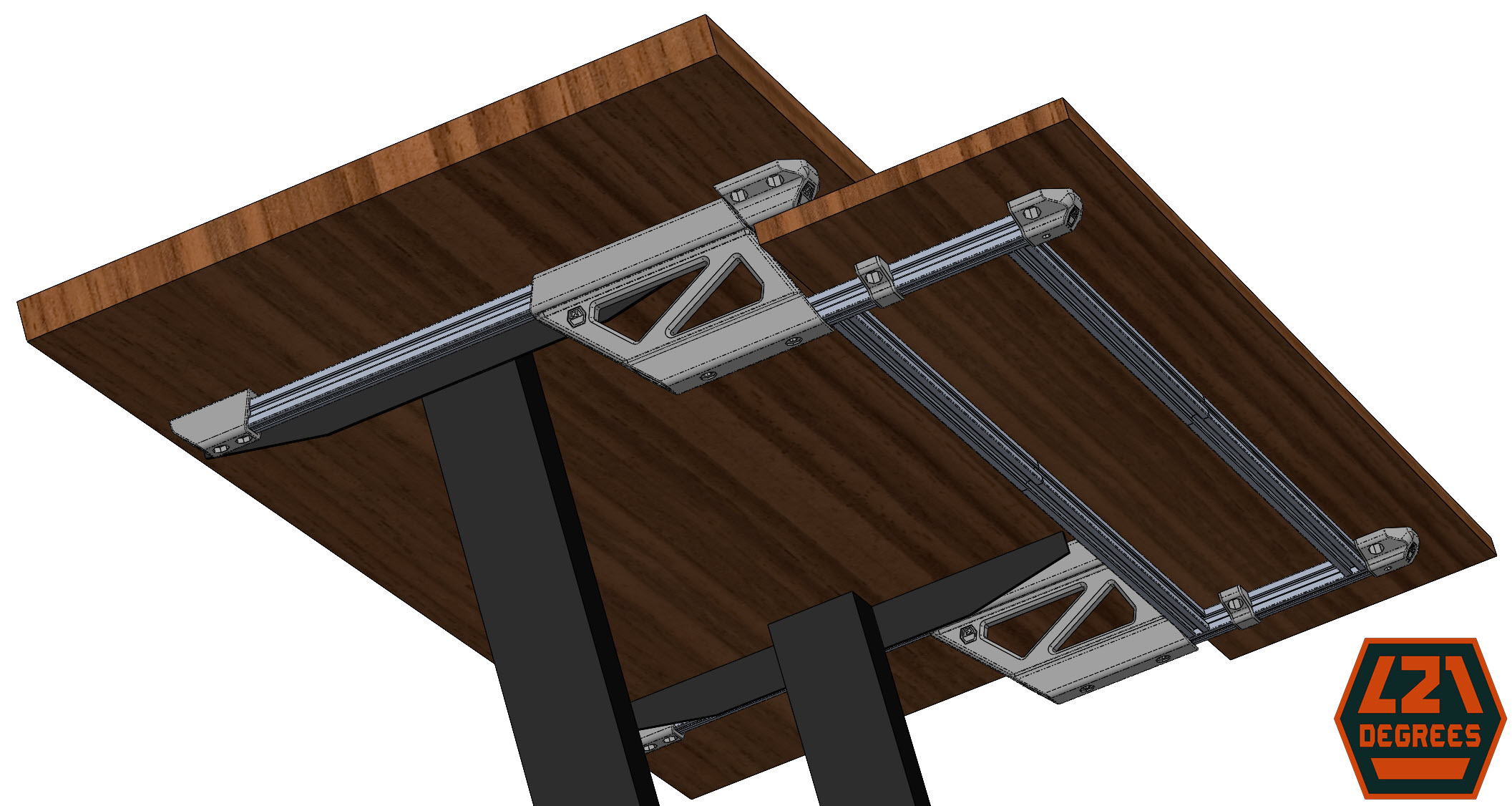
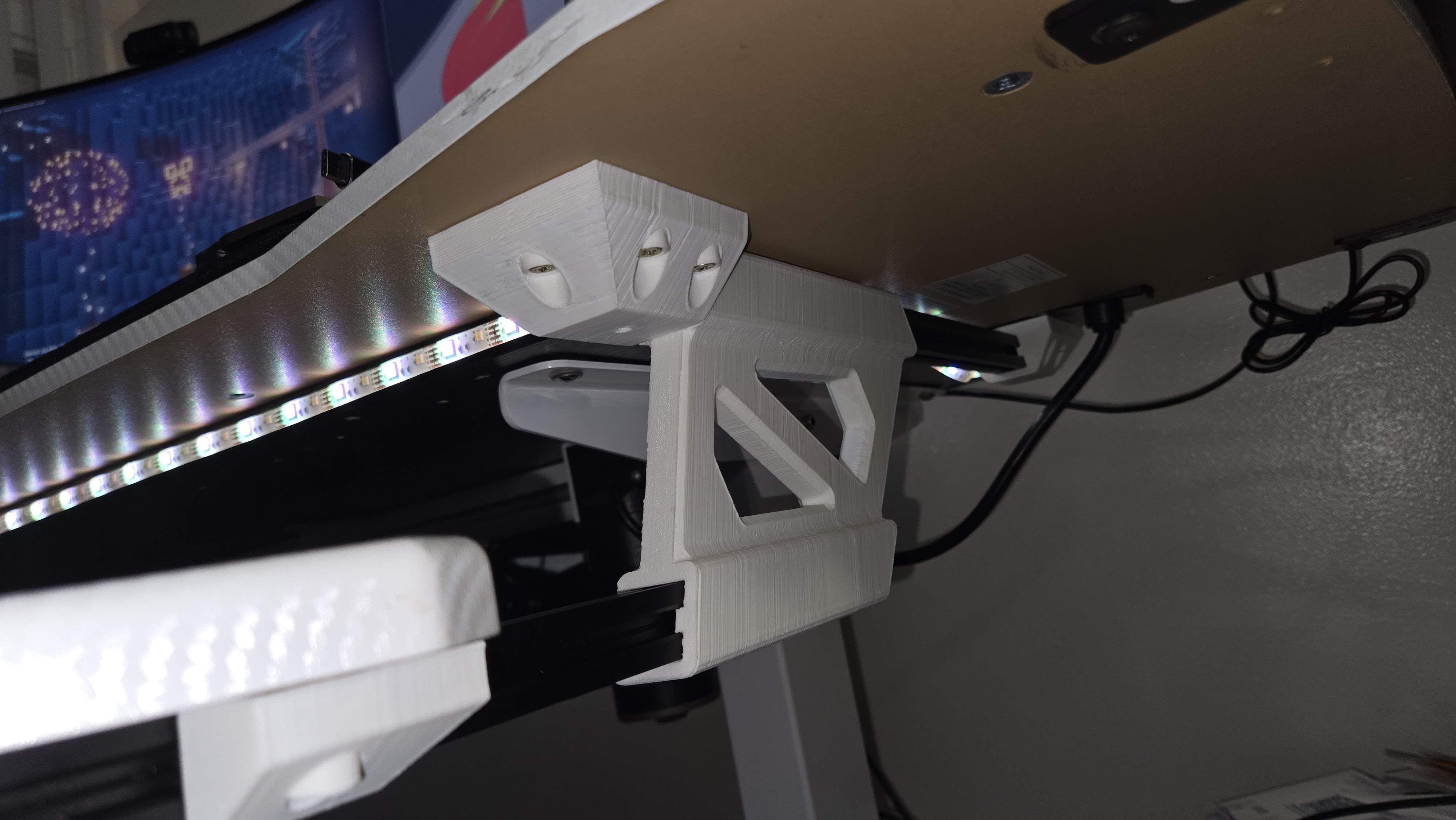
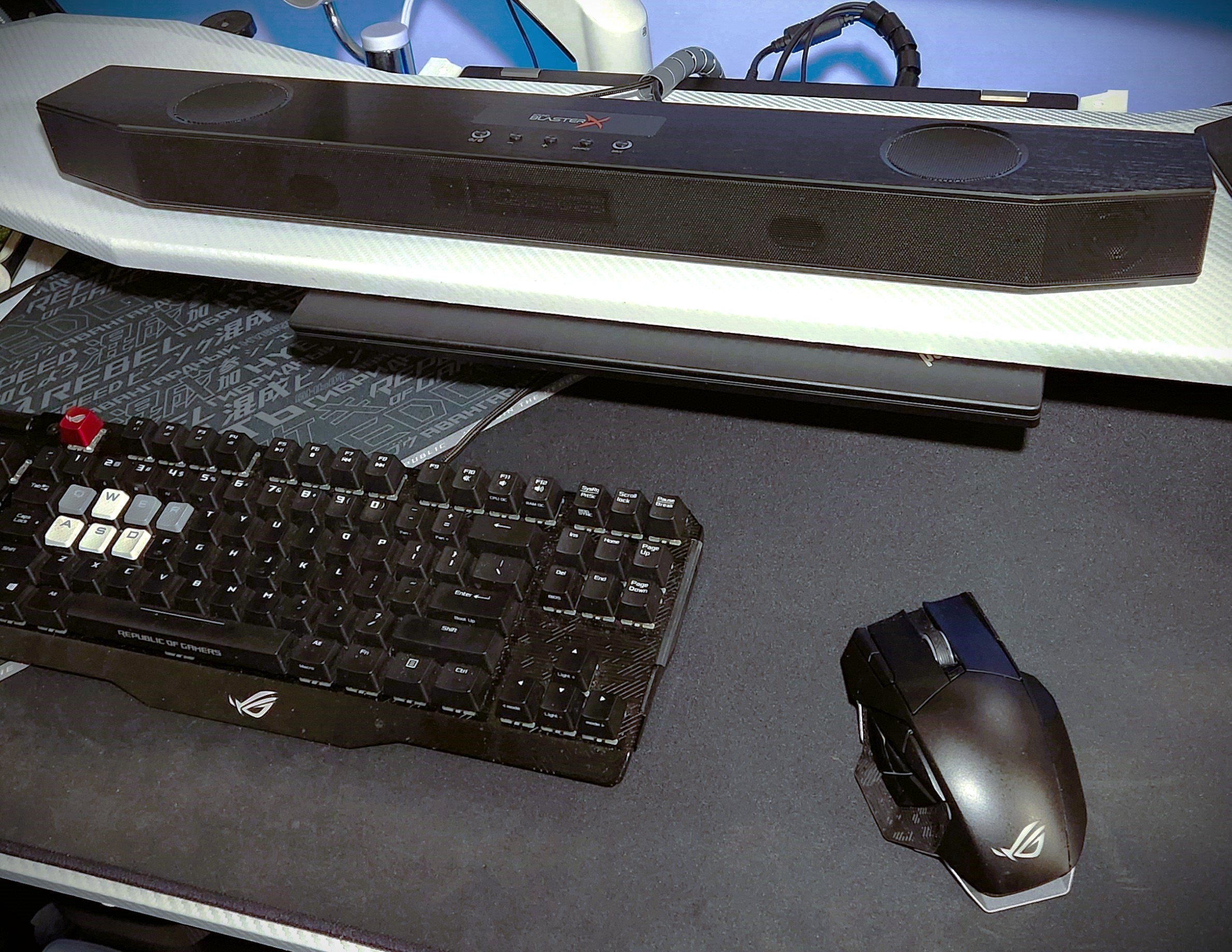
Hi! This design is the result of my need to free desk space and lower the keyboard height as the desk is too tall for me. I spent over an hour looking for sliding keyboard trays and none met my needs/wants.
Designed in SolidWorks for Makers, printed with a Creality Ender 3 V2 printer with custom 1st Layer firmware and board.
For the future: Can’t stop thinking about using v-slot wheels for that smooth and satisfying slide but initial thoughts makes it look clunky, obtrusive, and more expensive. But I like the challenge and more options are good so stay tuned!
All-in-all, I’m extremely happy with this solution, it’s very solid, holds peripherals clearing my desk and stows away. I’m publishing this free hoping that my time and effort go further than just meeting my needs.
Published and available to download in Maker World


Prototyping gallery:


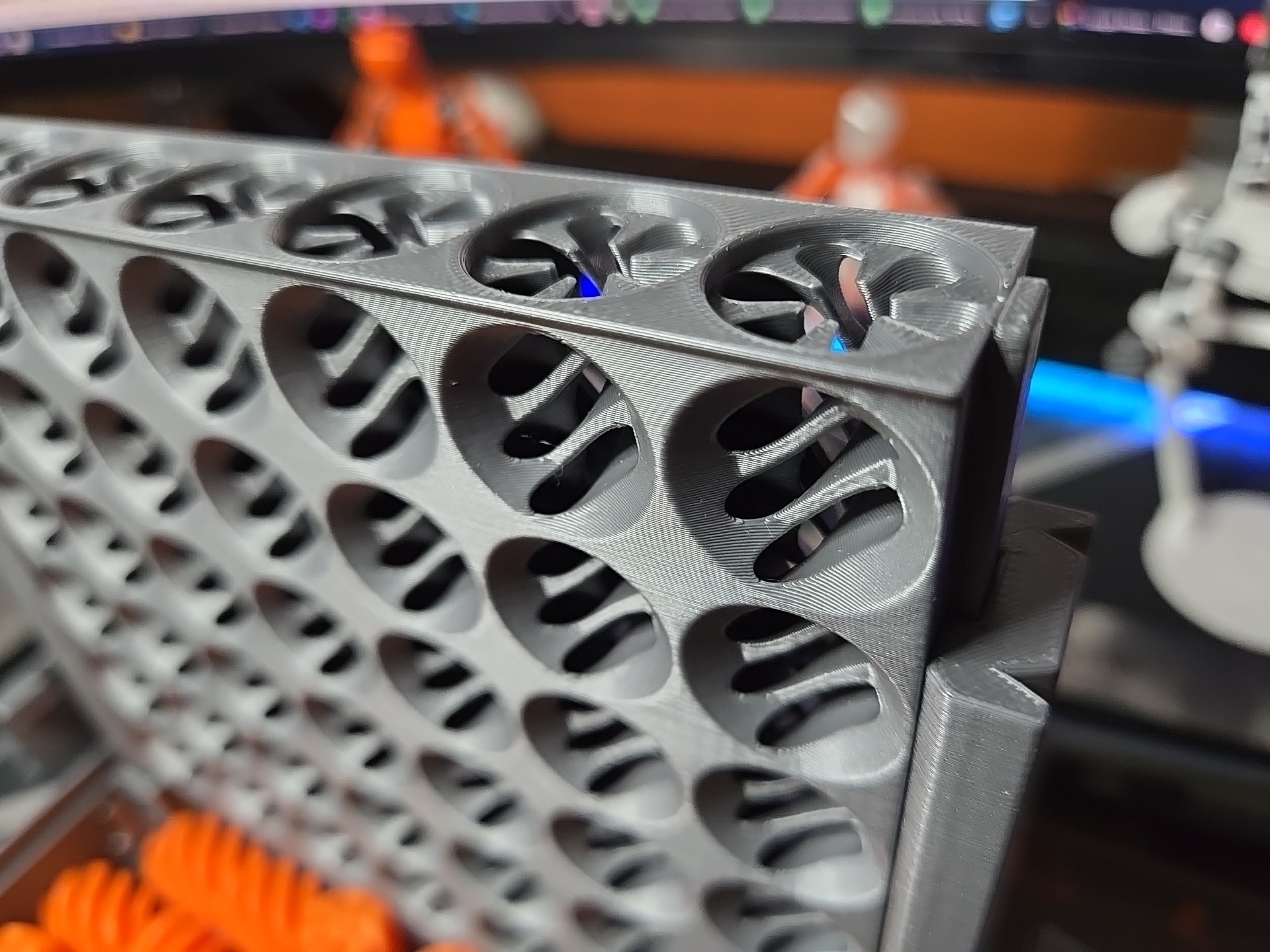
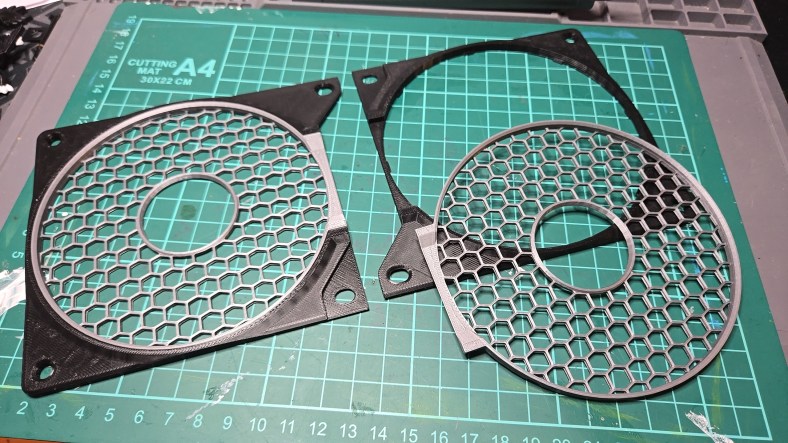
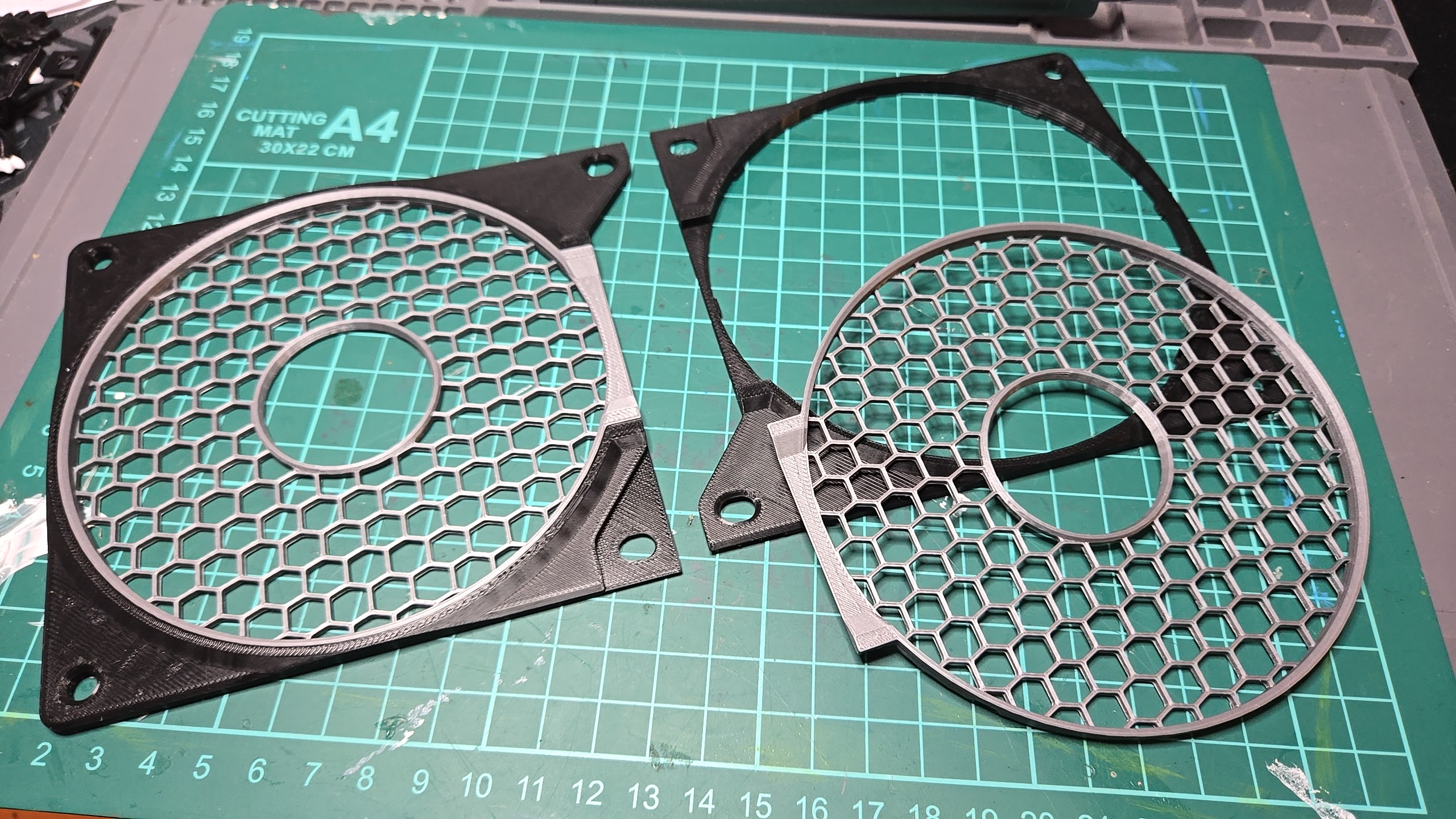
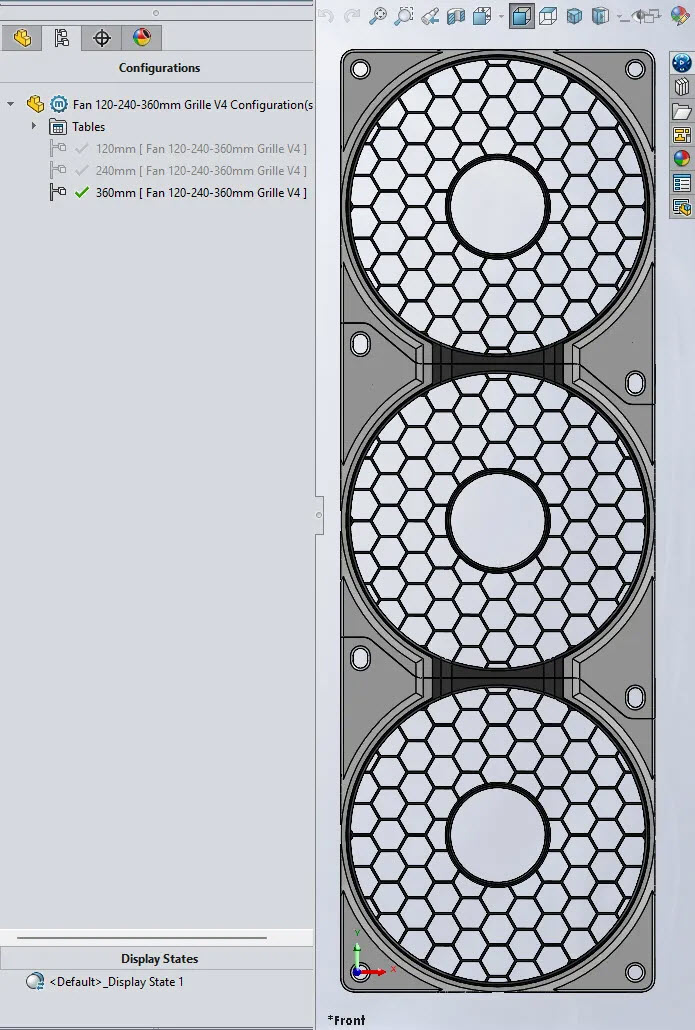
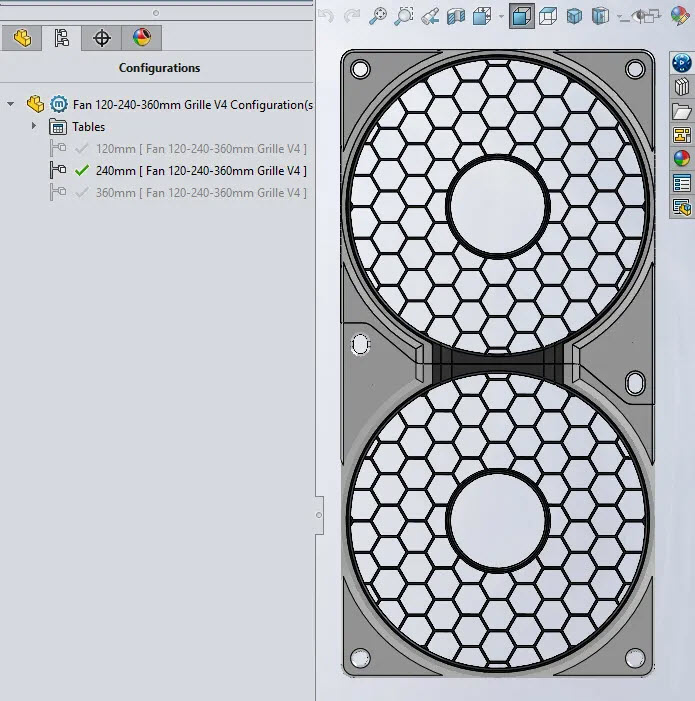
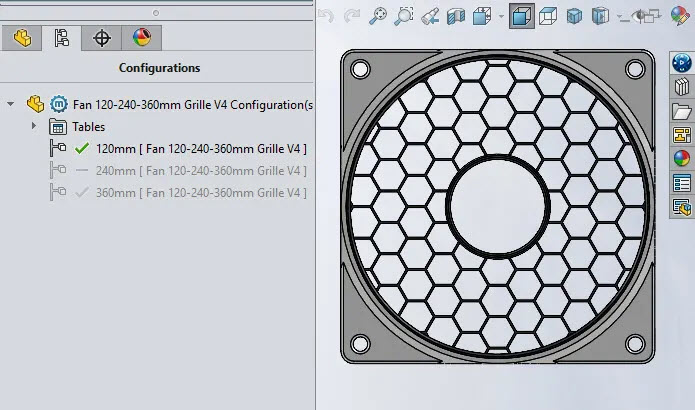
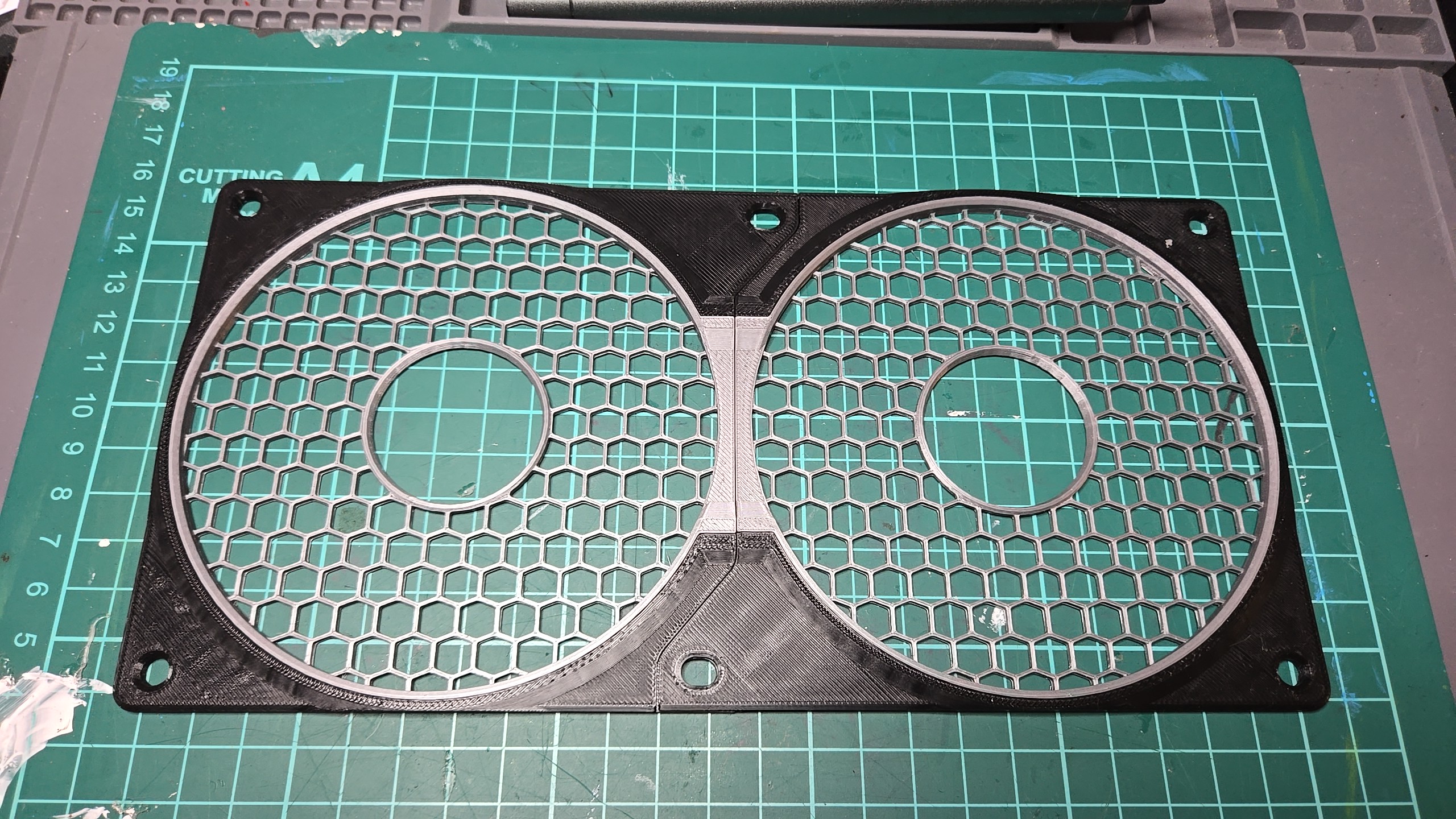
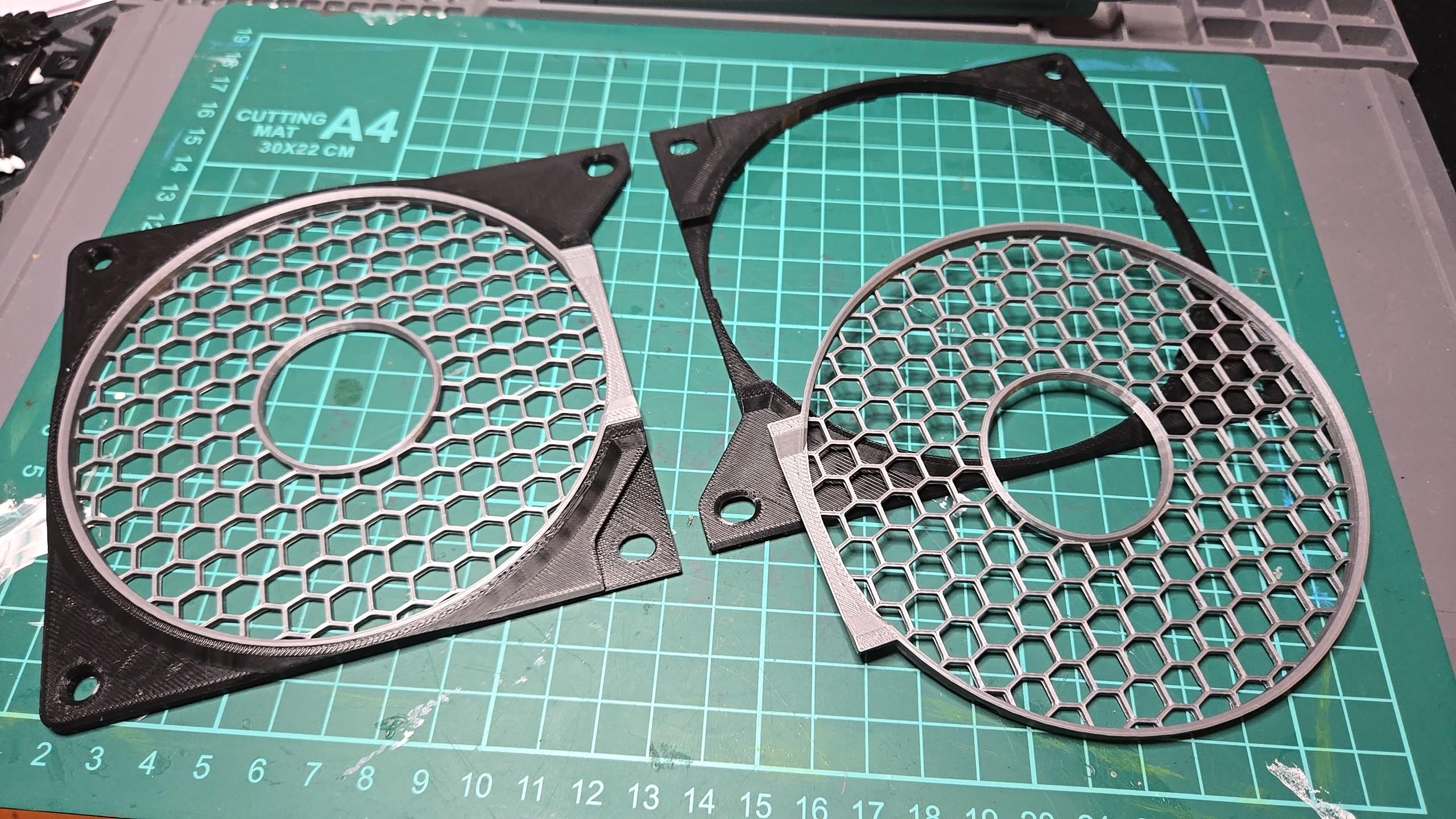
This is a 120mm fan cover, mostly common in computers. Like the million others out there, it protects the fans from foreign objects and your fingers from its blades. This design tho, also allows to swap grille colors and designs without unscrewing it plus when covering two or more fans together (as in computer radiators), it sprawls an overlapping design to make it seem like a seamless unit.
Designed in SolidWorks for Makers, this parametric design contains three configurations for single, double or triple and more fans, in double or more configurations, the screw tabs overlap the following frame and reduces mounting screws. The grille also “connects” to the next one enhancing the seamless design.
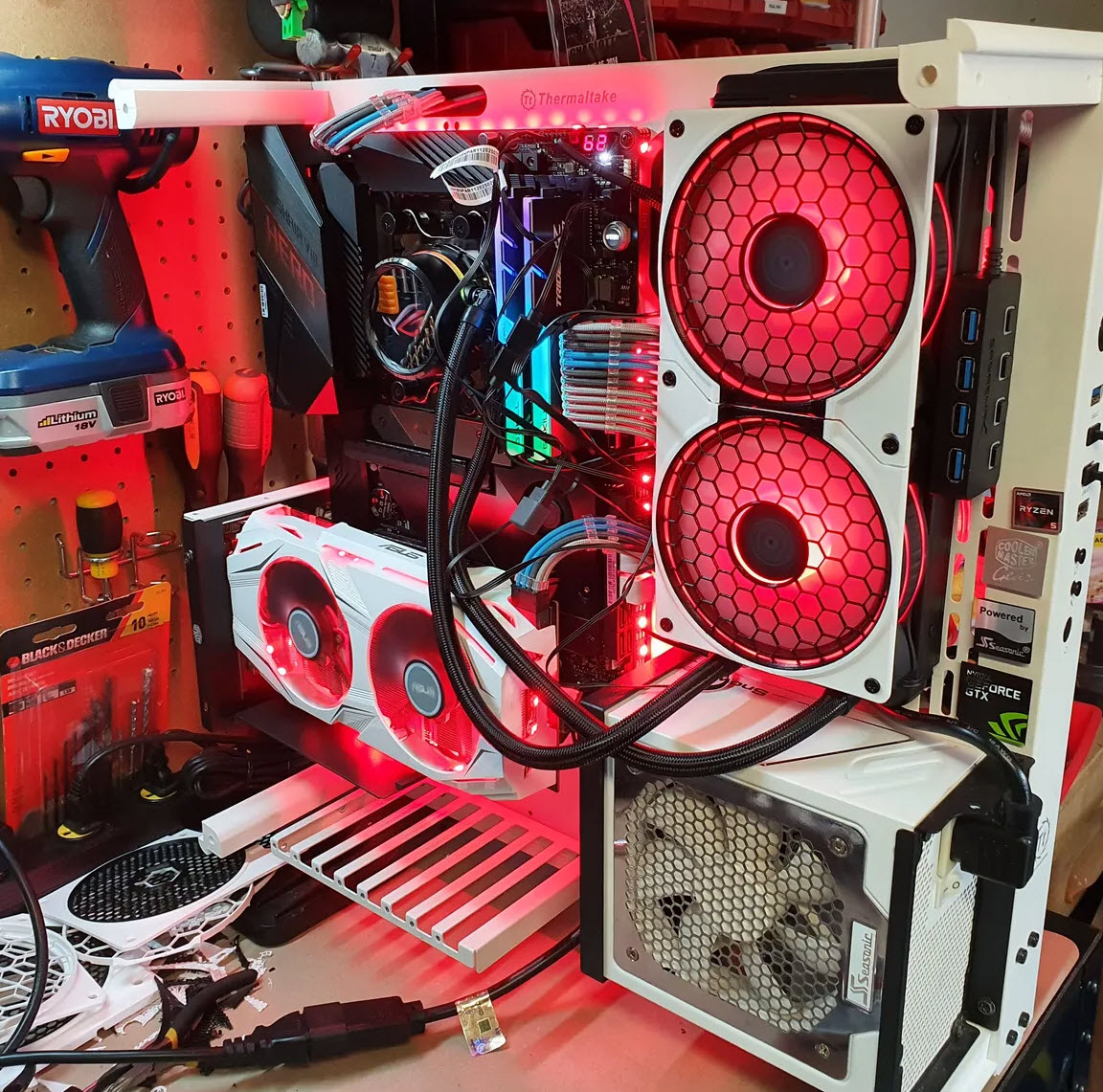
I created Fanswap as a way to mod my PC, what I wanted was not available and what I liked was way too expensive (CNC machined aluminum covers, anyone?), also the pain of changing the cover in a tight case, specially on radiators where the fan also comes off the same screws. Also, why did double and triple radiators never looked like a single cohesive unit?
In the image above, the parts were printed in Overture black PLA and 3D Solutech Silver Metal PLA, I love this last one.
I have published the files for printing in Maker World and Printables.


It’s a shield, showing “L21” in big bold letters and “DEGREES” in a custom font. Very geometric, almost mechanical, all angles measure 21° or a variation of it. The colors (which are still in the air) are burnt orange and misted black, bonus points to whoever recognizes the paint palette this is coming from.
Inspiration for the shield comes from the knights in medieval times, full armor, swords and shields. The shape comes from the honeycomb pattern, who doesn’t like those hexagons nested neatly defying most manufacturing processes? Of course, I added my spin where the side angles measure 21 degrees but still fit an inscribed circle tangent to all sides.
The “L21” was initially going to be a huge “L” behind the number “21” but as I sketched the letters, I decided to do the number “1” in a mirrored angle and bam! Bonus for that nostalgic feel coming from a galaxy far, far away…
“Degrees” almost didn’t make it in there but as the “L21” took that shape, it couldn’t be centered vertically anymore so I needed some bottom filler but also didn’t want to use an existing font and wanted something I could control 100% so I designed a parametric template for the font where the letters became a result of connecting dots where needed. The following shape is just filler for now.
If you were expecting some deeper meaning… sorry, I’m working on that 🙂
All said, here it is!


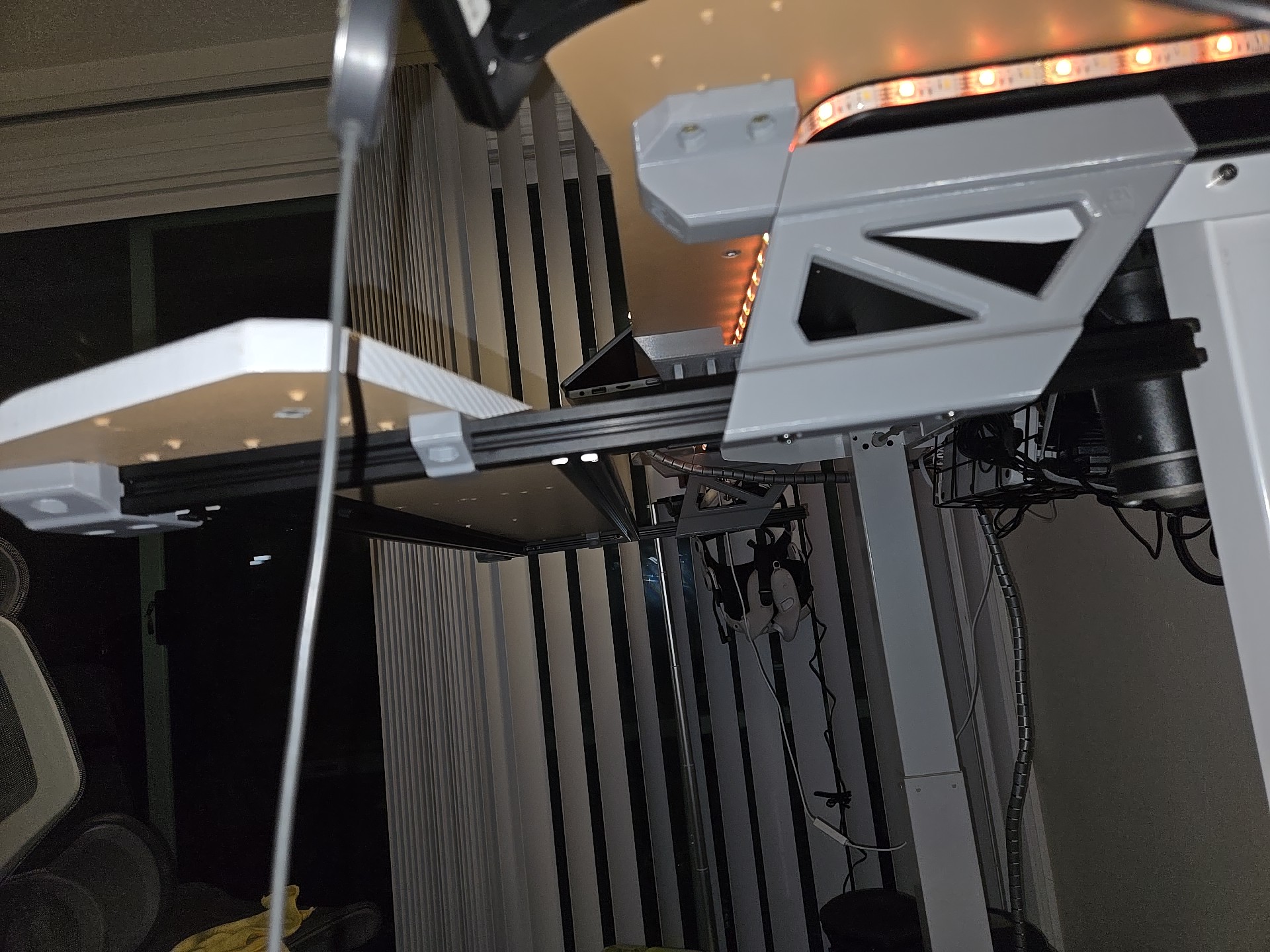
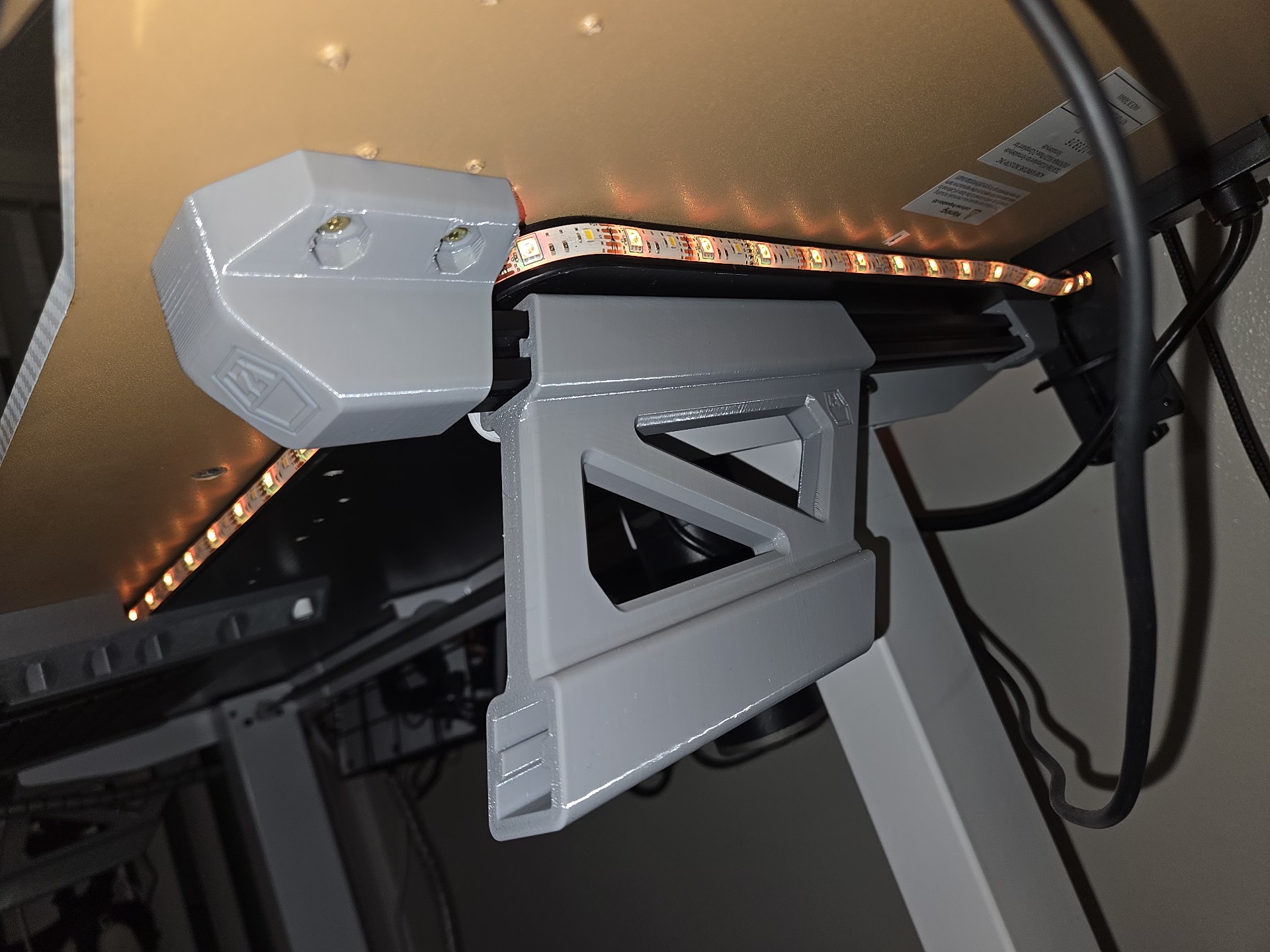
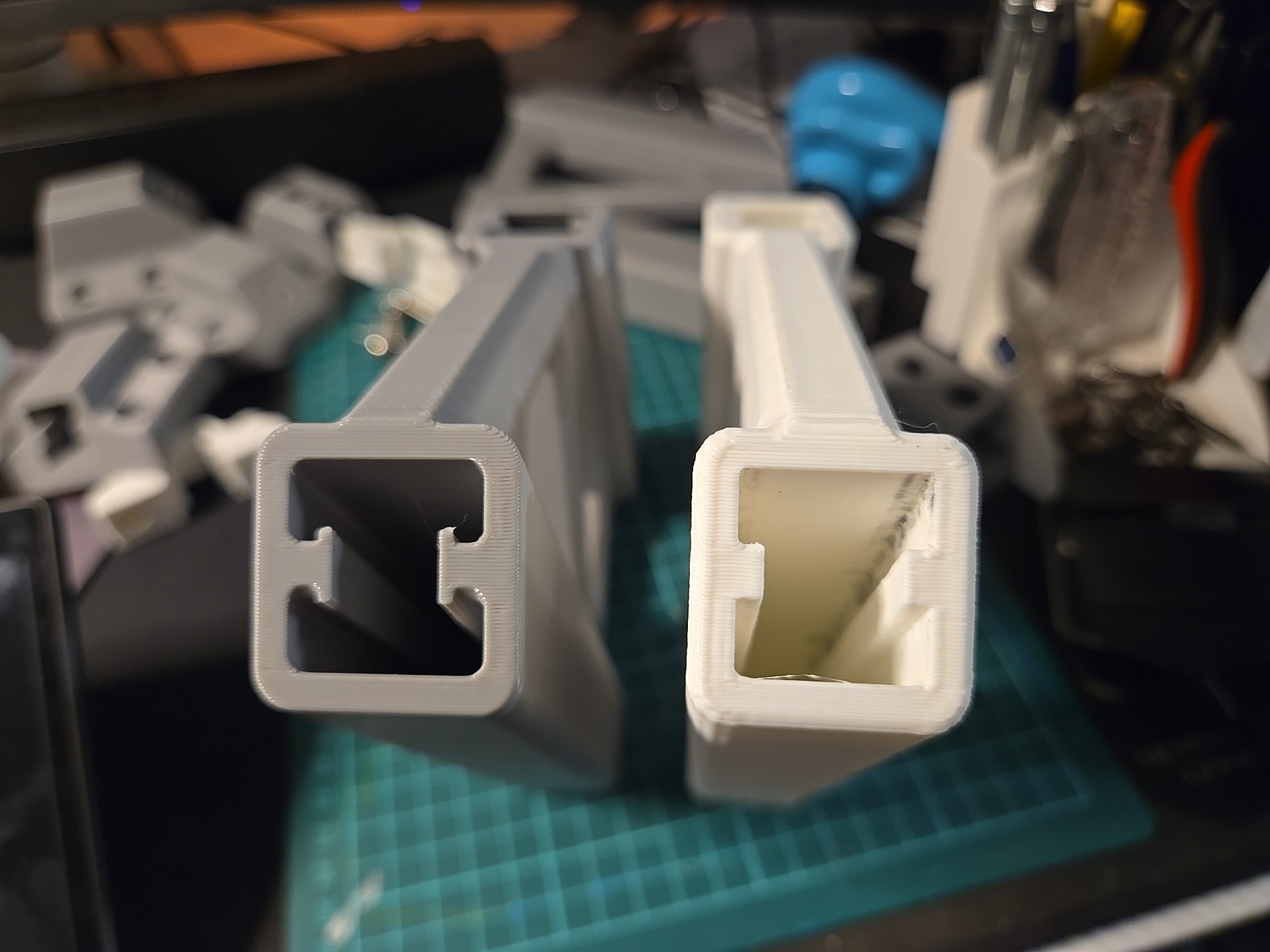
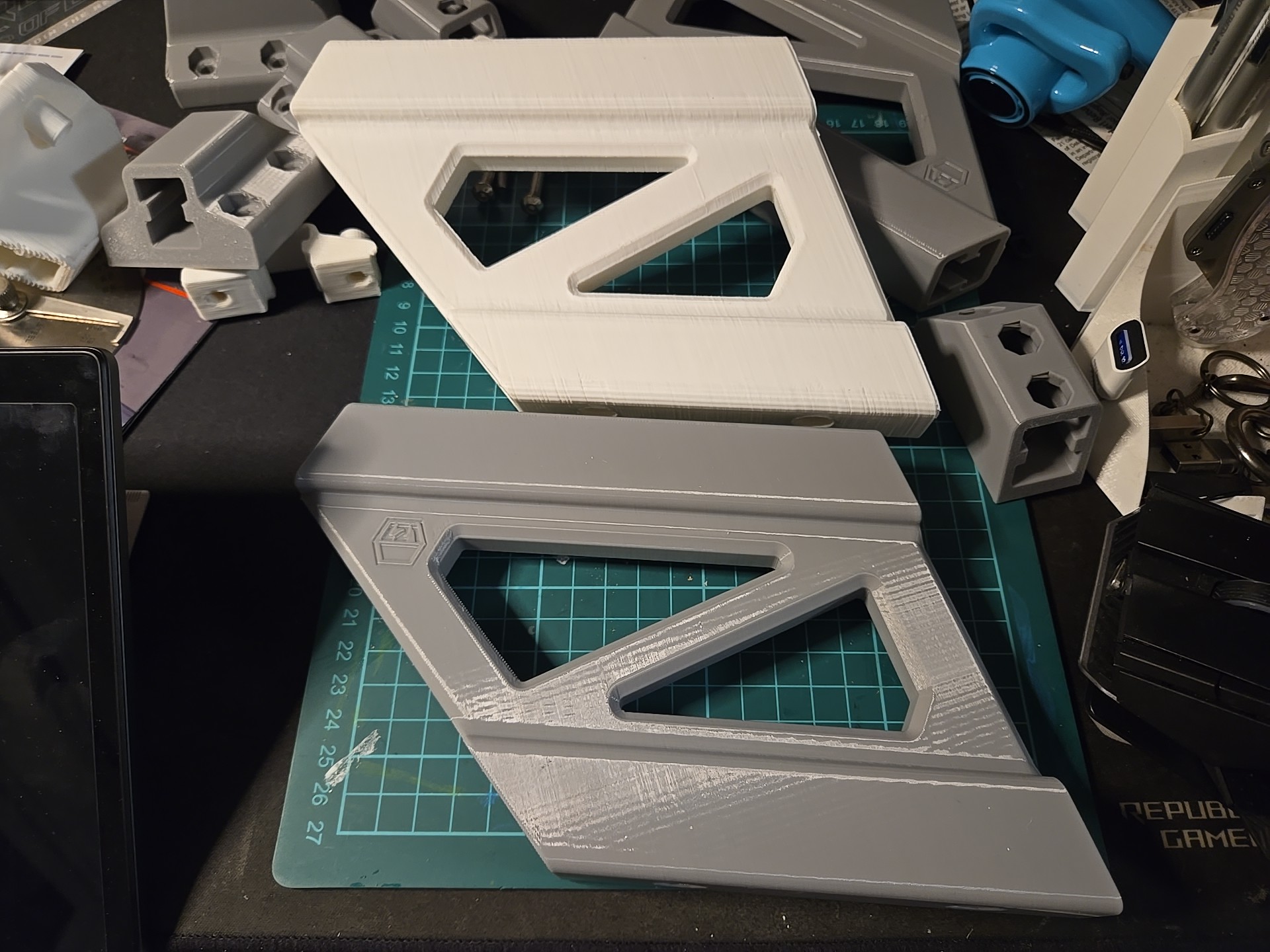
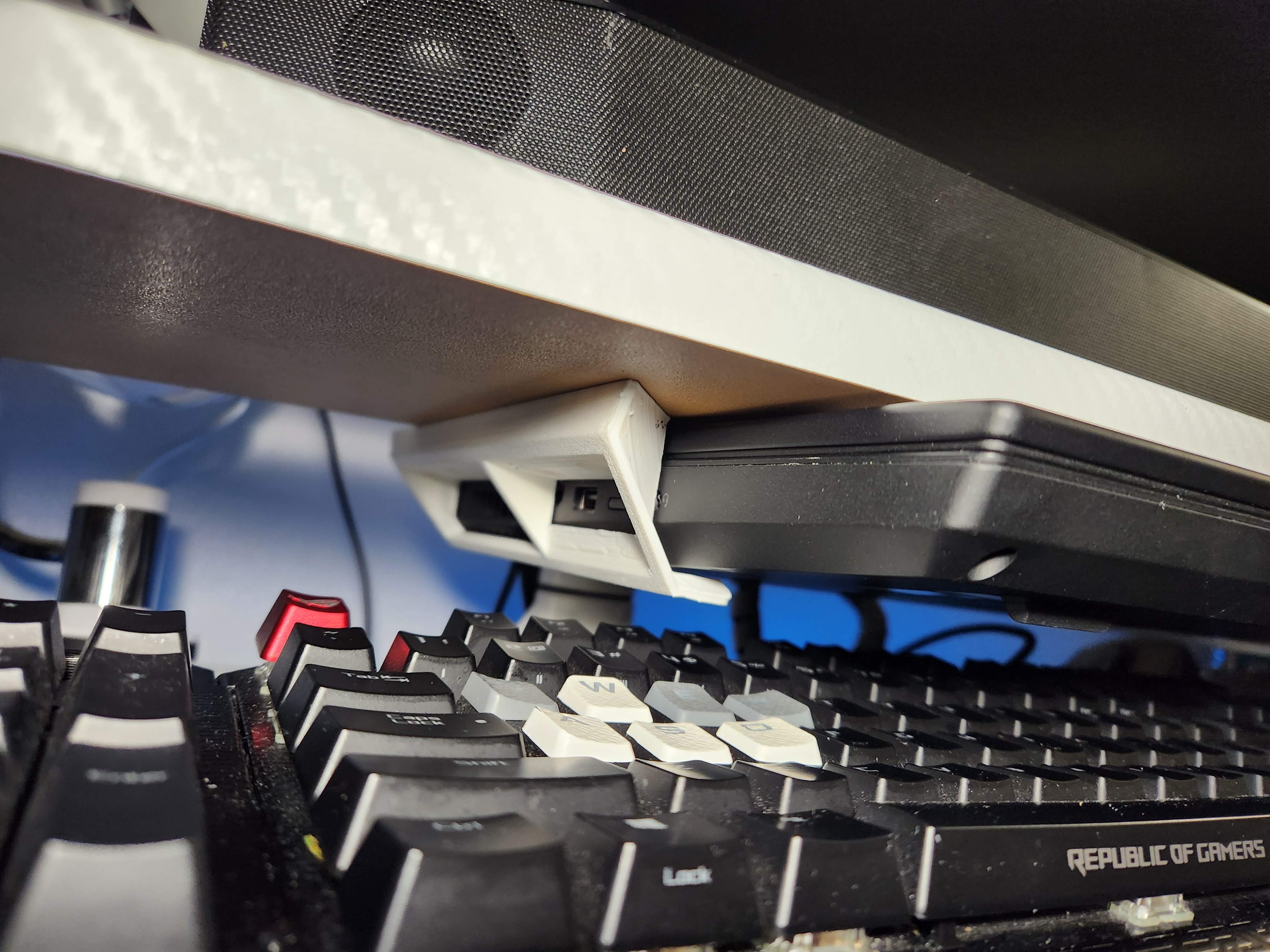
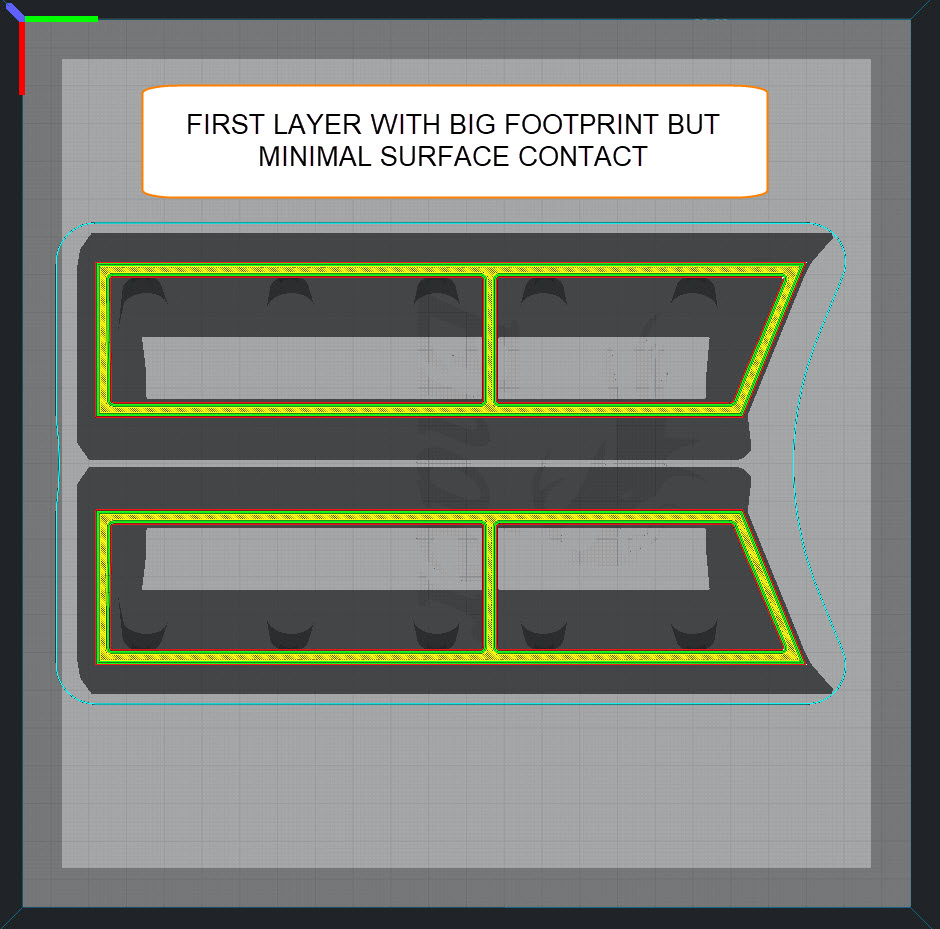
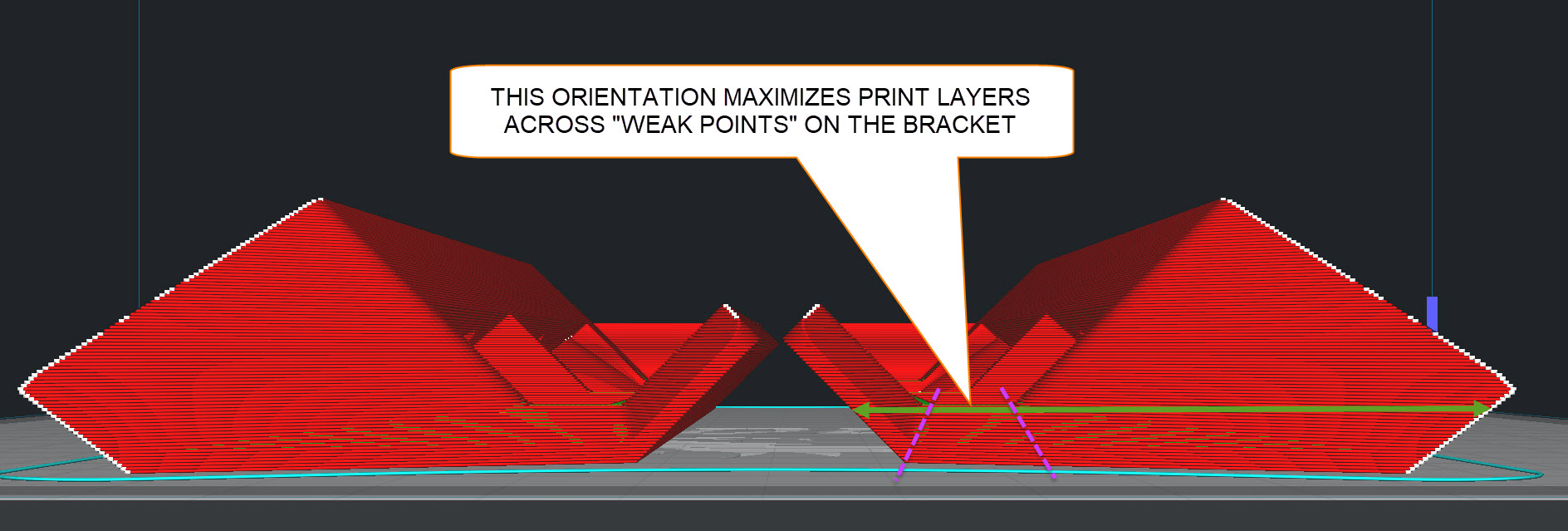
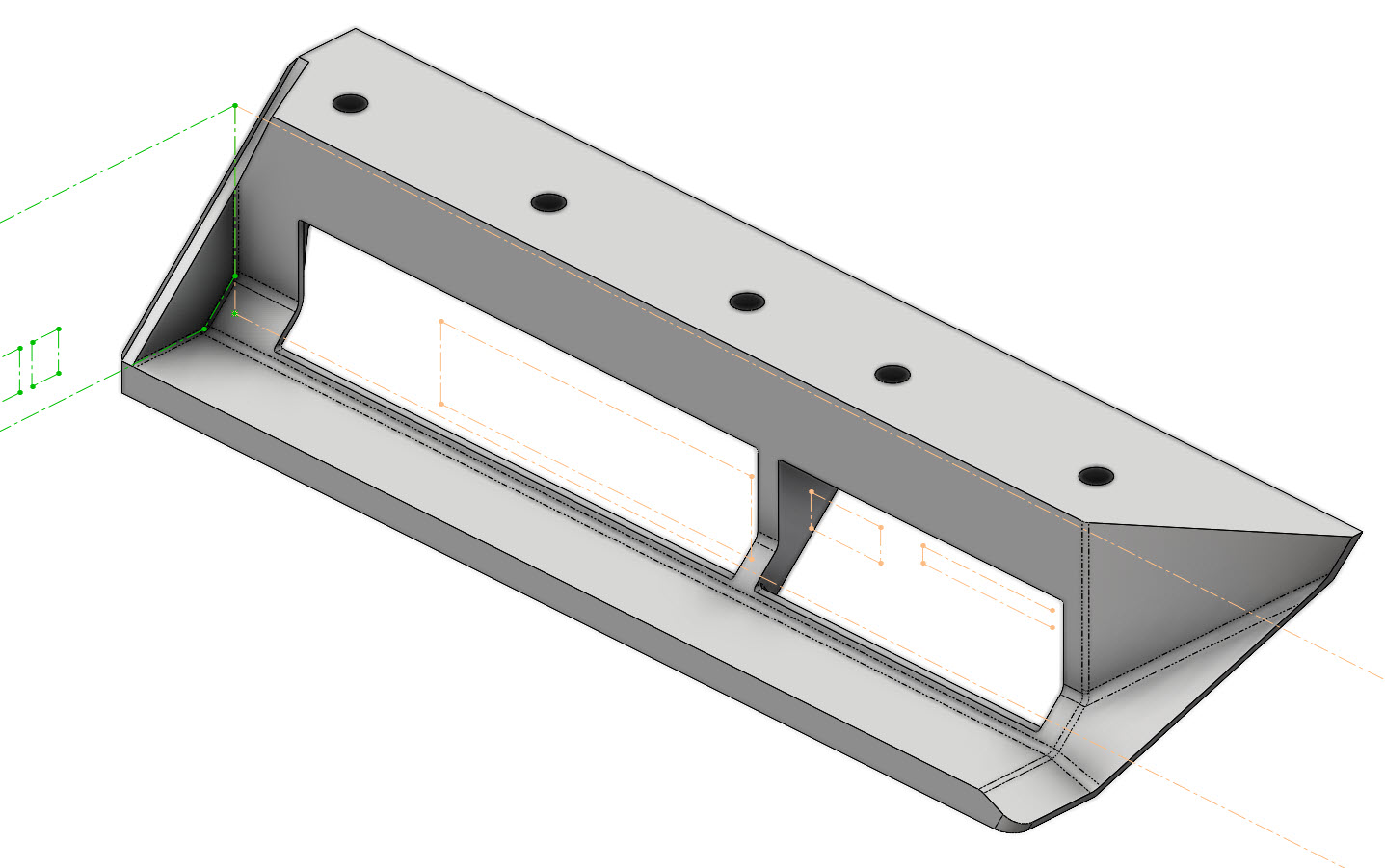
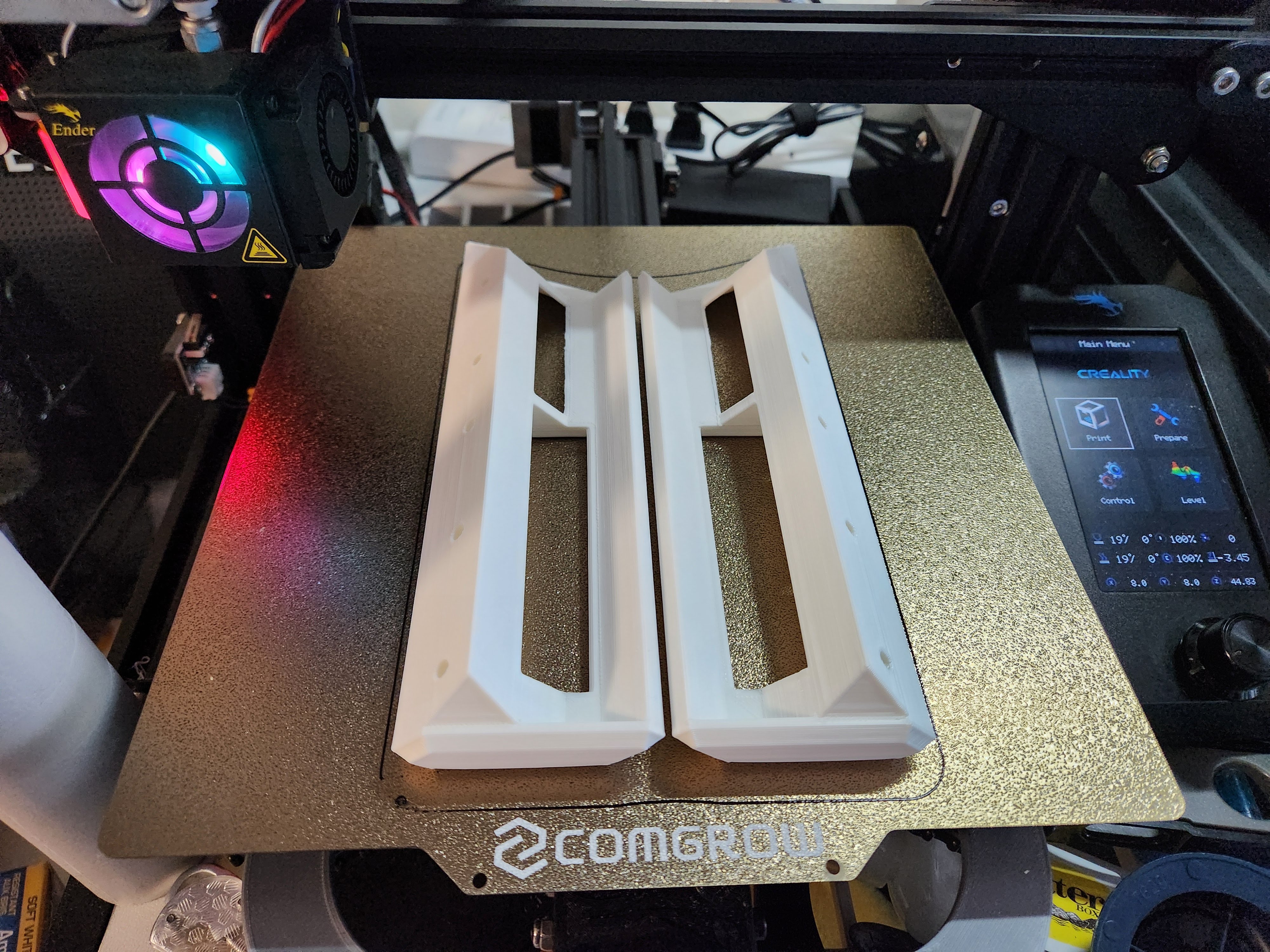
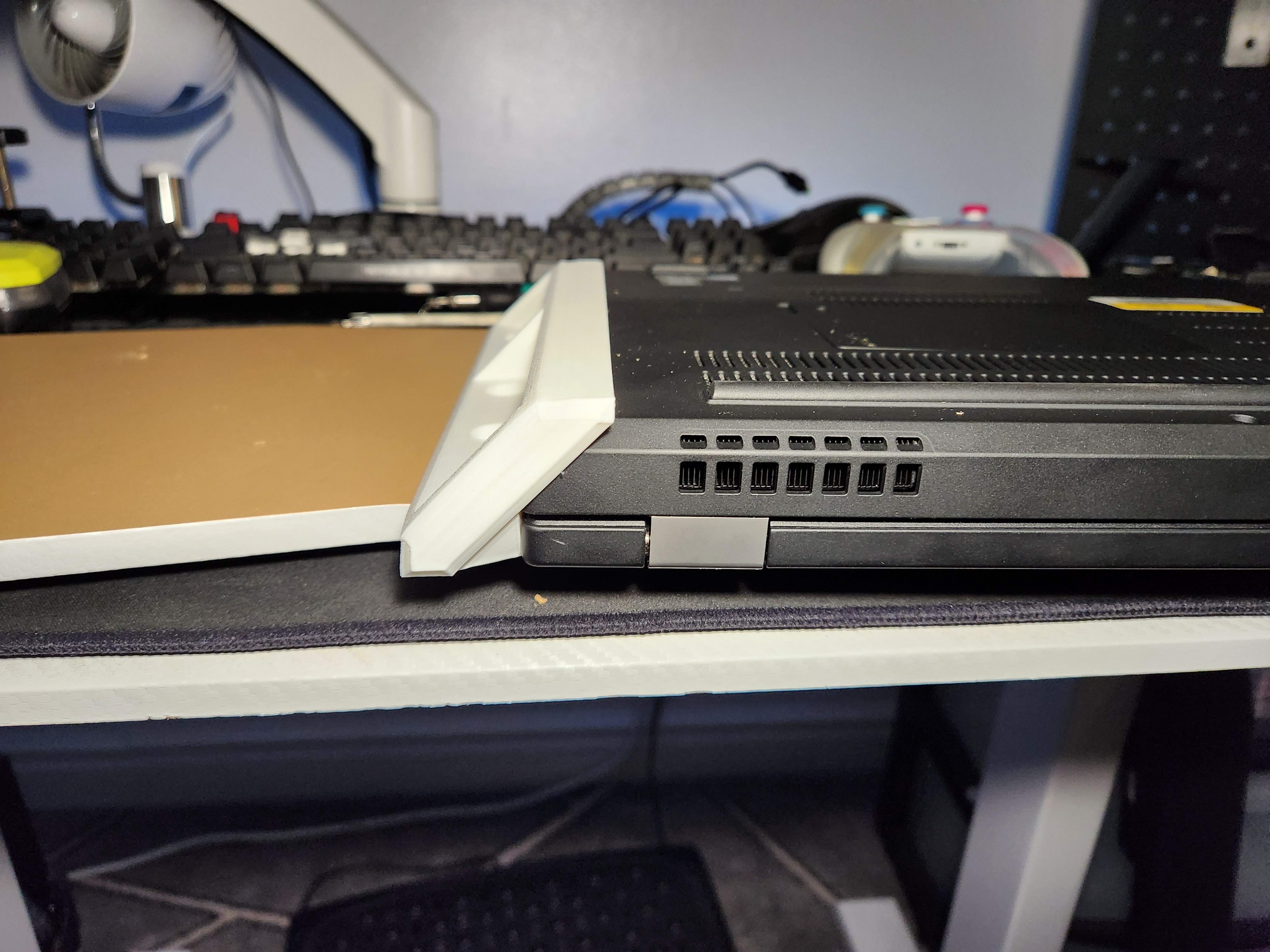
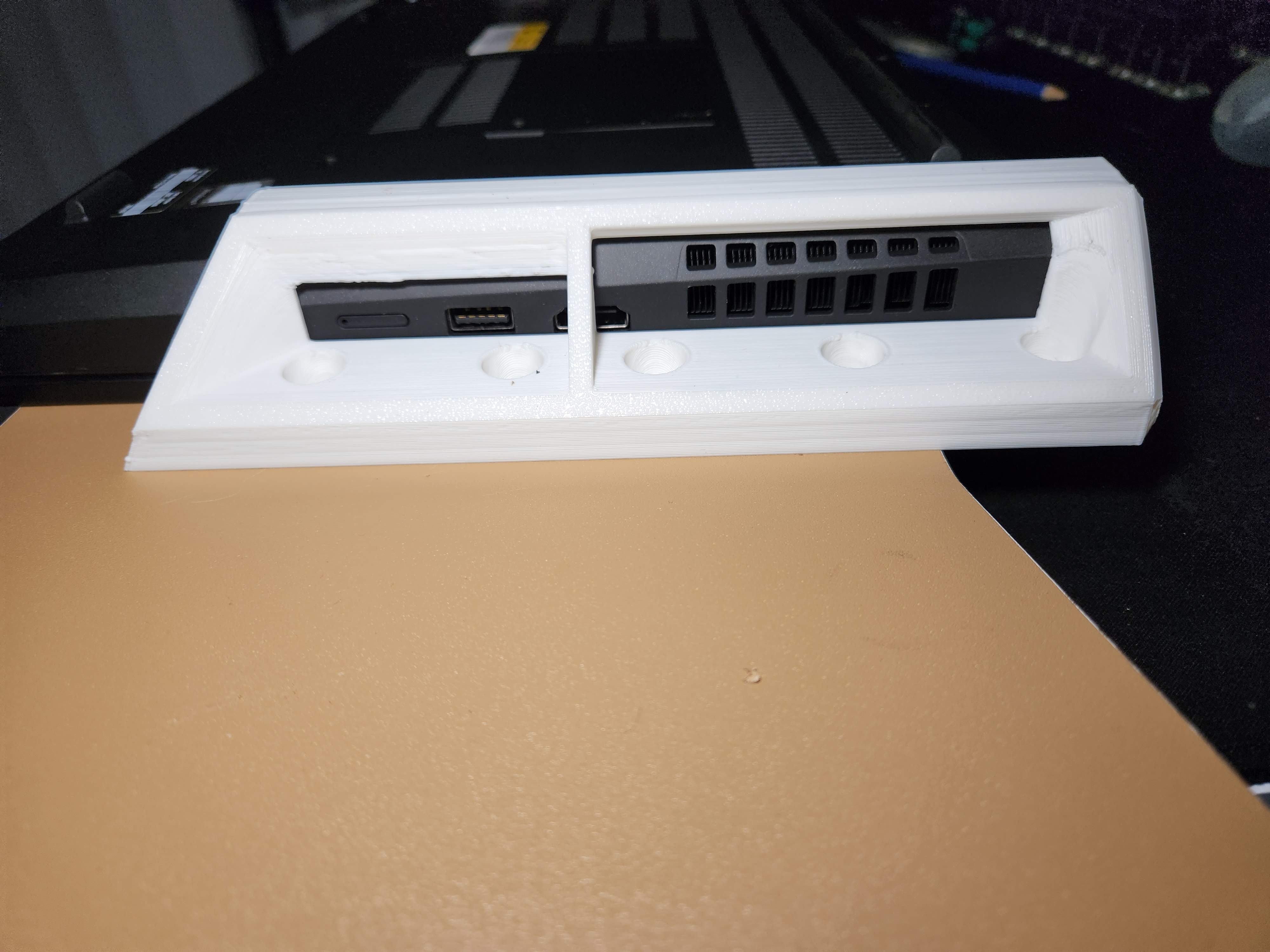
So this is a bracket set that allows a laptop to be mounted under a shelf or the desk. It has an inner bevel that mimics these laptops side profile, and yes, while I could have designed another L-bracket, I wanted to design something unique and specific where FDM (fused deposition modeling) manufacturing would shine. It also allows access to ports and ventilation plus easy insertion.
I wanted to challenge myself and forgo my injection plastic molding experience and instead focus on the most commonly available 3D printing process, optimizing for material, speed, structure and mass-manufacturing. Yeah, forget draft, forget undercuts, forget constant wall thicknesses, THIS IS 3D PRINTING BABY!!
Features:
Designed for FDM 3D printing first:
You can download .step and .stl plus a Bambu P1S profile here:


The end of the modern page posts, I’ve had this site for years and posts after this one are a bit of a bonus for you if you’ve come this far down, I could’ve deleted them but decided to leave them as a time-capsule easter egg.
Last blog post was in 2011, I think I wanted to retake it in 2015 but I abandoned it again until today. This post is named “The end” but it’s actually the beginning of the new purpose, I bought the domain name and hosting because I wanted a permanent place to showcase things and stuffs about me. Yeah, you got me, I couldn’t afford Twitter but on a positive side, only I can create posts 😛
Welcome to L21Degrees of Awesomeness, tacos and drinks included but not paid for.
Test post from WordPress. Stuffs. Continue reading “Hello world! 🌍”
24 bucks for a 640GB Hard Drive!! Awesome deal to replace your boot drive. 😀
Windows Live Spaces met its impending doom and offered users to transfer their content to WordPress so I did.
I left Live Spaces and MySpace in the dust in favor of Facebook, but the latter one didn’t have the blog organization features that I’m learning about in WordPress and I’m finding out it’s very cool and also posts back to Facebook so I’ll be doing some stuffs around here.